
Politics
Witness Mary Townsend Arrested for Perjury in 1909 Liquor Case

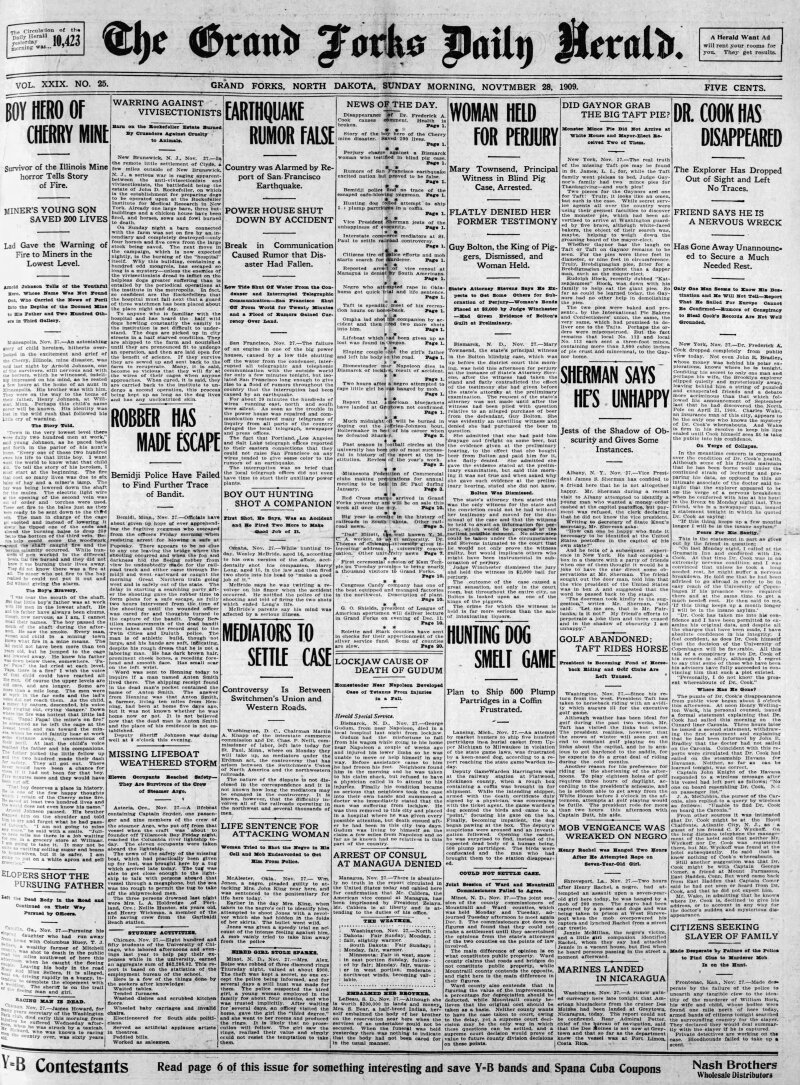
On November 28, 1909, Mary Townsend, a crucial witness in a liquor case against Guy Bolton, was arrested for perjury in Bismarck, North Dakota. This development came after Townsend recanted her earlier testimony regarding her involvement with Bolton, who had been accused of operating an illegal liquor establishment, commonly referred to as a “blind pig.”
Townsend’s testimony had previously implicated Bolton in the sale of beer. However, during her appearance in court, she denied having purchased beer from him, contradicting her earlier statements made at a preliminary examination. The dramatic turn of events unfolded when State’s Attorney Stevens questioned her regarding her previous claims.
Details of the Court Proceedings
The courtroom was tense as Townsend appeared visibly reluctant to testify. She admitted to having paid Bolton for drayage and freight on some beer but firmly denied having bought any from him. When pressed about her earlier testimony, she stated she did not know why she had provided that evidence, raising further doubts about the integrity of her statements.
As the only witness for the prosecution, Townsend’s retraction led to the dismissal of the case against Bolton. State’s Attorney Stevens declared that without her testimony, a conviction was impossible. He subsequently motioned for Townsend to be held for perjury, indicating he would also pursue charges against others who may have influenced her original testimony. Judge Winchester agreed, setting her bail at $2,000.
This incident caused significant public interest and debate, as Bolton was known as one of the prominent figures in the illicit liquor trade. The ramifications of Townsend’s arrest extended beyond the courtroom, creating a sensation throughout Bismarck and highlighting the gravity of perjury in legal proceedings.
Public Reaction and Legal Implications
The arrest of Townsend not only impacted the specific case against Bolton but also raised broader concerns about the integrity of witness testimonies in legal matters. Perjury is considered a serious crime, often carrying heavier penalties than the offenses that witnesses may testify about.
As the case developed, State’s Attorney Stevens hinted at the possibility of uncovering a network of individuals who might have been involved in the subornation of perjury. This aspect could lead to further investigations and indictments, indicating that the fallout from this case might reach beyond just Townsend and Bolton.
The events of November 28, 1909, serve as a historical reminder of the complexities involved in legal testimonies and the serious consequences that can arise from dishonesty in the courtroom. With significant public attention and potential legal ramifications, this case continues to resonate in discussions about the judicial system and the importance of truthful testimony.

Urgent: Winter Weather Advisory Issued for South Central PA

ECB Confirms Current Interest Rates Are Appropriate as Year Ends

Debate Dynamics: Bregman and Haaland Gear Up for Gubernatorial Race

University of Arizona Identifies Key Immune Cell Linked to Fibrosis

Titans Lead 2026 NFL Draft Race, Raiders and Saints Lurk Behind

Delta A350 Diverts to Tokyo After Hydraulic Emergency Mid-Flight

Zacks Research Lowers Earnings Forecast for Avanos Medical

“All’s Fair Season 1 Episode 7 to Release on December 2, 2025”

Rolette Record Sold to Cando Editors, New Era Begins

New ‘Star Trek: Voyager’ Game Demo Released, Players Test Limits

Global Air Forces Ranked by Annual Defense Budgets in 2025

ALMA Discovers Companion Orbiting Giant Red Star π 1 Gruis

Mass Production of F-35 Fighter Jet Drives Down Costs

Electrification Challenges Demand Advanced Multiphysics Modeling

Gold Investment Surge: Top Mutual Funds and ETF Alternatives

Time Crystals Revolutionize Quantum Computing Potential

DirecTV to Launch AI-Driven Ads with User Likenesses in 2026

Freeport Art Gallery Transforms Waste into Creative Masterpieces
-
 Top Stories2 months ago
New ‘Star Trek: Voyager’ Game Demo Released, Players Test Limits
-
 World2 months ago
Global Air Forces Ranked by Annual Defense Budgets in 2025
-
 Science2 weeks ago
ALMA Discovers Companion Orbiting Giant Red Star π 1 Gruis
-
 World2 months ago
Mass Production of F-35 Fighter Jet Drives Down Costs
-
 World2 months ago
Electrification Challenges Demand Advanced Multiphysics Modeling
-
 Business2 months ago
Gold Investment Surge: Top Mutual Funds and ETF Alternatives
-
 Science2 months ago
Time Crystals Revolutionize Quantum Computing Potential
-
 Top Stories2 months ago
DirecTV to Launch AI-Driven Ads with User Likenesses in 2026
-
 Entertainment2 months ago
Freeport Art Gallery Transforms Waste into Creative Masterpieces
-

 Business2 months ago
US Government Denies Coal Lease Bid, Impacting Industry Revival Efforts
-

 Health2 months ago
Gavin Newsom Critiques Trump’s Health and National Guard Plans
-

 Lifestyle2 months ago
Discover Reese Witherspoon’s Chic Dining Room Style for Under $25