
World
Pope Leo XIV Calls for Unity at Historic First Council of Nicaea

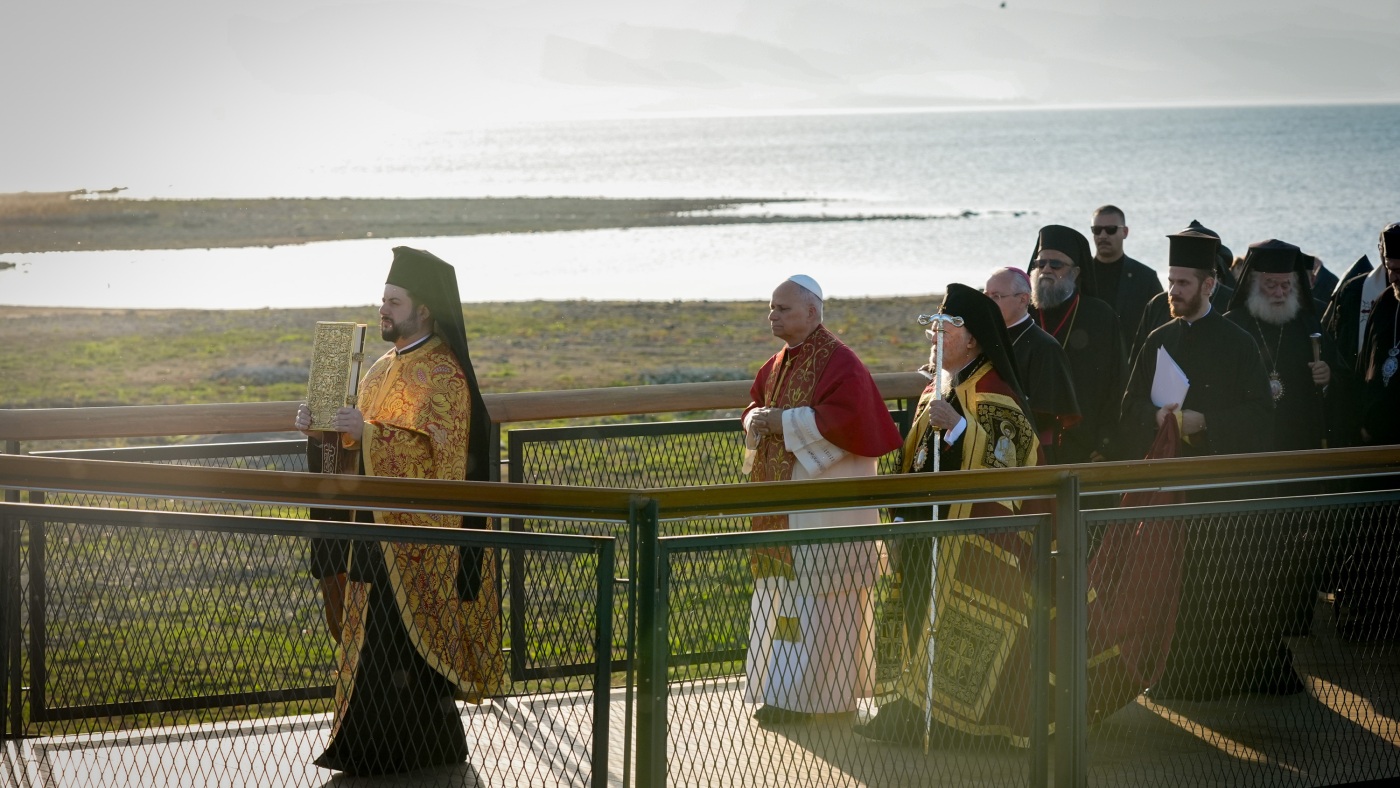
Pope Leo XIV emphasized the importance of unity during his visit to the site of the First Council of Nicaea in Iznik, Turkey, on March 14, 2024. This historic location, where early Christian leaders convened 1,700 years ago, was the backdrop for his prayers alongside Ecumenical Patriarch Bartholomew, the spiritual leader of the Eastern Orthodox Church. The Pope’s inaugural foreign trip underscored the urgent call for reconciliation among Christian denominations and across different faiths.
The First Council of Nicaea, convened by Emperor Constantine in 325, was a pivotal moment in Christian history. It aimed to address deep divisions within the early Church, mainly over the nature of Jesus Christ and his relationship with God. Pope Leo highlighted the need to “strongly reject the use of religion for justifying war, violence, or any form of fundamentalism or fanaticism,” advocating instead for “fraternal encounter, dialogue, and cooperation.” This message resonated strongly at the serene lakeside location, where bishops once gathered to resolve doctrinal disputes.
As part of his visit, Pope Leo participated in a joint silent prayer with Patriarch Bartholomew at the recently uncovered ruins of the ancient church. The site, which lay submerged under approximately eight feet of water until its discovery about eleven years ago, is now visible as the shoreline of Iznik Lake has receded. Turkish archaeologist Mustafa Sahin, who played a key role in the site’s excavation, noted the significance of the ruins to local history and current religious discourse.
The First Council of Nicaea was instrumental in defining core Christian beliefs, particularly in rejecting the views of Arius, an Alexandrian priest who contended that Jesus, while exalted, was not equal to God. The council ultimately affirmed that Jesus is “of one substance” with the Father, a declaration that forms the foundation of the Nicene Creed recited in churches today. The Pope’s address reaffirmed the creed as a “common heritage of Christians,” emphasizing its relevance even as historical wounds from persecutions remain fresh.
Pope Leo’s visit is significant not just for its historical context but also for its contemporary implications. During a speech with Turkish President Recep Tayyip Erdogan, he warned that the current divisions and polarization threaten the future of humanity itself. The Pope’s messages of unity extend beyond Christianity, advocating for collaboration among various religions in an increasingly fragmented world.
The Church remained relatively united until the Great Schism of 1054, which divided Catholic and Eastern Orthodox Christianity due to theological disagreements and power dynamics between Rome and Constantinople, known today as Istanbul. As Pope Leo XIV and Patriarch Bartholomew prepare to sign a joint declaration on March 15, 2024, their actions symbolize a modern effort to bridge these historical divides.
Pope Leo’s visit to the historic site of the First Council of Nicaea is not merely a reflection on the past but a clarion call for unity in a world rife with conflict. By invoking the spirit of dialogue and cooperation, he aims to inspire a renewed commitment to peace among all faiths, emphasizing that the paths forward lie in mutual respect and understanding.

Boise State Faces UNLV in Urgent MWC Championship Showdown

Hallmark’s ‘Christmas at the Catnip Café’ Premieres Today!

Millville Woman Arrested for Threatening U-Haul Worker with Baton

Japan’s PM Takaichi Vows Fiscal Management Amid Economic Shift

Bitcoin Plummets Below $88K Amid Tether Controversy

Tottenville Falls Short in PSAL 4A Title Game Against Erasmus

Shark Teeth Reveal Urgent Insights to Prevent Extinction Now

Englewood Church Members Rally After Thanksgiving Day Fire

Mayor Appoints Alan Wong as New District 4 Supervisor

New ‘Star Trek: Voyager’ Game Demo Released, Players Test Limits

Global Air Forces Ranked by Annual Defense Budgets in 2025

ALMA Discovers Companion Orbiting Giant Red Star π 1 Gruis

Mass Production of F-35 Fighter Jet Drives Down Costs

Electrification Challenges Demand Advanced Multiphysics Modeling

Gold Investment Surge: Top Mutual Funds and ETF Alternatives

Time Crystals Revolutionize Quantum Computing Potential

DirecTV to Launch AI-Driven Ads with User Likenesses in 2026

Freeport Art Gallery Transforms Waste into Creative Masterpieces
-
 Top Stories2 months ago
New ‘Star Trek: Voyager’ Game Demo Released, Players Test Limits
-
 World2 months ago
Global Air Forces Ranked by Annual Defense Budgets in 2025
-
 Science2 weeks ago
ALMA Discovers Companion Orbiting Giant Red Star π 1 Gruis
-
 World2 months ago
Mass Production of F-35 Fighter Jet Drives Down Costs
-
 World2 months ago
Electrification Challenges Demand Advanced Multiphysics Modeling
-
 Business2 months ago
Gold Investment Surge: Top Mutual Funds and ETF Alternatives
-
 Science2 months ago
Time Crystals Revolutionize Quantum Computing Potential
-
 Top Stories2 months ago
DirecTV to Launch AI-Driven Ads with User Likenesses in 2026
-
 Entertainment2 months ago
Freeport Art Gallery Transforms Waste into Creative Masterpieces
-

 Business2 months ago
US Government Denies Coal Lease Bid, Impacting Industry Revival Efforts
-

 Health1 month ago
Gavin Newsom Critiques Trump’s Health and National Guard Plans
-

 Lifestyle1 month ago
Discover Reese Witherspoon’s Chic Dining Room Style for Under $25