
Science
NASA’s OSIRIS-APEX Spacecraft Captures Breathtaking Earth Images

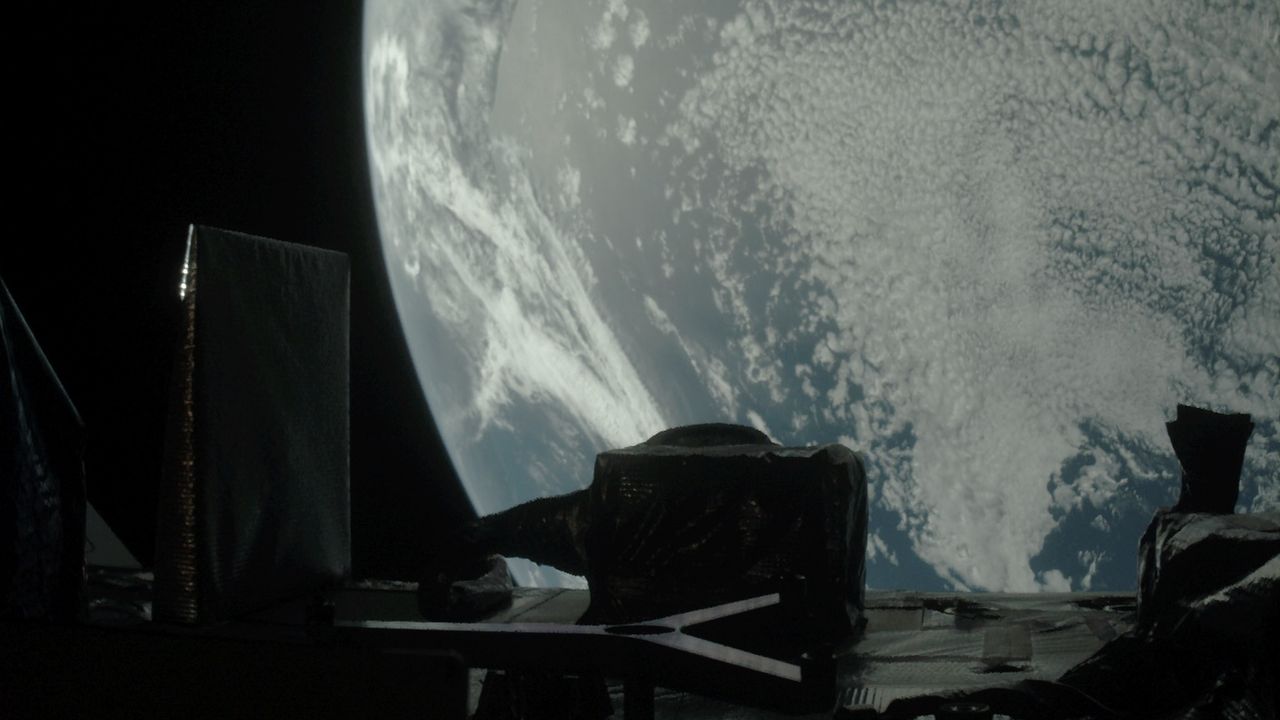
NASA’s OSIRIS-APEX spacecraft has recently captured remarkable images of Earth during a high-speed slingshot maneuver. This event occurred on September 23, 2025, as the probe approached the planet, marking a significant step in its mission toward the asteroid Apophis. The images reveal stunning details of Earth’s swirling clouds and blue oceans from just 2,136 miles (3,438 kilometers) above the surface.
As OSIRIS-APEX continued its journey, it also photographed the moon from approximately 370,000 miles (595,000 kilometers) away. These images confirm that the spacecraft’s instruments are functioning well after years in deep space. The flyby served a dual purpose: not only did it provide breathtaking visuals, but it also utilized Earth’s gravity to accelerate the spacecraft on its path toward Apophis.
A New Chapter in Asteroid Exploration
OSIRIS-APEX is the second phase of the OSIRIS-REx mission, which successfully returned samples from the near-Earth asteroid Bennu in 2023. Following this historic achievement, NASA redirected the spacecraft toward Apophis, a stony, metal-rich asteroid that presents a contrasting scientific opportunity compared to Bennu’s carbon-rich composition.
The Apophis asteroid is expected to make a close approach to Earth on April 13, 2029, coming closer than many satellites in orbit. This proximity raises intriguing possibilities, as Earth’s tidal forces could reshape the asteroid’s surface, alter its spin, or even shift its orbit. Once OSIRIS-APEX arrives, it will be the first mission to observe how an asteroid reacts to such a close planetary encounter, according to the mission overview from the University of Arizona.
Mapping and Studying Apophis
Once in orbit around Apophis, OSIRIS-APEX is scheduled to spend approximately 18 months conducting detailed mapping of the asteroid. The mission aims to study its composition and capture high-resolution imagery. Mission planners have also devised an innovative approach to reveal previously hidden materials on the asteroid’s surface. The spacecraft will hover a few meters above Apophis, firing its thrusters downward to disturb the dust and uncover fresh material.
The recent photos of Earth were taken using OSIRIS-APEX’s MapCam imager, equipped with red, green, and blue filters, along with StowCam, which can capture both still images and video. These tools are crucial for verifying the safe storage of collected asteroid samples, as the mission progresses.
As OSIRIS-APEX continues its journey, it will provide trajectory updates and perform additional instrument checks. The insights gained from its mission to Apophis could enhance our understanding of how near-Earth asteroids evolve and respond to gravitational forces. With these stunning images and the promising research ahead, NASA’s mission is poised to contribute significantly to the field of planetary science.

Robinhood Stock Surges 2.5% in Early Trading on March 17

Israel Intensifies Strikes as Global Energy Crisis Looms

CALV Offers Class on Communication Skills for Real Estate Professionals

Historic Bideford Pub Reopens as The Patch Wine Bar & Kitchen

Oscar Night Celebrations: Winners, Guests, and Exclusive After-Parties

Samsung Galaxy Watch 9 Set for Larger Battery Boost, Report Reveals

Kibble vs. Fresh Dog Food: What’s Best for Your Dog’s Health?

Acclaimed San Francisco Pizzeria Del Popolo to Close in May

‘Invincible’ Season 4 Launches on Prime Video with Epic Action

ALMA Discovers Companion Orbiting Giant Red Star π 1 Gruis

Doctoral Candidate Trivanni Yadav Advances Battery Research at UTulsa

Global Air Forces Ranked by Annual Defense Budgets in 2025

Rev. Bry Shields to Retire as McGill-Toolen President in 2026

Mass Production of F-35 Fighter Jet Drives Down Costs

Tucson Celebrates Life and Remembrance at 36th Annual All Souls Procession

Gold Investment Surge: Top Mutual Funds and ETF Alternatives

DirecTV to Launch AI-Driven Ads with User Likenesses in 2026

Paul Giamatti Reveals Villainous Role in Star Trek: Starfleet Academy
-
 Science9 months ago
ALMA Discovers Companion Orbiting Giant Red Star π 1 Gruis
-
 Science9 months ago
Doctoral Candidate Trivanni Yadav Advances Battery Research at UTulsa
-
 World10 months ago
Global Air Forces Ranked by Annual Defense Budgets in 2025
-
 Lifestyle10 months ago
Rev. Bry Shields to Retire as McGill-Toolen President in 2026
-
 World10 months ago
Mass Production of F-35 Fighter Jet Drives Down Costs
-
 Lifestyle9 months ago
Tucson Celebrates Life and Remembrance at 36th Annual All Souls Procession
-
 Business10 months ago
Gold Investment Surge: Top Mutual Funds and ETF Alternatives
-
 Top Stories10 months ago
DirecTV to Launch AI-Driven Ads with User Likenesses in 2026
-
 Entertainment10 months ago
Paul Giamatti Reveals Villainous Role in Star Trek: Starfleet Academy
-

 Top Stories10 months ago
New ‘Star Trek: Voyager’ Game Demo Released, Players Test Limits
-

 Lifestyle8 months ago
Maumee’s Shop With a Hero Event Delivers Joy to Local Children
-

 Lifestyle8 months ago
Cape May Shines as New Jersey’s Only Entry on Beach Town List