
World
U.S. Military Presence in Syria: A Strategic Move Against ISIS and Iran

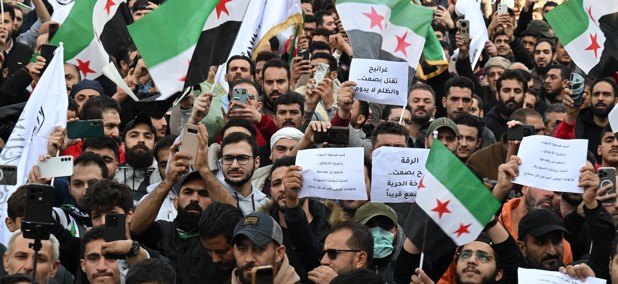
The United States has proposed establishing a military presence at an airbase near Damascus to enhance its efforts against the Islamic State (ISIS) and Iranian influence in the region. While this initiative signals a strengthening of ties with Syria’s new government, experts caution that it may not adequately protect U.S. interests. A presence in Damascus should serve as a complement to the ongoing partnership with the Syrian Democratic Forces (SDF), which plays a crucial role in preventing the resurgence of ISIS.
The concentration of ISIS activity is primarily in northeastern Syria, where approximately 9,000 ISIS fighters and their families are detained. Most of these individuals are held in facilities near Hasakah and Shaddadi, with nearly 85 percent confined to two prisons. These locations represent significant vulnerabilities, as evidenced by the 2022 Hasakah prison break, which took two weeks to control despite U.S. air support and intelligence. The SDF, bolstered by U.S. funding and training, has been instrumental in managing these detention sites for over a decade.
The threat posed by ISIS extends beyond these detention facilities. In March, an ISIS suicide bomber attacked a church in Damascus, resulting in 25 deaths and 63 injuries. Syrian authorities have recently thwarted two plots targeting President Bashar al-Assad and arrested over 70 ISIS suspects during nationwide operations. Incidents in the United States, including an ISIS-inspired attack in New Orleans, highlight the group’s ability to radicalize individuals beyond the Syrian border, underlining the necessity of maintaining pressure on ISIS and supporting local partners.
To effectively combat ISIS, the United States should continue to enhance the “by, with, and through” strategy that has positioned the SDF as the most effective counter-ISIS force in Syria. Sustaining this alliance through training, intelligence sharing, and operational support is vital to preventing the group from regrouping. This approach also signals to regional allies that the United States remains committed to a stable transition in Syria, rather than withdrawing prematurely.
The issue of managing detained ISIS fighters requires greater international cooperation. Currently, only 36 countries have repatriated nationals from northeastern Syria, while 21 have yet to initiate repatriation efforts. Extended detention raises the risk of radicalization and poses long-term humanitarian and security challenges. Iraq’s recent repatriation of about 25,000 citizens—approximately 80 percent of those detained in Syria—demonstrates the impact of decisive action. The U.S. should apply similar diplomatic pressure to secure financial contributions and expedite repatriation efforts, thereby alleviating the burden on the SDF and mitigating the threat these populations pose.
In addition to addressing ISIS, broader counterterrorism goals include curtailing Iranian support for Hezbollah, which poses a destabilizing threat to the region. Israeli intelligence has reported that Hezbollah has begun reestablishing supply lines through Syrian territory. Despite setbacks faced by Iran and Hezbollah, and the reduced influence of Russia, Tehran continues to seek ways to rebuild its operations.
This context makes it essential for the United States to maintain its partnership with the SDF, which, according to the Lead Inspector General for Operation Iraqi Freedom, currently controls most Iraqi-border crossings in eastern Syria. This positioning serves as a critical barrier against the flow of Iranian weapons into Lebanon. Beyond collaboration with the SDF, Washington should engage with the Syrian government and Israel to disrupt these supply routes. Providing intelligence, coordinating diplomatic efforts, and facilitating deconfliction can complicate Iran’s activities in the region.
Syria’s pivot away from reliance on Iran and Russia towards greater collaboration with Western partners offers a strategic opportunity. The Syrian government has a vested interest in limiting extremist groups and restoring security. Its decision to join the Global Coalition to Defeat ISIS reflects a willingness to cooperate with international stakeholders, and recent joint counter-ISIS operations with U.S. forces further illustrate this alignment.
While the partnership with the SDF and international cooperation are critical, challenges such as ISIS prison breaks and Iranian rearmament remain preventable. Addressing these issues requires ongoing support for the SDF, advancing global burden sharing, and actively countering Iranian arms flows. A premature withdrawal from Syria will not conclude U.S. involvement but rather set the stage for a more challenging return in the future.
As noted by Thomas Bergeson, a retired U.S. Air Force lieutenant general, and current insights from policy analysts like Jonah Brody, the path forward must prioritize strategic partnerships and proactive measures to foster regional stability.

Lenhartsville Couple Honors 4-H with Friend of 4-H Award

Hydesville Man, 65, Arrested for Attempted Homicide in Domestic Violence Case

WWE NXT Prepares for Deadline with Action-Packed Go-Home Show

U.S. Military Presence in Syria: A Strategic Move Against ISIS and Iran

Telework Satisfaction and Productivity Shift Post-COVID-19

Leslie Odom Jr. to Adapt Rolling Stone’s Sammy Davis Jr. Article into Horror Film

Bird Flu Detected in Galveston County; Health Risks Highlighted

Local Nonprofit Launches Holiday Donation Drive for Animals

Five Guns Seized, Four Arrested in Urgent I-95 Traffic Busts

ALMA Discovers Companion Orbiting Giant Red Star π 1 Gruis

New ‘Star Trek: Voyager’ Game Demo Released, Players Test Limits

Global Air Forces Ranked by Annual Defense Budgets in 2025

Mass Production of F-35 Fighter Jet Drives Down Costs

Electrification Challenges Demand Advanced Multiphysics Modeling

Gold Investment Surge: Top Mutual Funds and ETF Alternatives

Time Crystals Revolutionize Quantum Computing Potential

DirecTV to Launch AI-Driven Ads with User Likenesses in 2026

Freeport Art Gallery Transforms Waste into Creative Masterpieces
-
 Science3 weeks ago
ALMA Discovers Companion Orbiting Giant Red Star π 1 Gruis
-
 Top Stories2 months ago
New ‘Star Trek: Voyager’ Game Demo Released, Players Test Limits
-
 World2 months ago
Global Air Forces Ranked by Annual Defense Budgets in 2025
-
 World2 months ago
Mass Production of F-35 Fighter Jet Drives Down Costs
-
 World2 months ago
Electrification Challenges Demand Advanced Multiphysics Modeling
-
 Business2 months ago
Gold Investment Surge: Top Mutual Funds and ETF Alternatives
-
 Science2 months ago
Time Crystals Revolutionize Quantum Computing Potential
-
 Top Stories2 months ago
DirecTV to Launch AI-Driven Ads with User Likenesses in 2026
-
 Entertainment2 months ago
Freeport Art Gallery Transforms Waste into Creative Masterpieces
-

 Politics1 month ago
SEVENTEEN’s Mingyu Faces Backlash Over Alcohol Incident at Concert
-

 Business2 months ago
US Government Denies Coal Lease Bid, Impacting Industry Revival Efforts
-

 Health2 months ago
Gavin Newsom Critiques Trump’s Health and National Guard Plans