
Health
CDC Delays Vote on Controversial Hepatitis B Vaccine for Infants

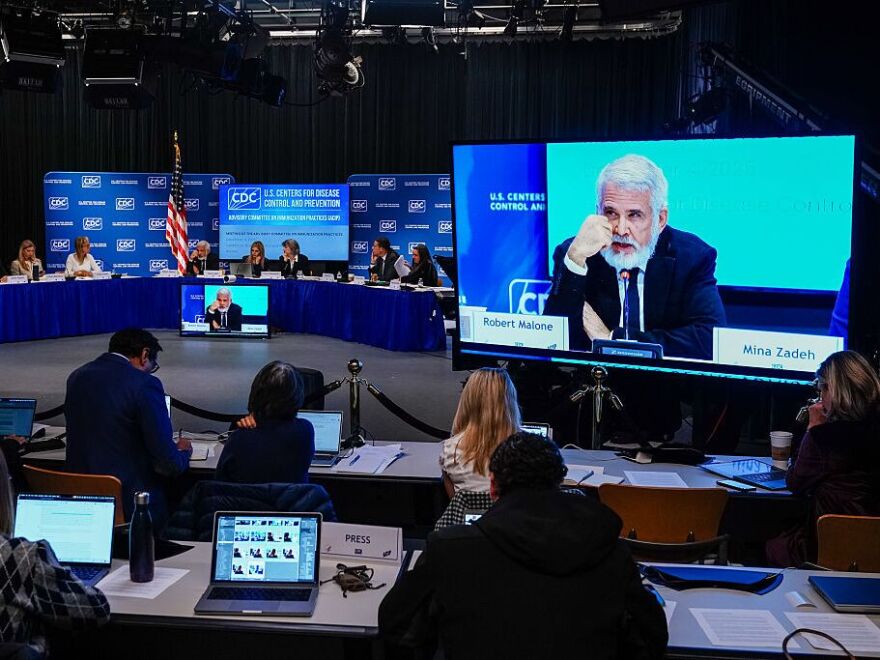
Vaccine advisers to the Centers for Disease Control and Prevention (CDC) postponed a crucial vote on Thursday regarding the recommendation for hepatitis B vaccination for infants. The delay, which has drawn attention due to the contentious nature of the discussion, was prompted by confusion over the wording of the proposed changes. The decision by the Advisory Committee on Immunization Practices (ACIP) to move the vote to Friday highlights ongoing divisions among committee members.
The meeting, which took place on March 14, 2025, was marked by notable conflict, with members expressing frustration over the evolving nature of the vote’s language. “This is the third version of the questions that we have received in 72 hours, and we’re trying to evaluate a moving target,” said Dr. Joseph Hibbeln, a psychiatrist and ACIP voting member. His remarks reflect a broader concern that the committee’s decision-making process has become increasingly chaotic.
The vote was set to address a long-standing recommendation advocating for the universal vaccination of healthy newborns against hepatitis B, irrespective of their mother’s hepatitis B status. This recommendation aims to protect at-risk infants and provide long-term immunity against a virus that can lead to severe health issues, including liver cancer and cirrhosis. Hepatitis B can be transmitted from mother to child during childbirth, and infections acquired in infancy pose significantly higher risks.
During the session, a divide emerged, with some committee members advocating for a change to the existing recommendation. Dr. Tracy Beth Høeg, a representative for the Food and Drug Administration, questioned the necessity of the universal vaccination policy. “Babies who are born without high-risk factors… for these babies, the potential for benefit is so low,” she stated, emphasizing that many high-income countries do not follow the same protocol.
In contrast, Dr. Cody Meissner, a professor of pediatrics at Dartmouth’s Geisel School of Medicine and a long-serving committee member, defended the current policy. He highlighted the success of the vaccination program in reducing hepatitis B cases in the United States, stating, “This disease has gone down in the United States, thanks to the effectiveness of our current immunization program.”
The discussion also drew criticism from non-voting liaisons representing medical professional organizations. Dr. Jason Goldman, a liaison for the American College of Physicians, expressed concern over the committee’s approach, urging members to adhere to their ethical obligation to “first, do no harm.” He accused the committee of promoting an agenda without adequate data and evidence to inform critical decisions regarding public health.
The postponement of the vote adds to a packed agenda for Friday, which includes discussions on the U.S. vaccine schedule in comparison to other nations and the safety of aluminum adjuvants used in vaccines. While many medical professionals assert that there is substantial evidence to support the safety of these aluminum compounds, concerns persist among certain groups regarding their potential link to health issues, such as asthma.
Public health experts have voiced worries that recent developments may contribute to a larger effort to undermine vaccine access in the United States. The ACIP’s recommendations hold significant influence over vaccination practices and insurance coverage, making the committee’s decisions critical for public health policy.
Since the appointment of new members in June 2025, the committee has faced scrutiny for its reduced collaboration with established medical organizations like the American Academy of Pediatrics. This shift has led to diminished trust among many in the mainstream medical community, further complicating the already contentious landscape of vaccine policy.
As the ACIP prepares for a potentially pivotal vote on the hepatitis B vaccine, the implications of their decision will resonate throughout the healthcare community and impact vaccination strategies across the nation.

Subaru Announces 2026 Trailseeker EV Starts Under $40,000 Now!

Northeast Arc Earns Top Workplace Honor Again, Ranking 14th in MA

Man Arrested After Fire Erupts at Food Lion in Fayetteville

Aetina Unveils Next-Gen MXM AI Modules Powered by NVIDIA Blackwell

Columbus Area Vertical Voices to Host Free Christmas Concert

CDC Delays Vote on Controversial Hepatitis B Vaccine for Infants

UC Davis Researchers Secure Funding for Pediatric Sarcoma Study

Mississippi Legislators Face Key Decisions on $100 Million Opioid Funds

New Research Suggests Ice-Nucleating Particles Can Cut Aviation Emissions

ALMA Discovers Companion Orbiting Giant Red Star π 1 Gruis

New ‘Star Trek: Voyager’ Game Demo Released, Players Test Limits

Global Air Forces Ranked by Annual Defense Budgets in 2025

Mass Production of F-35 Fighter Jet Drives Down Costs

Electrification Challenges Demand Advanced Multiphysics Modeling

SEVENTEEN’s Mingyu Faces Backlash Over Alcohol Incident at Concert

Gold Investment Surge: Top Mutual Funds and ETF Alternatives

Time Crystals Revolutionize Quantum Computing Potential

DirecTV to Launch AI-Driven Ads with User Likenesses in 2026
-
 Science3 weeks ago
ALMA Discovers Companion Orbiting Giant Red Star π 1 Gruis
-
 Top Stories2 months ago
New ‘Star Trek: Voyager’ Game Demo Released, Players Test Limits
-
 World2 months ago
Global Air Forces Ranked by Annual Defense Budgets in 2025
-
 World2 months ago
Mass Production of F-35 Fighter Jet Drives Down Costs
-
 World2 months ago
Electrification Challenges Demand Advanced Multiphysics Modeling
-
 Politics1 month ago
SEVENTEEN’s Mingyu Faces Backlash Over Alcohol Incident at Concert
-
 Business2 months ago
Gold Investment Surge: Top Mutual Funds and ETF Alternatives
-
 Science2 months ago
Time Crystals Revolutionize Quantum Computing Potential
-
 Top Stories2 months ago
DirecTV to Launch AI-Driven Ads with User Likenesses in 2026
-

 Entertainment2 months ago
Freeport Art Gallery Transforms Waste into Creative Masterpieces
-

 Business2 months ago
US Government Denies Coal Lease Bid, Impacting Industry Revival Efforts
-

 Health2 months ago
Gavin Newsom Critiques Trump’s Health and National Guard Plans