
Health
Pilot Program Uses Social Media to Find Kidney Donors

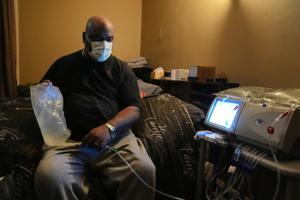
In a groundbreaking initiative, a pilot program in Pennsylvania is exploring the potential of social media to connect kidney disease patients with living organ donors. This innovative project, named the Great Social Experiment by its founder, filmmaker David Krissman, aims to leverage the networks of “angel advocates” — volunteers who use their social media platforms to share the stories of patients in need.
Fernando Moreno, a 50-year-old resident of Vineland, New Jersey, has been on dialysis for nearly two years. With his limited social circle, he has found his hopes pinned on ascending the national waiting list for a kidney transplant. However, with the assistance of the program, he is gaining optimism through increased outreach efforts. “This process is great,” Moreno stated, expressing his hope that someone will step forward to help.
The program began in May 2023, involving 15 patients from three hospitals in Pennsylvania, including Temple University Hospital, UPMC-Harrisburg, and Jefferson University Hospital. The objective is to improve the chances of finding living kidney donors, particularly for individuals like Moreno who may not have extensive social networks. “We know how this has always been done, and we’re trying to put that on steroids and really get them the help they need,” Krissman explained.
Support for this initiative comes from the Gift of Life Donor Program, which has provided over $100,000 in funding. So far, two of the five patients at Temple University Hospital have successfully found kidney donors, with one preparing for surgery. One patient at UPMC-Harrisburg has also undergone a transplant.
The program’s approach combines social media outreach with storytelling techniques to mobilize the connections of each patient. Richard Hasz Jr., the chief executive of Gift of Life, noted that this is a pioneering effort that may provide valuable insights into the messaging that resonates with potential donors. “This is the first of its kind that I’m aware of,” Hasz remarked.
Krissman’s interest in increasing living kidney donations stems from his own health struggles two decades ago. Following his recovery, he produced a podcast on kidney transplantation and initiated a previous project in North Carolina that successfully matched all three patients with living donors. The current pilot program aims to connect patients with a broader audience, utilizing videos and other media to spread their messages.
Living kidney donations are significant because they often result in better compatibility and lower rejection rates compared to organs from deceased donors. In the United States, around 90,000 individuals are currently on the waiting list for a kidney transplant, yet only about 6,400 living kidney donations were made last year. Many patients waiting for transplants struggle with health issues that limit their ability to seek donors independently.
The initiative has also attracted the attention of past living donors who have become angel advocates. Francis Beaumier, a double living donor from Green Bay, Wisconsin, sees the program as a valuable opportunity for individuals to contribute to the lives of others. “It’s a great little way for everyone to make a small difference,” he said. Another advocate, Holly Armstrong, hopes her efforts will inspire others to take action. “Some people might just keep scrolling… but there might be someone like me, where they stop scrolling and say, ‘This person needs a kidney,’” she explained.
Research published last year indicates that the risks associated with living kidney donation are lower than previously thought. Tracking data over 30 years, researchers found that fewer than 1 in every 10,000 donors died within three months of surgery, attributing this decrease to advancements in surgical techniques.
At a recent kickoff event in Harrisburg, family and friends gathered to support kidney patient Ahmad Collins, who has been reliant on dialysis since late 2022. Collins, formerly a linebacker at Penn State, remains hopeful about the potential for strangers to step in and help him. “They can be a superhero, so to speak,” he said.
With the potential for this program to expand, Becca Brown, the director of transplant services at UPMC-Harrisburg, believes it could significantly impact the future of kidney donations. “There’s potential for this to really snowball,” Brown stated, expressing her eagerness to see how this innovative approach can be rolled out to support more patients in need.

Robinhood Stock Surges 2.5% in Early Trading on March 17

Israel Intensifies Strikes as Global Energy Crisis Looms

CALV Offers Class on Communication Skills for Real Estate Professionals

Historic Bideford Pub Reopens as The Patch Wine Bar & Kitchen

Oscar Night Celebrations: Winners, Guests, and Exclusive After-Parties

Samsung Galaxy Watch 9 Set for Larger Battery Boost, Report Reveals

Kibble vs. Fresh Dog Food: What’s Best for Your Dog’s Health?

Acclaimed San Francisco Pizzeria Del Popolo to Close in May

‘Invincible’ Season 4 Launches on Prime Video with Epic Action

ALMA Discovers Companion Orbiting Giant Red Star π 1 Gruis

Doctoral Candidate Trivanni Yadav Advances Battery Research at UTulsa

Rev. Bry Shields to Retire as McGill-Toolen President in 2026

Global Air Forces Ranked by Annual Defense Budgets in 2025

Tucson Celebrates Life and Remembrance at 36th Annual All Souls Procession

Mass Production of F-35 Fighter Jet Drives Down Costs

Gold Investment Surge: Top Mutual Funds and ETF Alternatives

Maumee’s Shop With a Hero Event Delivers Joy to Local Children

DirecTV to Launch AI-Driven Ads with User Likenesses in 2026
-
 Science9 months ago
ALMA Discovers Companion Orbiting Giant Red Star π 1 Gruis
-
 Science9 months ago
Doctoral Candidate Trivanni Yadav Advances Battery Research at UTulsa
-
 Lifestyle10 months ago
Rev. Bry Shields to Retire as McGill-Toolen President in 2026
-
 World10 months ago
Global Air Forces Ranked by Annual Defense Budgets in 2025
-
 Lifestyle10 months ago
Tucson Celebrates Life and Remembrance at 36th Annual All Souls Procession
-
 World10 months ago
Mass Production of F-35 Fighter Jet Drives Down Costs
-
 Business10 months ago
Gold Investment Surge: Top Mutual Funds and ETF Alternatives
-
 Lifestyle8 months ago
Maumee’s Shop With a Hero Event Delivers Joy to Local Children
-
 Top Stories10 months ago
DirecTV to Launch AI-Driven Ads with User Likenesses in 2026
-

 Sports8 months ago
Lawrence Launches Winterfest Skating Rink and Hot Chocolate Chalet
-

 Lifestyle8 months ago
Cape May Shines as New Jersey’s Only Entry on Beach Town List
-

 Entertainment10 months ago
Paul Giamatti Reveals Villainous Role in Star Trek: Starfleet Academy