
Top Stories
South Korea’s Judicial Reforms Face Criticism from Experts

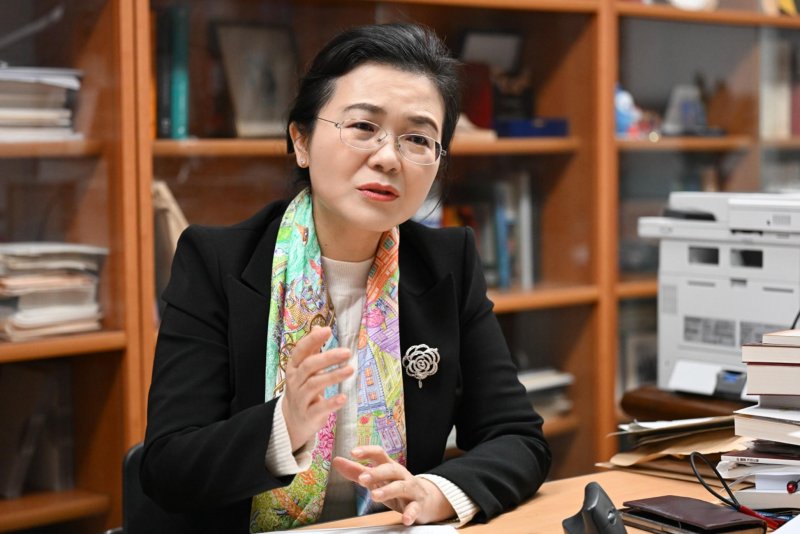
UPDATE: An urgent warning has emerged from a leading legal expert in South Korea as concerns mount over proposed judicial reforms. Cha Jin-ah, a law professor at Korea University, cautioned that reforms backed by the ruling party could severely undermine judicial independence and disrupt the balance of power.
In an interview earlier today, Cha emphasized, “Unchecked power leads to dictatorship,” highlighting the potential risks of simultaneous processing of multiple reform bills. The proposed changes include expanding the number of Supreme Court justices, establishing a special court for treason, and introducing a controversial new crime of “distorting the law.”
Cha, who has a background as a constitutional researcher at the Constitutional Court, supports some reform ideas but warns that the details raise significant concerns. “Increasing the number of justices is necessary, but doubling their number raises suspicions of political manipulation,” she stated. Currently, the ruling party’s plan could see an increase of 12 justices, which Cha argues would facilitate blatant political appointments.
The urgency of this issue cannot be overstated. Cha highlighted that the proposed court petition system could inundate the Constitutional Court with cases, overwhelming its capacity to filter legitimate claims. “If all final judgments alleged to violate due process are subject to review, how can the court manage that influx?” she questioned.
As the ruling party pushes for these reforms, potential constitutional violations are at the forefront of the debate. Cha described plans for a special court for treason as fundamentally unconstitutional, warning that it could lead to predetermined outcomes in politically charged trials. She stated, “Fair trials become meaningless; it becomes a tool for politically crushing opposition.”
Another contentious point is the introduction of the crime of distorting the law, which Cha likened to a “barbaric” measure reminiscent of Germany’s past under the Nazi regime. “This could result in endless exploitation, where officials may feel pressured to conform to political narratives to avoid criminal repercussions,” she cautioned.
Cha’s concerns extend to the proposed abolition of the court administration office, suggesting that such moves strip judicial authority from the courts themselves. “Judicial power includes administration – it’s essential to maintaining the system,” she asserted.
As these reform bills advance, the question remains: what can stop their passage? Cha believes only a robust public outcry can halt what she describes as a legislative rampage. “Elections don’t equate to unchallenged power. Democracy requires ongoing public vigilance and opposition accountability,” she urged.
This developing story highlights a critical moment for South Korea’s judicial integrity, with potential implications for democracy itself. As the public and lawmakers continue to navigate these reforms, the stakes have never been higher.
Stay tuned for further updates as this situation unfolds.

Central-Phenix City Flag Football Team Crowned USA Today’s Best

Australian Police Thwart Second Terror Plot Near Bondi Beach

Dallas Eyes Economic Growth with Proposed Rail Network Merger

Austin Meade’s Musical Journey: From Preacher’s Son to Rock Star

Silent Dengue Infections Offer Insights for Future Vaccine Development

Fashion Luminaries Dazzle at Arc of San Diego’s Winter Wonderland

Federal Judge Orders Urgent Hearing in Diamantis Legal Fee Dispute

18 States Announce Major SNAP Restrictions by 2026 – What’s Next?

Brother of Rams Star Puka Nacua Arrested for Car Theft

ALMA Discovers Companion Orbiting Giant Red Star π 1 Gruis

SEVENTEEN’s Mingyu Faces Backlash Over Alcohol Incident at Concert

New ‘Star Trek: Voyager’ Game Demo Released, Players Test Limits

Global Air Forces Ranked by Annual Defense Budgets in 2025

Electrification Challenges Demand Advanced Multiphysics Modeling

Mass Production of F-35 Fighter Jet Drives Down Costs

Gold Investment Surge: Top Mutual Funds and ETF Alternatives

Time Crystals Revolutionize Quantum Computing Potential

DirecTV to Launch AI-Driven Ads with User Likenesses in 2026
-
 Science1 month ago
ALMA Discovers Companion Orbiting Giant Red Star π 1 Gruis
-
 Politics2 months ago
SEVENTEEN’s Mingyu Faces Backlash Over Alcohol Incident at Concert
-
 Top Stories2 months ago
New ‘Star Trek: Voyager’ Game Demo Released, Players Test Limits
-
 World2 months ago
Global Air Forces Ranked by Annual Defense Budgets in 2025
-
 World2 months ago
Electrification Challenges Demand Advanced Multiphysics Modeling
-
 World2 months ago
Mass Production of F-35 Fighter Jet Drives Down Costs
-
 Business2 months ago
Gold Investment Surge: Top Mutual Funds and ETF Alternatives
-
 Science2 months ago
Time Crystals Revolutionize Quantum Computing Potential
-
 Top Stories2 months ago
DirecTV to Launch AI-Driven Ads with User Likenesses in 2026
-

 Entertainment2 months ago
Freeport Art Gallery Transforms Waste into Creative Masterpieces
-

 Business2 months ago
US Government Denies Coal Lease Bid, Impacting Industry Revival Efforts
-

 Health2 months ago
Gavin Newsom Critiques Trump’s Health and National Guard Plans