
World
Revolutionary Gel Developed to Repair Tooth Enamel and Combat Cavities

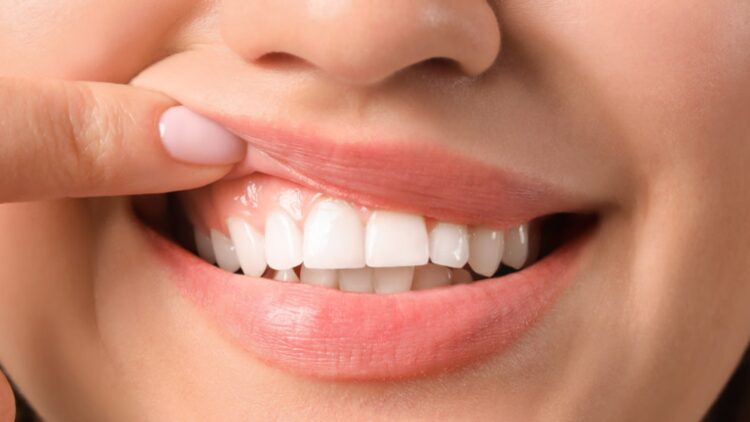
Researchers from the University of Nottingham in the United Kingdom have made a significant advancement in dentistry with the development of a new gel that has the potential to repair tooth enamel and eliminate cavities. This innovative enamel-regenerating gel, detailed in a study published in Nature Communications, could transform how dental professionals address tooth decay.
The gel works by mimicking natural processes of enamel formation. According to Abshar Hasan, a pharmaceutical scientist involved in the research, the gel can fill cavities and restore the tooth’s natural enamel structure. This process leverages proteins known as elastin-like recombinamers, or ELRs, which replicate the natural proteins called amelogenins that are crucial in the formation of enamel.
Mechanism of Action
The gel promotes the growth of dental enamel through a process called epitaxial mineralization. Laboratory tests have shown promising results, indicating that when the gel is applied to demineralized or eroded enamel, it encourages organized crystal growth. This restoration mimics the architecture of healthy enamel, providing a protective layer against further decay.
“When our material is applied to demineralized or eroded enamel, or to exposed dentin, it promotes crystal growth in an integrated and organized way,” Hasan explained. “This restores the architecture of our healthy natural enamel.” The gel utilizes calcium and phosphate from saliva to facilitate the formation of new enamel crystals.
Future Implications and Next Steps
While this research is not the first to seek effective solutions for cavity treatment, it stands out as one of the most promising developments to date. The potential applications of this gel extend beyond mere repair; it could pave the way for growing entire teeth in laboratory settings for future transplants.
To advance their research, the team has established a start-up dedicated to further developing this technology. Currently, all tests have been conducted in laboratory settings, with plans for small-scale human trials on the horizon. Researchers assert that “these results suggest that our technology could provide a one-stop solution for dental enamel regeneration regardless of the level of dental erosion.”
As this exciting research progresses, it could change the landscape of dental care, offering patients a quick and effective method to combat cavities before they become severe. The implications of this gel could lead to significant advancements in oral health, reflecting a broader trend in regenerative medicine.

Bitcoin Plummets Below $88K Amid Tether Controversy

Tottenville Falls Short in PSAL 4A Title Game Against Erasmus

Shark Teeth Reveal Urgent Insights to Prevent Extinction Now

Englewood Church Members Rally After Thanksgiving Day Fire

Mayor Appoints Alan Wong as New District 4 Supervisor

UK Universities Embrace AI to Revolutionize Research Evaluation

Mikaela Shiffrin Claims 104th World Cup Victory at Copper Mountain

Trump Promises MRI Results Amid Uncertainty Over Scan Details

U.S. Investors Boost Canadian Energy Stocks Amid Low Oil Prices

New ‘Star Trek: Voyager’ Game Demo Released, Players Test Limits

Global Air Forces Ranked by Annual Defense Budgets in 2025

Mass Production of F-35 Fighter Jet Drives Down Costs

ALMA Discovers Companion Orbiting Giant Red Star π 1 Gruis

Electrification Challenges Demand Advanced Multiphysics Modeling

Gold Investment Surge: Top Mutual Funds and ETF Alternatives

Time Crystals Revolutionize Quantum Computing Potential

DirecTV to Launch AI-Driven Ads with User Likenesses in 2026

Freeport Art Gallery Transforms Waste into Creative Masterpieces
-
 Top Stories2 months ago
New ‘Star Trek: Voyager’ Game Demo Released, Players Test Limits
-
 World2 months ago
Global Air Forces Ranked by Annual Defense Budgets in 2025
-
 World2 months ago
Mass Production of F-35 Fighter Jet Drives Down Costs
-
 Science2 weeks ago
ALMA Discovers Companion Orbiting Giant Red Star π 1 Gruis
-
 World2 months ago
Electrification Challenges Demand Advanced Multiphysics Modeling
-
 Business2 months ago
Gold Investment Surge: Top Mutual Funds and ETF Alternatives
-
 Science2 months ago
Time Crystals Revolutionize Quantum Computing Potential
-
 Top Stories2 months ago
DirecTV to Launch AI-Driven Ads with User Likenesses in 2026
-
 Entertainment2 months ago
Freeport Art Gallery Transforms Waste into Creative Masterpieces
-

 Business2 months ago
US Government Denies Coal Lease Bid, Impacting Industry Revival Efforts
-

 Health1 month ago
Gavin Newsom Critiques Trump’s Health and National Guard Plans
-

 Lifestyle1 month ago
Discover Reese Witherspoon’s Chic Dining Room Style for Under $25