
Top Stories
Kissing Dates Back 21 Million Years, New Study Reveals Urgently

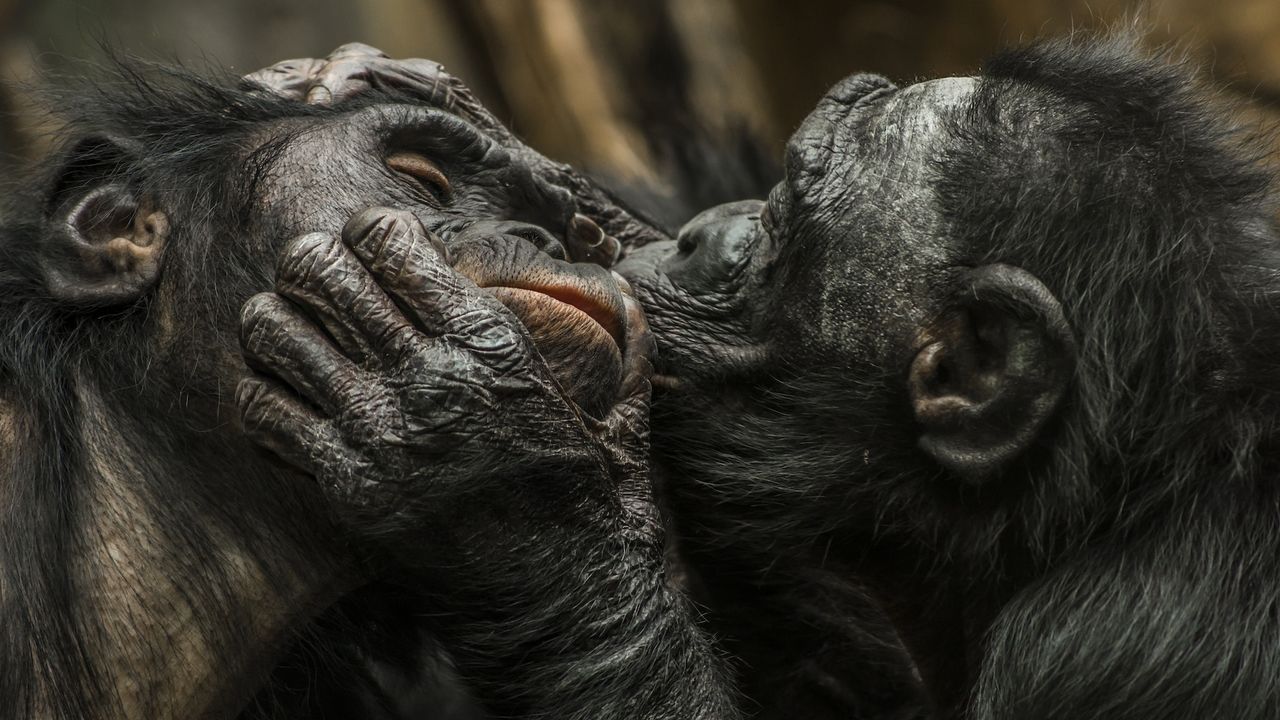
UPDATE: A groundbreaking study reveals that the act of kissing dates back approximately 21 million years, predating modern humans. This urgent discovery, published on November 19 in the journal Evolution and Human Behavior, suggests that kissing originated with the common ancestor of humans and large apes, highlighting a vital aspect of our evolutionary history.
Researchers from the University of Oxford, led by evolutionary biologist Matilda Brindle, utilized advanced modeling techniques to trace the origins of kissing. This study not only positions kissing as a long-standing behavior but also indicates that Neanderthals, our closest extinct relatives, engaged in this intimate act—potentially even with Homo sapiens.
Why does this matter now? Understanding the biological roots of kissing provides profound insights into human behavior and social bonds. The research emphasizes that kissing is not merely a modern phenomenon but a complex trait that has evolved over millions of years.
The international team defined kissing as “non-aggressive, mouth-to-mouth contact that did not involve food transfer,” distinguishing it from similar behaviors observed in primates, such as food-sharing among mother orangutans and chimpanzees. They employed a statistical method called Bayesian modeling, running simulations 10 million times to ensure the reliability of their findings.
According to the study, kissing likely evolved in the common ancestor of large apes between 21.5 million and 16.9 million years ago. However, it’s noted that kissing was absent in the ancestral groups of macaques and baboons, indicating that this behavior developed separately in these species.
Interestingly, the researchers propose that kissing may have evolved from the practice of mothers pre-chewing food for their infants, which transitioned into the affectionate act recognized today. This connection to early nurturing behaviors adds an emotional layer to the understanding of human interactions.
Despite the findings, some experts urge caution. April Nowell, a Paleolithic archaeologist at the University of Victoria, remarked that the study does not significantly advance our knowledge of Neanderthal behavior but aligns with previous research indicating that Neanderthals and modern humans may have shared intimate moments. In 2017, a study comparing the microbes in the dental plaque of a Neanderthal and modern humans suggested they may have kissed, although shared food could also explain the microbial overlap.
While evidence of kissing among Neanderthals is intriguing, it’s essential to recognize that kissing is not universally practiced among modern humans—only about half of cultures engage in it. This variability may have existed in the past, as Nowell suggests that kissing could have been a behavior adopted by some Neanderthal communities and not others.
As scientists continue to explore the evolutionary significance of kissing, they ponder its benefits, including enhancing reproductive success through chemical cues that signal health and compatibility. Kissing may also strengthen social bonds and even improve immunity through the exchange of beneficial microbes.
This vital research sheds light on the deep-rooted connections between human behaviors and our evolutionary past, prompting further questions about the role of intimacy in shaping social structures across species.
Stay tuned for more updates as this story develops, and share your thoughts on the significance of kissing in human history!

Urgent Fire at Indigo Apartments in OKC Leaves Residents Shaken

Arlene Hartman Passes Away at 87, Leaving Lasting Legacy

Urgent: Vehicle Fire Closes Lanes on I-215 in Salt Lake City

Boise State Faces UNLV in Urgent MWC Championship Showdown

Hallmark’s ‘Christmas at the Catnip Café’ Premieres Today!

Millville Woman Arrested for Threatening U-Haul Worker with Baton

Japan’s PM Takaichi Vows Fiscal Management Amid Economic Shift

Bitcoin Plummets Below $88K Amid Tether Controversy

Tottenville Falls Short in PSAL 4A Title Game Against Erasmus

New ‘Star Trek: Voyager’ Game Demo Released, Players Test Limits

Global Air Forces Ranked by Annual Defense Budgets in 2025

ALMA Discovers Companion Orbiting Giant Red Star π 1 Gruis

Mass Production of F-35 Fighter Jet Drives Down Costs

Electrification Challenges Demand Advanced Multiphysics Modeling

Gold Investment Surge: Top Mutual Funds and ETF Alternatives

Time Crystals Revolutionize Quantum Computing Potential

DirecTV to Launch AI-Driven Ads with User Likenesses in 2026

Freeport Art Gallery Transforms Waste into Creative Masterpieces
-
 Top Stories2 months ago
New ‘Star Trek: Voyager’ Game Demo Released, Players Test Limits
-
 World2 months ago
Global Air Forces Ranked by Annual Defense Budgets in 2025
-
 Science2 weeks ago
ALMA Discovers Companion Orbiting Giant Red Star π 1 Gruis
-
 World2 months ago
Mass Production of F-35 Fighter Jet Drives Down Costs
-
 World2 months ago
Electrification Challenges Demand Advanced Multiphysics Modeling
-
 Business2 months ago
Gold Investment Surge: Top Mutual Funds and ETF Alternatives
-
 Science2 months ago
Time Crystals Revolutionize Quantum Computing Potential
-
 Top Stories2 months ago
DirecTV to Launch AI-Driven Ads with User Likenesses in 2026
-
 Entertainment2 months ago
Freeport Art Gallery Transforms Waste into Creative Masterpieces
-

 Business2 months ago
US Government Denies Coal Lease Bid, Impacting Industry Revival Efforts
-

 Health2 months ago
Gavin Newsom Critiques Trump’s Health and National Guard Plans
-

 Lifestyle2 months ago
Discover Reese Witherspoon’s Chic Dining Room Style for Under $25