
Science
Adventurers Seek Meaning in Danger, Study Reveals Insights

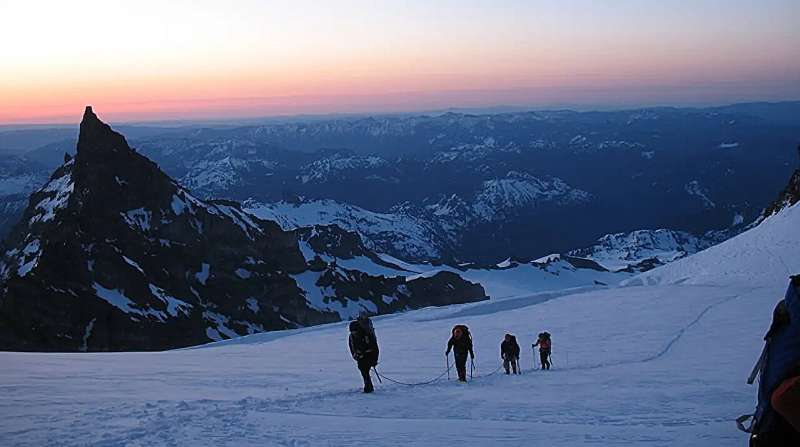
Climbing challenging mountains or navigating treacherous terrains can be life-threatening, yet many individuals are irresistibly drawn to such extreme adventures. A recent study conducted by a team of researchers, led by Christopher Newman from the University of Mississippi, explores the psychological motivations behind this thrilling pursuit. The findings suggest a deeper connection between risk-taking and personal fulfillment in adventure tourism.
The research, published in the journal Psychology & Marketing, stems from Newman’s personal experience of climbing Mount Rainier, the highest peak in the Cascade Mountain Range at 14,441 feet. The expedition, which included 21 climbers, revealed the intense dangers associated with high-altitude climbing, such as blinding snowstorms and hidden crevasses. Newman noted that approximately one in four climbers on their journey did not reach the summit due to injuries or a lack of preparation.
Newman and his collaborators, including Steven W. Kopp from the University of Arkansas and Justine Rapp Farrell and Kenneth Bates from the University of San Diego, sought to understand why individuals willingly engage in such hazardous activities. Traditional consumer research often focuses on immediate thrills, but this study aimed to delve into the long-term psychological benefits derived from high-risk experiences.
Exploring the Psychology of Adventure
The research team utilized terror management theory to assess the appeal of these demanding activities. They posited that climbers engage in adventure sports as a means of confronting their mortality, ultimately seeking an enduring sense of satisfaction and identity transformation. In interviews with climbers, they found that the process of preparation and teamwork offered significant rewards, often outweighing the adrenaline rush associated with danger.
Newman emphasized that many adventurers do not pursue danger for its own sake. Instead, they find joy in demonstrating competence and control while navigating risks. “Experiences that challenge your mortality can offer intangible benefits that other, less risky experiences simply cannot,” he said. This perspective shifts the narrative around extreme sports, highlighting that success lies in effective risk management and preparation rather than recklessness.
Climbers reported that the awareness of their mortality during these adventures heightened their experiences, fostering a stronger sense of identity and community. According to Newman, “You tend to strongly adhere to the values and behaviors of others like you who are facing the same danger.” Engaging in disciplined preparation not only boosts self-esteem but also reinforces a climber’s identity.
Implications for Adventure Tourism
The findings could significantly impact how adventure tourism is marketed. Ken Cyree, dean of the School of Business Administration at the University of Mississippi, noted that the research provides valuable insights for tour operators aiming to attract thrill-seekers. By understanding the motivations behind adventurers’ choices, businesses can tailor their offerings to meet the psychological needs of potential clients.
Kopp added that the preparation involved in adventure pursuits is integral to the overall experience. “The preparation involved in the search for the perfect gear was intimately tied to the actual ‘service’ and anticipation of the guided climb,” he explained. Consumers derive satisfaction not just from the experience itself but from the journey leading up to it, encompassing physical training and financial planning.
As climbers continue to seek meaning through extreme sports, the insights from this study may encourage individuals to appreciate the transient nature of life, prompting them to forge meaningful relationships and create lasting impacts in their communities. The research underscores the notion that adventure is not merely about the thrill of danger, but about the profound personal growth that accompanies confronting one’s limits.
The full study, titled “Love Affair With Thin Air: Mortality, Mastery, and the Consumerism of Mountaineering,” can be found in the journal Psychology & Marketing for those interested in exploring this fascinating intersection of adventure and psychology further.

Debate Dynamics: Bregman and Haaland Gear Up for Gubernatorial Race

University of Arizona Identifies Key Immune Cell Linked to Fibrosis

Titans Lead 2026 NFL Draft Race, Raiders and Saints Lurk Behind

Delta A350 Diverts to Tokyo After Hydraulic Emergency Mid-Flight

Zacks Research Lowers Earnings Forecast for Avanos Medical

“All’s Fair Season 1 Episode 7 to Release on December 2, 2025”

Rolette Record Sold to Cando Editors, New Era Begins

Urgent Fire at Indigo Apartments in OKC Leaves Residents Shaken

Arlene Hartman Passes Away at 87, Leaving Lasting Legacy

New ‘Star Trek: Voyager’ Game Demo Released, Players Test Limits

Global Air Forces Ranked by Annual Defense Budgets in 2025

ALMA Discovers Companion Orbiting Giant Red Star π 1 Gruis

Mass Production of F-35 Fighter Jet Drives Down Costs

Electrification Challenges Demand Advanced Multiphysics Modeling

Gold Investment Surge: Top Mutual Funds and ETF Alternatives

Time Crystals Revolutionize Quantum Computing Potential

DirecTV to Launch AI-Driven Ads with User Likenesses in 2026

Freeport Art Gallery Transforms Waste into Creative Masterpieces
-
 Top Stories2 months ago
New ‘Star Trek: Voyager’ Game Demo Released, Players Test Limits
-
 World2 months ago
Global Air Forces Ranked by Annual Defense Budgets in 2025
-
 Science2 weeks ago
ALMA Discovers Companion Orbiting Giant Red Star π 1 Gruis
-
 World2 months ago
Mass Production of F-35 Fighter Jet Drives Down Costs
-
 World2 months ago
Electrification Challenges Demand Advanced Multiphysics Modeling
-
 Business2 months ago
Gold Investment Surge: Top Mutual Funds and ETF Alternatives
-
 Science2 months ago
Time Crystals Revolutionize Quantum Computing Potential
-
 Top Stories2 months ago
DirecTV to Launch AI-Driven Ads with User Likenesses in 2026
-
 Entertainment2 months ago
Freeport Art Gallery Transforms Waste into Creative Masterpieces
-

 Business2 months ago
US Government Denies Coal Lease Bid, Impacting Industry Revival Efforts
-

 Health2 months ago
Gavin Newsom Critiques Trump’s Health and National Guard Plans
-

 Lifestyle2 months ago
Discover Reese Witherspoon’s Chic Dining Room Style for Under $25