
Politics
President Johnson Takes Oath, Shapes Supreme Court on Nov. 22, 1963

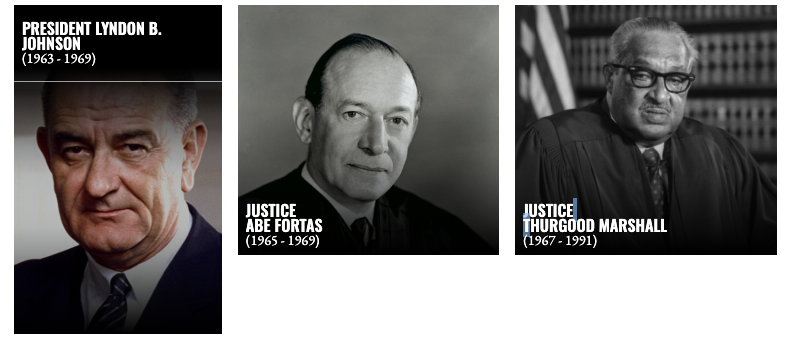
On November 22, 1963, Lyndon B. Johnson was sworn in as the 36th President of the United States following the assassination of John F. Kennedy. This pivotal moment not only marked a significant transition in leadership but also set the stage for critical changes in the Supreme Court, as Johnson would later appoint two influential Justices: Abe Fortas and Thurgood Marshall.
Johnson’s Immediate Response to a National Crisis
The oath of office took place on Air Force One at Dallas Love Field Airport, emphasizing the tension and urgency of the situation. Johnson, who had been serving as Vice President, quickly had to navigate the nation through its grief and uncertainty. His immediate actions would define his presidency and influence the judicial landscape of the United States.
In the years following his swearing-in, Johnson focused on a domestic agenda that included civil rights and social reforms. His appointments to the Supreme Court were integral to his vision of a more equitable society. Abe Fortas, who had been a close advisor to Johnson, was appointed in 1965. Fortas brought a progressive approach to the Court, advocating for the rights of individuals and the importance of civil liberties.
A Landmark Appointment: Thurgood Marshall
The most notable appointment made by Johnson came in 1967 when he nominated Thurgood Marshall as the first African American Justice on the Supreme Court. Marshall’s contributions to civil rights law, particularly as the chief counsel for the NAACP, positioned him as a transformative figure in American history. His confirmation heralded a new era in which the Court would address issues related to race and equality more directly.
Both Fortas and Marshall would leave lasting legacies on the Supreme Court, shaping landmark decisions and advancing the cause of justice in various ways. Johnson’s influence on the judiciary was profound, as he aimed to reflect the changing values of the American public during a time of social upheaval.
The events of November 22, 1963, are a reminder of how political leadership can pivot in times of crisis and how such changes can reverberate through the judicial system for generations. As the nation reflects on this significant date, the impact of Johnson’s presidency continues to resonate, particularly through the lens of Supreme Court decisions that have shaped modern America.

Trump to Convene National Security Team on Venezuela Crisis Today

Thanksgiving Leftovers At Risk: Experts Warn About Turkey Safety

Hit-Boy Reveals Top 20 Nas Songs, Celebrating Hip-Hop’s Revival

Trump Issues Ultimatum to Maduro; Venezuela Closes Airspace

Evanescence Announces 2026 World Tour, Bay Area Date Set!

World CopperSmith and Anna Dinger Unveil Stunning Kitchen Renovation

Fever’s Candlelight Concerts Offer Up to 30% Off for Cyber Monday

Prepare for Tooth Extraction: Key Steps for a Smooth Process

Thomas University Celebrates New Inductees into Beta Beta Beta Honor Society

New ‘Star Trek: Voyager’ Game Demo Released, Players Test Limits

Global Air Forces Ranked by Annual Defense Budgets in 2025

ALMA Discovers Companion Orbiting Giant Red Star π 1 Gruis

Mass Production of F-35 Fighter Jet Drives Down Costs

Electrification Challenges Demand Advanced Multiphysics Modeling

Gold Investment Surge: Top Mutual Funds and ETF Alternatives

Time Crystals Revolutionize Quantum Computing Potential

DirecTV to Launch AI-Driven Ads with User Likenesses in 2026

Freeport Art Gallery Transforms Waste into Creative Masterpieces
-
 Top Stories2 months ago
New ‘Star Trek: Voyager’ Game Demo Released, Players Test Limits
-
 World2 months ago
Global Air Forces Ranked by Annual Defense Budgets in 2025
-
 Science2 weeks ago
ALMA Discovers Companion Orbiting Giant Red Star π 1 Gruis
-
 World2 months ago
Mass Production of F-35 Fighter Jet Drives Down Costs
-
 World2 months ago
Electrification Challenges Demand Advanced Multiphysics Modeling
-
 Business2 months ago
Gold Investment Surge: Top Mutual Funds and ETF Alternatives
-
 Science2 months ago
Time Crystals Revolutionize Quantum Computing Potential
-
 Top Stories2 months ago
DirecTV to Launch AI-Driven Ads with User Likenesses in 2026
-
 Entertainment2 months ago
Freeport Art Gallery Transforms Waste into Creative Masterpieces
-

 Business2 months ago
US Government Denies Coal Lease Bid, Impacting Industry Revival Efforts
-

 Health2 months ago
Gavin Newsom Critiques Trump’s Health and National Guard Plans
-

 Politics1 month ago
SEVENTEEN’s Mingyu Faces Backlash Over Alcohol Incident at Concert