
Business
Australia’s LNG Industry Faces Local Challenges Despite Global Standing

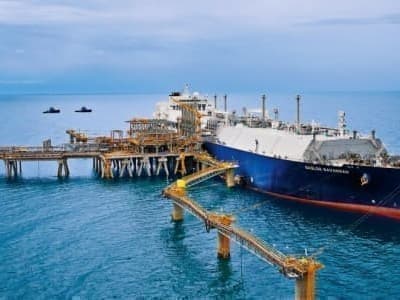
Australia remains a formidable player in the global liquefied natural gas (LNG) market, ranking as the world’s third-largest exporter, trailing only behind Qatar and the United States. However, the nation is grappling with significant local shortages that threaten to undermine its LNG success. While the upcoming start-up of the Barossa Project in September 2025, aimed at supplying the Darwin LNG facility, and ConocoPhillips‘ recent drilling achievements in the Otway Basin are positive developments, they do little to alleviate the broader structural challenges facing the industry.
The concentration of LNG production in regions such as Western Australia and Queensland presents logistical difficulties for meeting the energy needs of southeastern states. This geographical disparity exacerbates supply challenges as domestic demand continues to rise. The imbalance has raised concerns among industry analysts and policymakers about the sustainability of Australia’s LNG exports in the long term.
Recent statistics indicate that Australia’s LNG exports reached a record high of 81.2 million tonnes in 2022, generating approximately $63 billion AUD in revenue. Despite these impressive figures, local markets, particularly in the east, experience tightening supply and increasing prices. The situation has prompted discussions regarding energy policy reform and the need for investments in infrastructure to facilitate better distribution of LNG.
The Barossa Project, which is expected to commence production in September 2025, is pivotal for bolstering supply to the Darwin LNG plant. This project is anticipated to yield around 3.5 million tonnes of LNG annually. While it offers a glimmer of hope, the reliance on a few key projects poses risks, particularly if unforeseen delays or operational issues arise.
Furthermore, the success of ConocoPhillips’ drilling in the Otway Basin, which was recently hailed as a significant breakthrough, is not yet enough to bridge the gap between production and demand in the southeastern regions. The Otway Basin has potential, but its output is limited compared to the vast reserves located in other parts of the country.
The Australian government faces pressure to address the growing energy demands domestically while maintaining its commitment to international export markets. Some analysts argue that a reevaluation of current policies may be necessary to ensure that domestic supply issues do not compromise Australia’s standing in the global LNG arena.
In summary, while Australia continues to hold its position as a leading LNG exporter, the local shortages represent a critical challenge that could threaten its future in the global market. The upcoming Barossa Project and recent successes in the Otway Basin are steps in the right direction, but they highlight the urgent need for comprehensive strategies to address the ongoing supply and demand imbalance.

Lago Vista Issues Urgent Water Conservation Notice Amid Plant Failure

Urgent: Man Shot Dead in SoMa Near Civic Center in Midnight Attack

Study Links Hormone-Disrupting Chemicals to Skin Inflammation

Cape Cod Estate Near Kennedy Compound Hits Market at $21.5 Million

Trump’s Doctor Details MRI Findings from Annual Physical Exam

SpaceX Prepares for 60th Falcon 9 Launch from Vandenberg SFB

Giants Face Patriots in Key Monday Night Clash

Pakistan Petroleum Plans Artificial Island for Offshore Oil Production

Trump Urges Support in Crucial GOP Race Amid Polling Alarm

New ‘Star Trek: Voyager’ Game Demo Released, Players Test Limits

Global Air Forces Ranked by Annual Defense Budgets in 2025

ALMA Discovers Companion Orbiting Giant Red Star π 1 Gruis

Mass Production of F-35 Fighter Jet Drives Down Costs

Electrification Challenges Demand Advanced Multiphysics Modeling

Gold Investment Surge: Top Mutual Funds and ETF Alternatives

Time Crystals Revolutionize Quantum Computing Potential

DirecTV to Launch AI-Driven Ads with User Likenesses in 2026

Freeport Art Gallery Transforms Waste into Creative Masterpieces
-
 Top Stories2 months ago
New ‘Star Trek: Voyager’ Game Demo Released, Players Test Limits
-
 World2 months ago
Global Air Forces Ranked by Annual Defense Budgets in 2025
-
 Science2 weeks ago
ALMA Discovers Companion Orbiting Giant Red Star π 1 Gruis
-
 World2 months ago
Mass Production of F-35 Fighter Jet Drives Down Costs
-
 World2 months ago
Electrification Challenges Demand Advanced Multiphysics Modeling
-
 Business2 months ago
Gold Investment Surge: Top Mutual Funds and ETF Alternatives
-
 Science2 months ago
Time Crystals Revolutionize Quantum Computing Potential
-
 Top Stories2 months ago
DirecTV to Launch AI-Driven Ads with User Likenesses in 2026
-
 Entertainment2 months ago
Freeport Art Gallery Transforms Waste into Creative Masterpieces
-

 Business2 months ago
US Government Denies Coal Lease Bid, Impacting Industry Revival Efforts
-

 Politics1 month ago
SEVENTEEN’s Mingyu Faces Backlash Over Alcohol Incident at Concert
-

 Health2 months ago
Gavin Newsom Critiques Trump’s Health and National Guard Plans