
Science
Blue Origin Unveils Plans for Super Heavy Rocket to Rival Starship

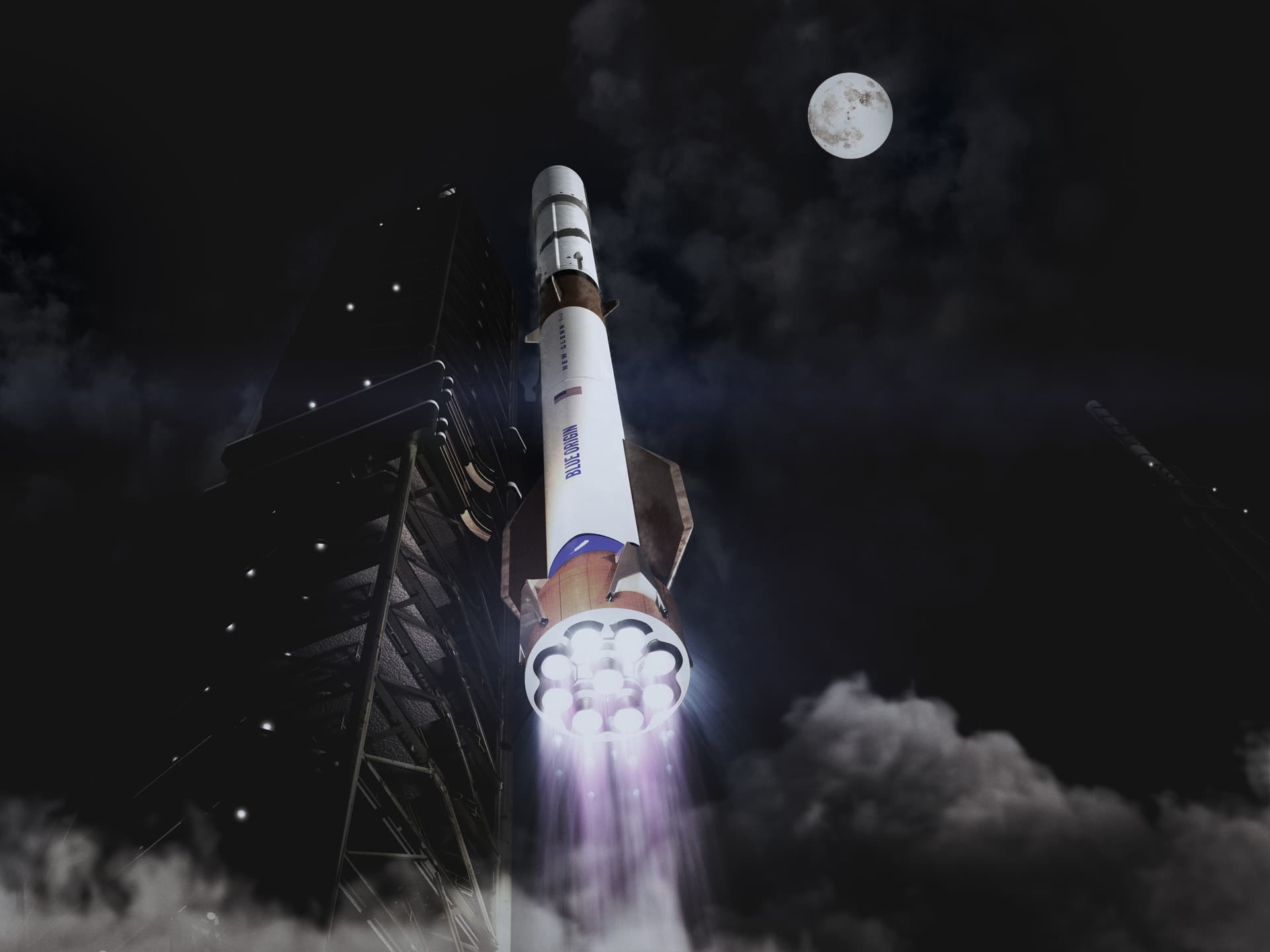
On November 13, 2023, Blue Origin successfully launched its partially reusable New Glenn rocket, marking a significant milestone in the company’s ambitions. The mission delivered NASA’s ESCAPADE payload, which consists of twin satellites designed to study the interaction between solar wind and Mars’ magnetic environment. This launch, designated NG-2, not only fulfilled its mission objectives but also saw the company retrieve the rocket’s first stage, demonstrating the New Glenn system’s capability for partial reusability.
Following this successful launch, Blue Origin outlined a series of enhancements for the New Glenn rocket aimed at improving its performance and competitiveness in the evolving space launch market. The company announced plans to develop a “super-heavy” variant of the rocket, designated New Glenn 9×4, which will feature increased power and a larger payload fairing.
Next-Generation Enhancements for New Glenn
The upgrades for the New Glenn rocket will include higher-performing engines, with the new BE-4 booster engines expected to deliver an impressive thrust of 2,847 kN (642,850 lbf) each. This marks an increase from the current capacity of 2,400 kN (550,000 lbf) per engine, resulting in a total thrust of approximately 19,928 kN (4.5 million lbf). Blue Origin has already demonstrated capabilities of up to 2,780 kN (625,000 lbf) on the test stand.
The BE-3U thrusters, which power the rocket’s upper stage, will also see enhancements, increasing thrust from 1,423 kN (320,000 lbf) to 1,779 kN (400,000 lbf). The phased introduction of these upgraded engines is expected to begin with the next launch, NG-3, while the BE-3U upgrades will be integrated over subsequent missions.
In addition to the engine improvements, the New Glenn 9×4 will feature a larger payload fairing measuring 8.7 meters in diameter, compared to the current 7 meters. This enhanced design will enable the rocket to deliver up to 70 metric tons to Low Earth Orbit (LEO), 14 metric tons to Geosynchronous Orbit (GSO), and 20 metric tons for Trans-Lunar Injection (TLI) missions.
Competing in a Growing Market
Blue Origin’s advancements come at a time when the competitive landscape for commercial space launches is intensifying. The global satellite launch market is projected to reach a value of $35.95 billion by 2030, prompting several new players to enter the field. The company aims to enhance its launch cadence and performance to secure a significant share of this burgeoning industry.
Additionally, Blue Origin is set to play a crucial role in NASA’s Artemis Program, particularly for the upcoming Artemis V and VI missions. While the specifics beyond Artemis III remain uncertain, recent budget proposals suggest a shift towards outsourcing more of NASA’s launch and crewed spacecraft needs to commercial partners. Acting NASA Director Sean Duffy has indicated the agency will seek competitive bids for Human Landing Systems (HLS), citing delays in the development of SpaceX’s Starship.
Blue Origin also intends to pursue additional contracts with NASA for deep space exploration missions, similar to the recent ESCAPADE project, as well as national security initiatives like the Golden Dome program. With these strategic developments, the company is positioning itself as a formidable competitor in the ever-evolving space exploration landscape.

Fayetteville Woman Launches Urgent Food Pantry for Families

Dollar Tree Launches $1.50 Organizers, Transforming Home Storage

Uber Driver Shot in Head Released from Hospital, Police Confirm

Orono Seeks Public Input on Urgent $11.6M Funding Plan

USDA Reviews All Programs to Restrict Food Stamp Access

Ancient Shell Trumpets Unveil Prehistoric Communication Methods

Lane Kiffin Leaves Ole Miss for LSU Amid Fan Backlash

Pope Leo XIV Visits Turkey and Lebanon, Promotes Faith and Unity

Chicago Homeowners Face Rising Property Taxes as Deadline Nears

New ‘Star Trek: Voyager’ Game Demo Released, Players Test Limits

Global Air Forces Ranked by Annual Defense Budgets in 2025

ALMA Discovers Companion Orbiting Giant Red Star π 1 Gruis

Mass Production of F-35 Fighter Jet Drives Down Costs

Electrification Challenges Demand Advanced Multiphysics Modeling

Gold Investment Surge: Top Mutual Funds and ETF Alternatives

Time Crystals Revolutionize Quantum Computing Potential

DirecTV to Launch AI-Driven Ads with User Likenesses in 2026

Freeport Art Gallery Transforms Waste into Creative Masterpieces
-
 Top Stories2 months ago
New ‘Star Trek: Voyager’ Game Demo Released, Players Test Limits
-
 World2 months ago
Global Air Forces Ranked by Annual Defense Budgets in 2025
-
 Science2 weeks ago
ALMA Discovers Companion Orbiting Giant Red Star π 1 Gruis
-
 World2 months ago
Mass Production of F-35 Fighter Jet Drives Down Costs
-
 World2 months ago
Electrification Challenges Demand Advanced Multiphysics Modeling
-
 Business2 months ago
Gold Investment Surge: Top Mutual Funds and ETF Alternatives
-
 Science2 months ago
Time Crystals Revolutionize Quantum Computing Potential
-
 Top Stories2 months ago
DirecTV to Launch AI-Driven Ads with User Likenesses in 2026
-
 Entertainment2 months ago
Freeport Art Gallery Transforms Waste into Creative Masterpieces
-

 Business2 months ago
US Government Denies Coal Lease Bid, Impacting Industry Revival Efforts
-

 Politics1 month ago
SEVENTEEN’s Mingyu Faces Backlash Over Alcohol Incident at Concert
-

 Health2 months ago
Gavin Newsom Critiques Trump’s Health and National Guard Plans