
Politics
Abbott Backs Trump’s National Guard Deployment, Defying His Stance

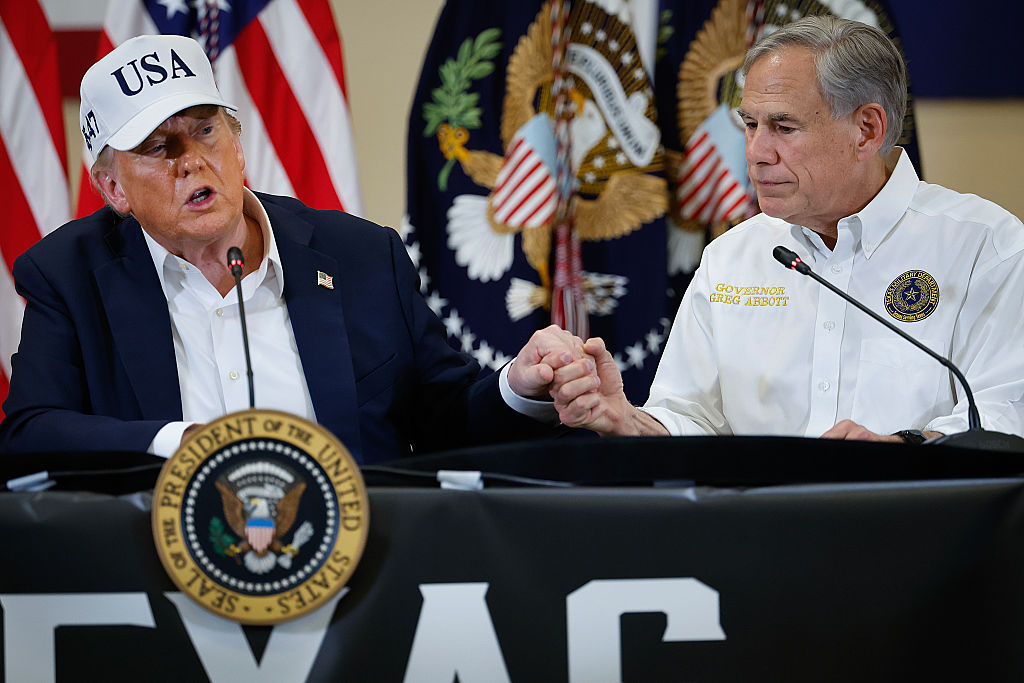
Texas Governor Greg Abbott has taken a controversial step by endorsing Donald Trump’s plan to deploy National Guard troops from Texas to Illinois and Oregon. This decision comes as a stark contrast to Abbott’s previous stance against federal overreach. Last year, he vocally opposed a Biden administration initiative that aimed to transfer Air National Guard units to the newly established U.S. Space Force, branding it an “intolerable threat.”
In a recent statement, Abbott asserted that he “fully authorized” the deployment of Texas National Guard members to assist federal law enforcement personnel enforcing immigration laws. This action has drawn criticism from governors in both Illinois and Oregon, who argue that it undermines state sovereignty and escalates tensions unnecessarily.
Abbott defended his decision during an appearance on Fox News, stating that the president is within his rights to mobilize guard members to preserve public safety. He emphasized a longstanding collaborative relationship with Trump, noting that they are “operating very closely aligned on ensuring that our country is going to be safe.” This alignment has positioned Abbott as a key ally of Trump as the latter explores the boundaries of executive authority.
Shifting Perspectives on State Sovereignty
Historically, Abbott has championed state rights, particularly in opposition to what he deemed executive overreach by the federal government. In a detailed essay published in January 2016, he criticized former President Barack Obama for bypassing Congress through executive orders related to climate change and immigration policy. Abbott argued that the Constitution was designed to empower states to challenge federal authority.
Yet, his recent actions signal a significant shift. Victoria Nourse, a constitutional expert at Georgetown University Law Center, highlighted this contradiction, stating that Abbott’s approach prioritizes short-term political gains over the long-term interests of Texas. She warned that while Abbott may support Trump now, future administrations could exploit this precedent to further erode state authority.
Abbott’s support for Trump’s deployment of National Guard troops reflects a broader trend described by Jessica Bulman-Pozen, a constitutional law professor at Columbia University. She termed it “partisan federalism,” where state leaders’ commitment to defending their sovereignty fluctuates based on the political party in power at the national level. This trend raises concerns about the diminishing role of governors in managing law enforcement and state matters.
Criticism from Peers and Legal Challenges
Abbott’s decision has not only faced backlash from his political opponents but also from fellow Republican governors. Oklahoma Governor Kevin Stitt expressed surprise over Abbott’s actions, emphasizing the importance of state rights and cooperation among states. Legal experts, including Ron Beal, a retired law professor at Baylor University, have criticized Abbott’s support for federal troop deployment as a violation of state sovereignty and an infringement on constitutional principles.
While Abbott’s administration has defended the legality of the troop mobilization under a unique interpretation of federal law, the deployment remains in limbo. Federal judges in Oregon and Illinois have temporarily halted the deployments, asserting that they violate the 10th Amendment, which reserves powers not granted to the federal government for the states.
The ongoing litigation has left Texas National Guard members in a state of uncertainty, unable to fulfill their intended roles under Trump’s directive. A ruling from the U.S. Supreme Court regarding this matter is anticipated, which could further impact the situation in Oregon and Illinois.
In a political landscape characterized by partisan divides, Abbott’s shifting position on federal power raises significant questions about the future of state authority and the balance of power within the U.S. governance structure. As he prepares for a potential fourth term in office, the implications of his collaboration with Trump could resonate well beyond his administration, shaping the relationship between state and federal powers for years to come.
The evolving dynamics of this situation underscore the complex interplay of state and federal authority, highlighting the potential risks of prioritizing political alliances over constitutional principles.

Virginia High School Football Semifinals Scheduled for Saturday

Central Indiana Faces Hazardous Snowfall: 2-4 Inches Expected Tonight

CSS Women’s Hockey Falls 3-1 to UW-Eau Claire in Urgent Showdown

49ers Dominate Browns 26-8 in Windy Cleveland Showdown

FDA Warns Millions Over Lead-Contaminated Cookware List

New Ownership Energizes Fargo’s Chick-fil-A with Fresh Vision

Exciting New Movie Trailers Released: Anticipation Builds

Regeneron Partners with Tessera Therapeutics in $150M Deal

Enhance Your Impact: 10 Guidelines for Effective Charity Giving

New ‘Star Trek: Voyager’ Game Demo Released, Players Test Limits

Global Air Forces Ranked by Annual Defense Budgets in 2025

ALMA Discovers Companion Orbiting Giant Red Star π 1 Gruis

Mass Production of F-35 Fighter Jet Drives Down Costs

Electrification Challenges Demand Advanced Multiphysics Modeling

Gold Investment Surge: Top Mutual Funds and ETF Alternatives

Time Crystals Revolutionize Quantum Computing Potential

DirecTV to Launch AI-Driven Ads with User Likenesses in 2026

Freeport Art Gallery Transforms Waste into Creative Masterpieces
-
 Top Stories2 months ago
New ‘Star Trek: Voyager’ Game Demo Released, Players Test Limits
-
 World2 months ago
Global Air Forces Ranked by Annual Defense Budgets in 2025
-
 Science2 weeks ago
ALMA Discovers Companion Orbiting Giant Red Star π 1 Gruis
-
 World2 months ago
Mass Production of F-35 Fighter Jet Drives Down Costs
-
 World2 months ago
Electrification Challenges Demand Advanced Multiphysics Modeling
-
 Business2 months ago
Gold Investment Surge: Top Mutual Funds and ETF Alternatives
-
 Science2 months ago
Time Crystals Revolutionize Quantum Computing Potential
-
 Top Stories2 months ago
DirecTV to Launch AI-Driven Ads with User Likenesses in 2026
-
 Entertainment2 months ago
Freeport Art Gallery Transforms Waste into Creative Masterpieces
-

 Business2 months ago
US Government Denies Coal Lease Bid, Impacting Industry Revival Efforts
-

 Health2 months ago
Gavin Newsom Critiques Trump’s Health and National Guard Plans
-

 Lifestyle2 months ago
Discover Reese Witherspoon’s Chic Dining Room Style for Under $25