
World
Boeing’s 747SP: A Dive into the Airline Industry’s Ambitious Flop

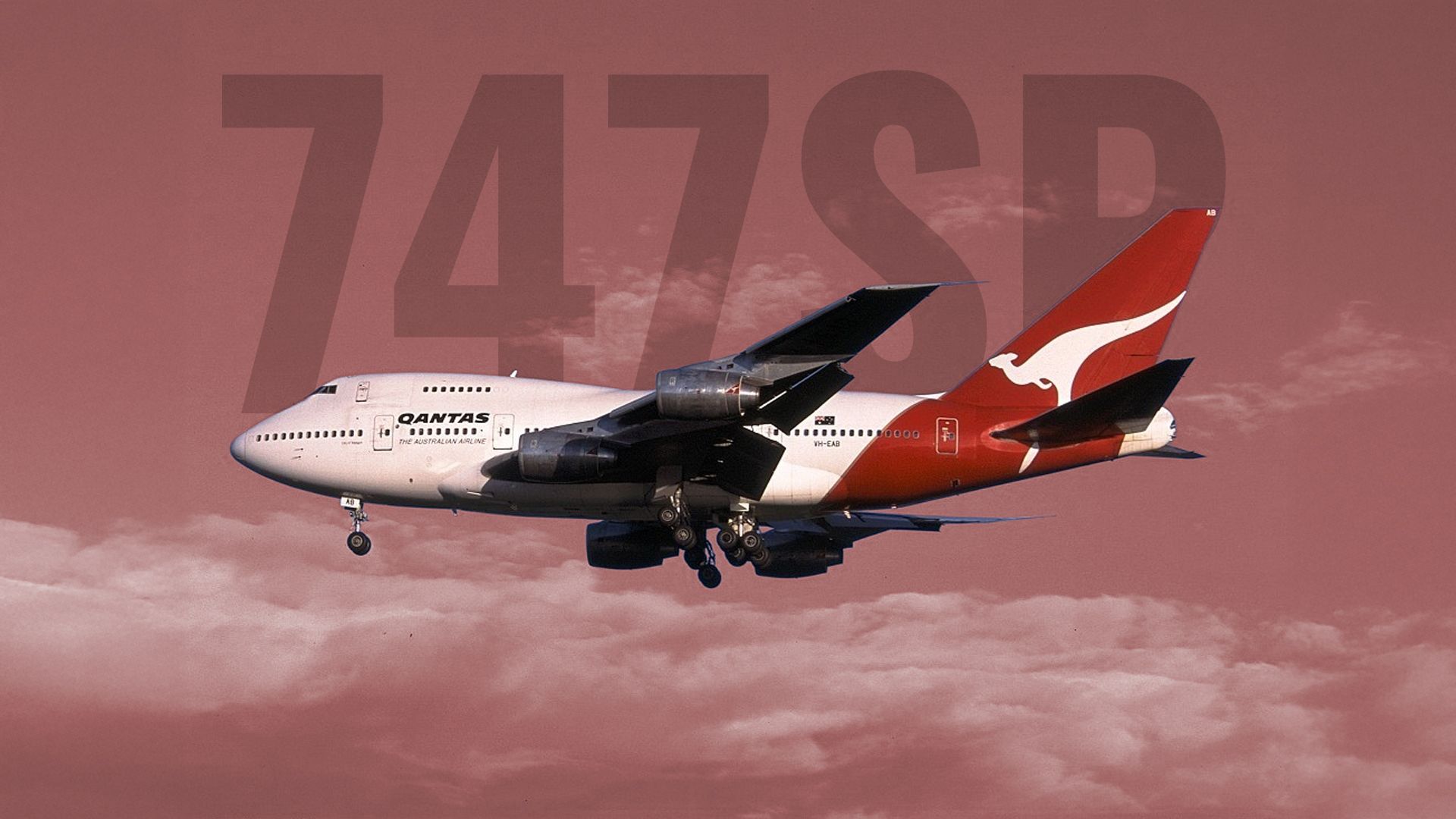
The Boeing 747, known as a pioneering subsonic airliner, saw a unique variant introduced in the late 1970s: the 747SP, or Special Performance. This model was a response to specific market demands and represented an innovative approach to long-haul travel. Ultimately, it became a fascinating case study in the complexities of aviation economics.
The 747SP was developed following requests from major airlines, notably Pan Am and Iran Air, for a large aircraft capable of flying nonstop between New York and Tehran. Launched in 1973, the 747SP was a scaled-down version of the 747-100, shrinking from a length of 231 feet 10 inches (70.6 meters) to 183 feet 3 inches (55.85 meters). Despite its smaller size, it retained a similar wingspan, allowing for a capacity to fly long distances.
The Design Innovations of the 747SP
The design process for the 747SP involved several modifications. Initial proposals considered converting the aircraft to a trijet design, but Boeing ultimately opted for a less radical approach. The aircraft featured a reduced Maximum Takeoff Weight compared to its predecessor, which contributed to lower fuel consumption. With a cruising range of up to 6,650 nautical miles (12,325 kilometers), the 747SP was capable of operating transpacific routes efficiently.
The aircraft’s field performance was another significant advantage. It excelled in takeoff and landing capabilities, which allowed airlines like Qantas to utilize the 747SP on routes with challenging airport conditions, such as Wellington in New Zealand. The 747SP’s operational flexibility appealed to a niche market.
Challenges and Market Reception
Despite its promising attributes, the 747SP faced obstacles upon entering service. Boeing initially projected a demand for 200 units based on the success of competing aircraft like the McDonnell Douglas DC-10 and Lockheed L-1011 TriStar, which each sold over 250 units. However, the 747SP launched in a tumultuous period for the airline industry, coinciding with the 1973 oil crisis that significantly raised fuel prices.
The economic environment revealed inherent weaknesses in the 747SP’s design. Although it was smaller and had improved field performance, its quadjet configuration made it less fuel-efficient compared to its trijet competitors. As fuel prices soared, airlines increasingly favored the operational cost savings of the 747-200, which continued to improve with advancements in engine technology.
The 747SP ultimately sold just 45 units, far below expectations. Its limited market presence underscored the challenges of introducing a derivative aircraft during a time of shifting economic conditions. Airlines struggled to justify the operational costs, leading to a decline in demand for the model.
The last commercial 747SP was produced in 1982, with one final VIP version completed in 1989. As the aviation landscape evolved, the 747-200 gained more capabilities, further diminishing the relevance of the 747SP.
In retrospect, the Boeing 747SP serves as a reminder of the complexities of the aviation industry. While it was designed to fill a specific market need with its long-range capabilities and enhanced performance, the economic realities of high fuel costs and competition ultimately led to its underwhelming success. As airlines continue to adapt to changing demands, the story of the 747SP remains a notable chapter in the history of commercial aviation.

Cyber Monday Countdown: Grab 25 Hot Deals Under $25 Now!

USTR Confirms Urgent Agreement on Pharma Pricing with UK

Transform: Auto Launches in Europe to Drive Supplier Decarbonization

CD Projekt Red Reveals Disappointing Update on The Witcher 4

Researchers Discover New Material to Treat Urinary Incontinence

dōTERRA Launches Together Touch Blend to Boost Global Giving

Researchers Develop Advanced Algorithm for Spacecraft Control

Virginia High School Football Semifinals Scheduled for Saturday

Central Indiana Faces Hazardous Snowfall: 2-4 Inches Expected Tonight

New ‘Star Trek: Voyager’ Game Demo Released, Players Test Limits

Global Air Forces Ranked by Annual Defense Budgets in 2025

ALMA Discovers Companion Orbiting Giant Red Star π 1 Gruis

Mass Production of F-35 Fighter Jet Drives Down Costs

Electrification Challenges Demand Advanced Multiphysics Modeling

Gold Investment Surge: Top Mutual Funds and ETF Alternatives

Time Crystals Revolutionize Quantum Computing Potential

DirecTV to Launch AI-Driven Ads with User Likenesses in 2026

Freeport Art Gallery Transforms Waste into Creative Masterpieces
-
 Top Stories2 months ago
New ‘Star Trek: Voyager’ Game Demo Released, Players Test Limits
-
 World2 months ago
Global Air Forces Ranked by Annual Defense Budgets in 2025
-
 Science2 weeks ago
ALMA Discovers Companion Orbiting Giant Red Star π 1 Gruis
-
 World2 months ago
Mass Production of F-35 Fighter Jet Drives Down Costs
-
 World2 months ago
Electrification Challenges Demand Advanced Multiphysics Modeling
-
 Business2 months ago
Gold Investment Surge: Top Mutual Funds and ETF Alternatives
-
 Science2 months ago
Time Crystals Revolutionize Quantum Computing Potential
-
 Top Stories2 months ago
DirecTV to Launch AI-Driven Ads with User Likenesses in 2026
-
 Entertainment2 months ago
Freeport Art Gallery Transforms Waste into Creative Masterpieces
-

 Business2 months ago
US Government Denies Coal Lease Bid, Impacting Industry Revival Efforts
-

 Health2 months ago
Gavin Newsom Critiques Trump’s Health and National Guard Plans
-

 Lifestyle2 months ago
Discover Reese Witherspoon’s Chic Dining Room Style for Under $25