
Politics
U.S. Deportation of DACA Recipients Raises Concerns Over Policy

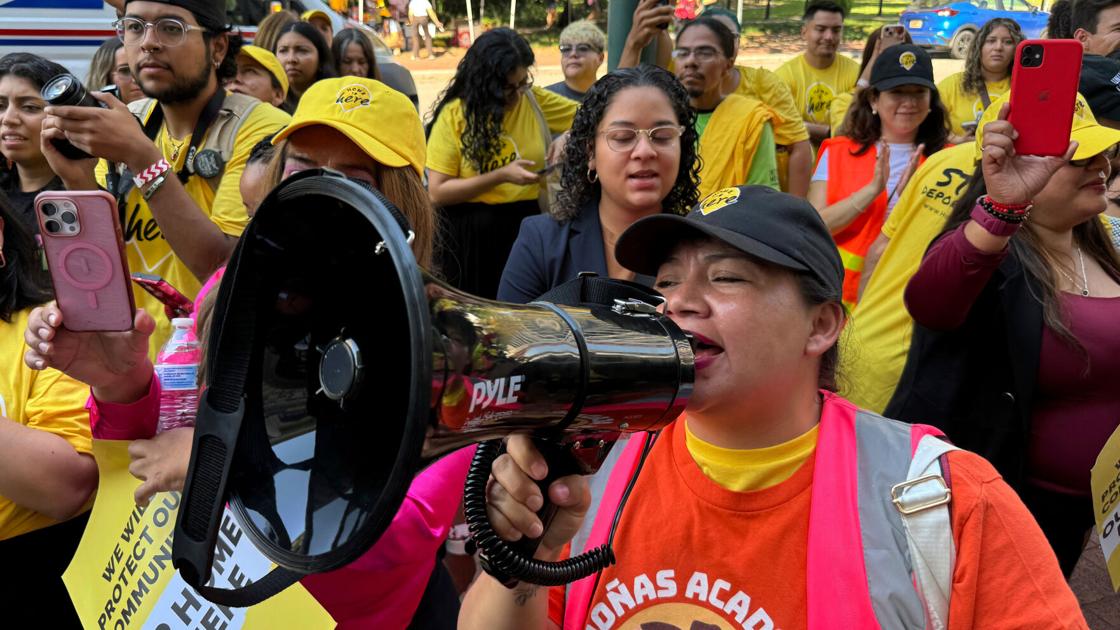
A series of recent incidents has highlighted a troubling shift in the enforcement of immigration policies affecting recipients of the Deferred Action for Childhood Arrivals (DACA) program. In October 2023, Yaakub Vijandre, a DACA recipient and mechanic, was arrested at his Dallas-area home by federal agents. This arrest is part of a broader trend that suggests a more aggressive stance towards DACA recipients under the current administration.
Vijandre’s arrest occurred as he was preparing for work when six vehicles arrived at his home. Agents reportedly detained him, citing social media posts as a reason for the action. The DACA program, initiated in 2012, was designed to protect individuals who were brought to the United States as children, allowing them to live and work without the fear of deportation. However, changes in immigration policy have led to heightened scrutiny of DACA recipients, particularly regarding their online activities.
The Trump administration has indicated that it will no longer provide warnings to DACA recipients if their status is at risk. Instead, individuals may face immediate detention. Tricia McLaughlin, Assistant Secretary for Homeland Security, stated that those claiming DACA status are not automatically protected from deportation. She emphasized that DACA does not grant legal status and that recipients can lose their protections for various reasons, including criminal activity.
Vijandre’s case is not isolated. According to the advocacy group Home is Here, approximately 20 DACA recipients have been arrested or detained since President Trump took office. This includes individuals like Catalina “Xóchitl” Santiago Santiago, who was arrested in August despite holding a valid DACA work permit. Santiago and another individual, Paulo Cesar Gamez Lira, were held for more than a month while their attorneys sought their release, raising concerns about the government’s procedures in these cases.
Critics argue that the administration’s actions indicate a deliberate effort to undermine the DACA program. Juliana Macedo do Nascimento, a spokesperson for the youth-led organization United We Dream, remarked that while it may not be an outright attempt to dismantle DACA, the administration is systematically eroding its protections.
Legal challenges to DACA have persisted since its inception. The program survived a major threat when the U.S. Supreme Court ruled in June 2020 that the Trump administration had not followed the proper legal procedures to rescind it. Yet, recent rulings from the 5th Circuit Court of Appeals have imposed new restrictions, including a decision that limits work permits for DACA recipients residing in Texas.
The situation for DACA recipients is further complicated by policy changes affecting their access to resources and rights. In the past year, 19 states led by Republican governors have sought to remove DACA recipients from health insurance programs under the Affordable Care Act. Additionally, the number of states offering in-state tuition to immigrant students has decreased significantly.
Legal representatives for DACA recipients contend that the government must provide valid reasons for any actions that threaten their clients’ status. Marisa Ong, an attorney representing both Santiago and Gamez Lira, asserted that the government had failed to present evidence of any past misconduct during their detention proceedings.
As the legal landscape continues to evolve, DACA recipients like Vijandre face uncertainty. He remains in a detention facility in Georgia, with the potential of deportation to the Philippines looming over him— a country he has not visited since he emigrated to the U.S. in 2001 at the age of 14. The gravity of this situation underscores the ongoing debate surrounding immigration policy and the future of DACA in the United States.

Urgent: Vehicle Fire Closes Lanes on I-215 in Salt Lake City

Boise State Faces UNLV in Urgent MWC Championship Showdown

Hallmark’s ‘Christmas at the Catnip Café’ Premieres Today!

Millville Woman Arrested for Threatening U-Haul Worker with Baton

Japan’s PM Takaichi Vows Fiscal Management Amid Economic Shift

Bitcoin Plummets Below $88K Amid Tether Controversy

Tottenville Falls Short in PSAL 4A Title Game Against Erasmus

Shark Teeth Reveal Urgent Insights to Prevent Extinction Now

Englewood Church Members Rally After Thanksgiving Day Fire

New ‘Star Trek: Voyager’ Game Demo Released, Players Test Limits

Global Air Forces Ranked by Annual Defense Budgets in 2025

ALMA Discovers Companion Orbiting Giant Red Star π 1 Gruis

Mass Production of F-35 Fighter Jet Drives Down Costs

Electrification Challenges Demand Advanced Multiphysics Modeling

Gold Investment Surge: Top Mutual Funds and ETF Alternatives

Time Crystals Revolutionize Quantum Computing Potential

DirecTV to Launch AI-Driven Ads with User Likenesses in 2026

Freeport Art Gallery Transforms Waste into Creative Masterpieces
-
 Top Stories2 months ago
New ‘Star Trek: Voyager’ Game Demo Released, Players Test Limits
-
 World2 months ago
Global Air Forces Ranked by Annual Defense Budgets in 2025
-
 Science2 weeks ago
ALMA Discovers Companion Orbiting Giant Red Star π 1 Gruis
-
 World2 months ago
Mass Production of F-35 Fighter Jet Drives Down Costs
-
 World2 months ago
Electrification Challenges Demand Advanced Multiphysics Modeling
-
 Business2 months ago
Gold Investment Surge: Top Mutual Funds and ETF Alternatives
-
 Science2 months ago
Time Crystals Revolutionize Quantum Computing Potential
-
 Top Stories2 months ago
DirecTV to Launch AI-Driven Ads with User Likenesses in 2026
-
 Entertainment2 months ago
Freeport Art Gallery Transforms Waste into Creative Masterpieces
-

 Business2 months ago
US Government Denies Coal Lease Bid, Impacting Industry Revival Efforts
-

 Health1 month ago
Gavin Newsom Critiques Trump’s Health and National Guard Plans
-

 Lifestyle1 month ago
Discover Reese Witherspoon’s Chic Dining Room Style for Under $25