
Business
Zimbabwe-Zambia Energy Summit Launches Amid Ongoing Crisis

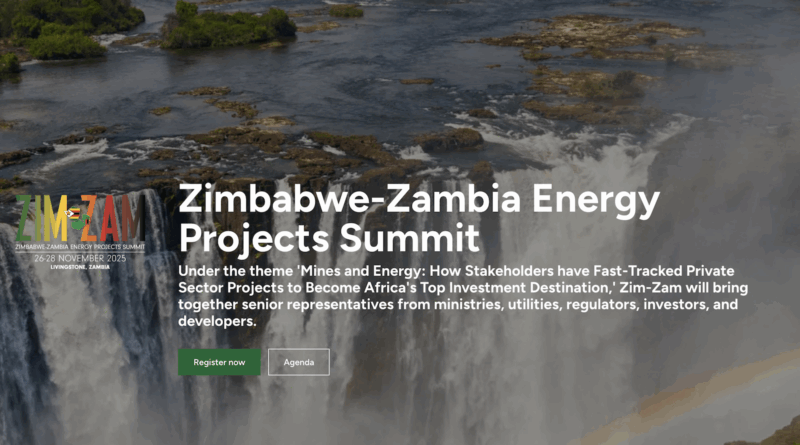
The Zimbabwe–Zambia Energy Projects Summit (ZimZam 2025) commenced today, November 26, and will continue until November 28, 2025, in Livingstone, Zambia. This conference is a crucial gathering for stakeholders in the energy sector, uniting policymakers, investors, and energy developers from both nations. Following the inaugural summit in Victoria Falls, Zimbabwe, last year, this event aims to address the persistent energy crisis affecting both countries.
Organised with the support of the African Union (AU) and the Southern African Development Community (SADC), the summit boasts significant backing from various sponsors, including Copperbelt Energy Corporation (CEC) as the Country Host, Petrodex as Summit Sponsor, and additional sponsorship from ZESCO and Standard Bank. The event is expected to serve as a key platform for sustainable investment and regional cooperation in the energy sector.
Despite the summit’s optimistic goals, the energy situation in Zimbabwe and Zambia remains dire. Both countries continue to grapple with extensive power outages, with many homes and businesses facing daily electricity rationing. In Zimbabwe, for instance, utility providers frequently cut off power from approximately 5:00 to 22:00, forcing many to rely on expensive diesel generators or alternative energy solutions. The situation in Zambia is reportedly even more severe, with reports indicating that some areas receive as little as two hours of electricity per day.
The ongoing generation shortfalls can largely be attributed to low water levels at the Kariba Dam, which has prompted the Zambezi River Authority to impose strict water use guidelines. Consequently, both the Zimbabwe Power Company (ZPC) and ZESCO have had to reduce their power generation capacities. For example, ZPC’s output at Kariba South has been capped at around 500 MW, well below its installed capacity of 1,050 MW, with potential reductions to as low as 250 MW depending on water allocation.
In the lead-up to this summit, various stakeholders expressed hope that tangible initiatives would emerge to enhance generation capacity in both nations. Makozo Chikote, Zambia’s Minister of Energy, is set to open the summit, emphasizing the country’s commitment to regional energy integration and collaboration between public and private sectors. During the summit, ZESCO plans to showcase recent policy reforms designed to boost investor confidence in the Zambian energy market.
According to Justin Loongo, Managing Director of ZESCO, “Zambia’s evolving energy policy has fundamentally improved investor confidence. Through open access and predictable tariffs, we’ve created an environment where public and private partners can deliver real progress.” The summit’s agenda will focus on financing the SADC Just Energy Transition Framework, enhancing interconnections, expanding renewable energy capacity, and promoting cross-border investments.
While the ambitions set forth at ZimZam 2025 are commendable, the urgency surrounding the energy crisis calls for accelerated action. Both nations have made strides in enhancing generation capacity, including the recent completion of the 750 MW Kafue Gorge Lower (KGL) hydro project in Zambia, and the $1.5 billion investment in a 600 MW power plant at Hwange in Zimbabwe. Nevertheless, significantly more capacity is required to meet the growing energy demands.
The long-discussed Batoka Gorge hydro project, which aims to establish two underground power stations with a combined capacity of 2,400 MW, has re-emerged as a focal point for future collaboration. Recent reports indicate that Zambia and Zimbabwe have selected Synergy Consulting as the lead financial advisor for the project, which is estimated to cost $4.5 billion. Synergy will assist in preparing requests for proposals and shortlisting potential bidders.
As both countries strive for economic growth, the urgency of addressing their energy challenges cannot be understated. The recent success of Ethiopia’s energy initiatives, including the commissioning of the 5,150 MW Grand Ethiopian Renaissance Dam (GERD), serves as a compelling example of what can be achieved with focused efforts. With the GERD now operational, Ethiopia is also advancing plans for the 1,800 MW Koysha hydropower plant, expected to be completed by 2029.
For Zimbabwe and Zambia, establishing a robust energy supply is essential for driving industrialisation and ensuring sustainable development. Both nations must not only enhance generation capacity but also address transmission and distribution challenges. The promotion of distributed solar energy, supported by net-metering policies allowing surplus energy to feed back into the grid, will be crucial in this endeavor.
While the regulatory environments in both countries are conducive to independent power producers, the time for expedited action on joint projects and collaborative solutions is now. The outcomes of the ZimZam 2025 summit could play a pivotal role in shaping the future of energy generation in Zimbabwe and Zambia, fostering a more resilient energy landscape for both nations.

Shark Teeth Reveal Urgent Insights to Prevent Extinction Now

Englewood Church Members Rally After Thanksgiving Day Fire

Mayor Appoints Alan Wong as New District 4 Supervisor

UK Universities Embrace AI to Revolutionize Research Evaluation

Mikaela Shiffrin Claims 104th World Cup Victory at Copper Mountain

Trump Promises MRI Results Amid Uncertainty Over Scan Details

U.S. Investors Boost Canadian Energy Stocks Amid Low Oil Prices

Nick Jonas Unveils Solo Album ‘Sunday Best’ Set for February Release

Mayor Lurie Appoints Alan Wong as New District 4 Supervisor

New ‘Star Trek: Voyager’ Game Demo Released, Players Test Limits

Global Air Forces Ranked by Annual Defense Budgets in 2025

Mass Production of F-35 Fighter Jet Drives Down Costs

ALMA Discovers Companion Orbiting Giant Red Star π 1 Gruis

Electrification Challenges Demand Advanced Multiphysics Modeling

Gold Investment Surge: Top Mutual Funds and ETF Alternatives

Time Crystals Revolutionize Quantum Computing Potential

DirecTV to Launch AI-Driven Ads with User Likenesses in 2026

Freeport Art Gallery Transforms Waste into Creative Masterpieces
-
 Top Stories2 months ago
New ‘Star Trek: Voyager’ Game Demo Released, Players Test Limits
-
 World2 months ago
Global Air Forces Ranked by Annual Defense Budgets in 2025
-
 World2 months ago
Mass Production of F-35 Fighter Jet Drives Down Costs
-
 Science2 weeks ago
ALMA Discovers Companion Orbiting Giant Red Star π 1 Gruis
-
 World2 months ago
Electrification Challenges Demand Advanced Multiphysics Modeling
-
 Business2 months ago
Gold Investment Surge: Top Mutual Funds and ETF Alternatives
-
 Science2 months ago
Time Crystals Revolutionize Quantum Computing Potential
-
 Top Stories2 months ago
DirecTV to Launch AI-Driven Ads with User Likenesses in 2026
-
 Entertainment2 months ago
Freeport Art Gallery Transforms Waste into Creative Masterpieces
-

 Business2 months ago
US Government Denies Coal Lease Bid, Impacting Industry Revival Efforts
-

 Health1 month ago
Gavin Newsom Critiques Trump’s Health and National Guard Plans
-

 Lifestyle1 month ago
Discover Reese Witherspoon’s Chic Dining Room Style for Under $25