
Politics
Chechnya Enforces New Dress Code Restrictions on Women

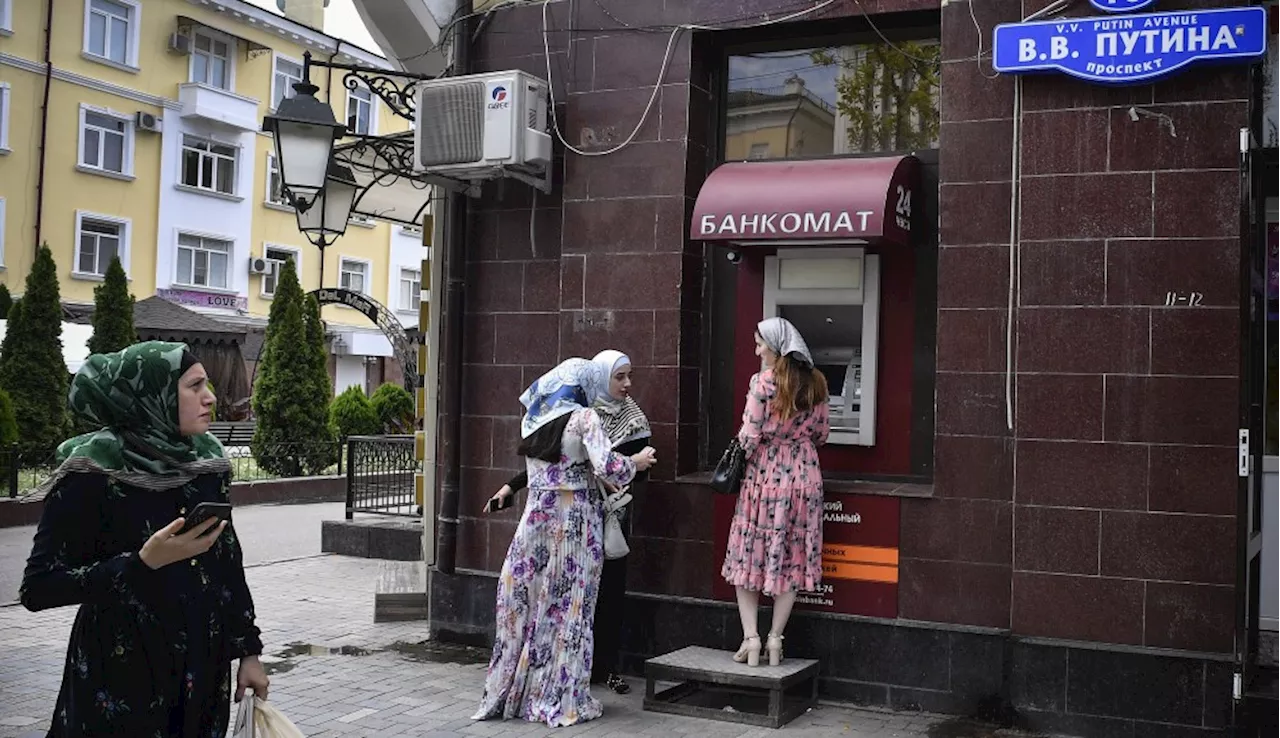
New restrictions imposed by authorities in Chechnya are significantly altering women’s fashion choices in the region. Under a directive from the Chechen Culture Ministry, the use of traditional **Gazyrs**, once utilized for storing gunpowder, has been banned for designers, as they are now deemed to contradict “traditional customs and cultural values.” This latest move is part of a broader effort to enforce specific dress codes for women.
In a recent social media statement, **Amir Sugaipov**, a Chechen Republic authority, advised women to adopt head scarves. He indicated that those who fail to comply could face “explanatory talks.” Sugaipov asserted, “From an aesthetic, religious, Chechen adat, tradition and customs perspective, a girl with a covered head looks much more dignified and beautiful.”
These developments have drawn criticism from various academics and fashion experts. **Susan Scafidi**, founder of The Fashion Law Institute, argued that such restrictions limit free speech and freedom of religion. She stated, “Women cannot be erased from society itself or even from civil discourse, but progressively requiring more and more coverage in public is akin to throwing a blanket over a birdcage to silence the trapped creature within.” Scafidi emphasized that defining sartorial details as masculine serves as a means of social control, reflecting authority.
Further contextualizing these restrictions, Scafidi highlighted similar political maneuvers globally. She compared Chechnya’s dress codes to **Donald Trump**’s “suit-shaming” of Ukrainian President **Volodymyr Zelenskyy**, proposed “anti-drag laws” in some U.S. states, and the Department of Transportation’s recent “dressing with respect” initiative for airline travelers. Scafidi remarked, “These can be seen as short steps from mandatory burkas in Afghanistan or burka and ‘burkini’ bans in France, depending on the regime in charge.” She expressed gratitude for the relative freedom of dress in other regions, hoping this form of expression receives the respect it deserves.
**Joseph Hancock**, a professor at **Drexel University**, noted the implications of shifting dress norms. He suggested that when men and women begin to adopt clothing styles that reflect the opposite gender, it represents a form of empowerment. He criticized the ideology behind the Chechen regulations, linking it to President **Vladimir Putin**’s broader agenda of fear and discrimination based on sexuality and gender expression in Russia.
Despite these setbacks, Hancock pointed to legislative progress in other areas, such as the recent passage of the **CROWN Act** in **Pennsylvania**. This law, which stands for “Creating a Respectful and Open World,” prohibits discrimination based on hair, marking a significant step forward in the fight against discrimination.
The situation in Chechnya underscores the ongoing tensions between cultural practices and individual freedoms, raising questions about the role of dress in expressing identity and autonomy. As restrictions tighten, the implications for women’s rights and freedom of expression become increasingly pronounced. The international community continues to observe these developments closely, as they reflect broader societal trends regarding gender and authority.

Shark Teeth Reveal Urgent Insights to Prevent Extinction Now

Englewood Church Members Rally After Thanksgiving Day Fire

Mayor Appoints Alan Wong as New District 4 Supervisor

UK Universities Embrace AI to Revolutionize Research Evaluation

Mikaela Shiffrin Claims 104th World Cup Victory at Copper Mountain

Trump Promises MRI Results Amid Uncertainty Over Scan Details

U.S. Investors Boost Canadian Energy Stocks Amid Low Oil Prices

Nick Jonas Unveils Solo Album ‘Sunday Best’ Set for February Release

Mayor Lurie Appoints Alan Wong as New District 4 Supervisor

New ‘Star Trek: Voyager’ Game Demo Released, Players Test Limits

Global Air Forces Ranked by Annual Defense Budgets in 2025

Mass Production of F-35 Fighter Jet Drives Down Costs

ALMA Discovers Companion Orbiting Giant Red Star π 1 Gruis

Electrification Challenges Demand Advanced Multiphysics Modeling

Gold Investment Surge: Top Mutual Funds and ETF Alternatives

Time Crystals Revolutionize Quantum Computing Potential

DirecTV to Launch AI-Driven Ads with User Likenesses in 2026

Freeport Art Gallery Transforms Waste into Creative Masterpieces
-
 Top Stories2 months ago
New ‘Star Trek: Voyager’ Game Demo Released, Players Test Limits
-
 World2 months ago
Global Air Forces Ranked by Annual Defense Budgets in 2025
-
 World2 months ago
Mass Production of F-35 Fighter Jet Drives Down Costs
-
 Science2 weeks ago
ALMA Discovers Companion Orbiting Giant Red Star π 1 Gruis
-
 World2 months ago
Electrification Challenges Demand Advanced Multiphysics Modeling
-
 Business2 months ago
Gold Investment Surge: Top Mutual Funds and ETF Alternatives
-
 Science2 months ago
Time Crystals Revolutionize Quantum Computing Potential
-
 Top Stories2 months ago
DirecTV to Launch AI-Driven Ads with User Likenesses in 2026
-
 Entertainment2 months ago
Freeport Art Gallery Transforms Waste into Creative Masterpieces
-

 Business2 months ago
US Government Denies Coal Lease Bid, Impacting Industry Revival Efforts
-

 Health1 month ago
Gavin Newsom Critiques Trump’s Health and National Guard Plans
-

 Lifestyle1 month ago
Discover Reese Witherspoon’s Chic Dining Room Style for Under $25