
Business
Chicago Homeowners Face Rising Property Taxes as Deadline Nears

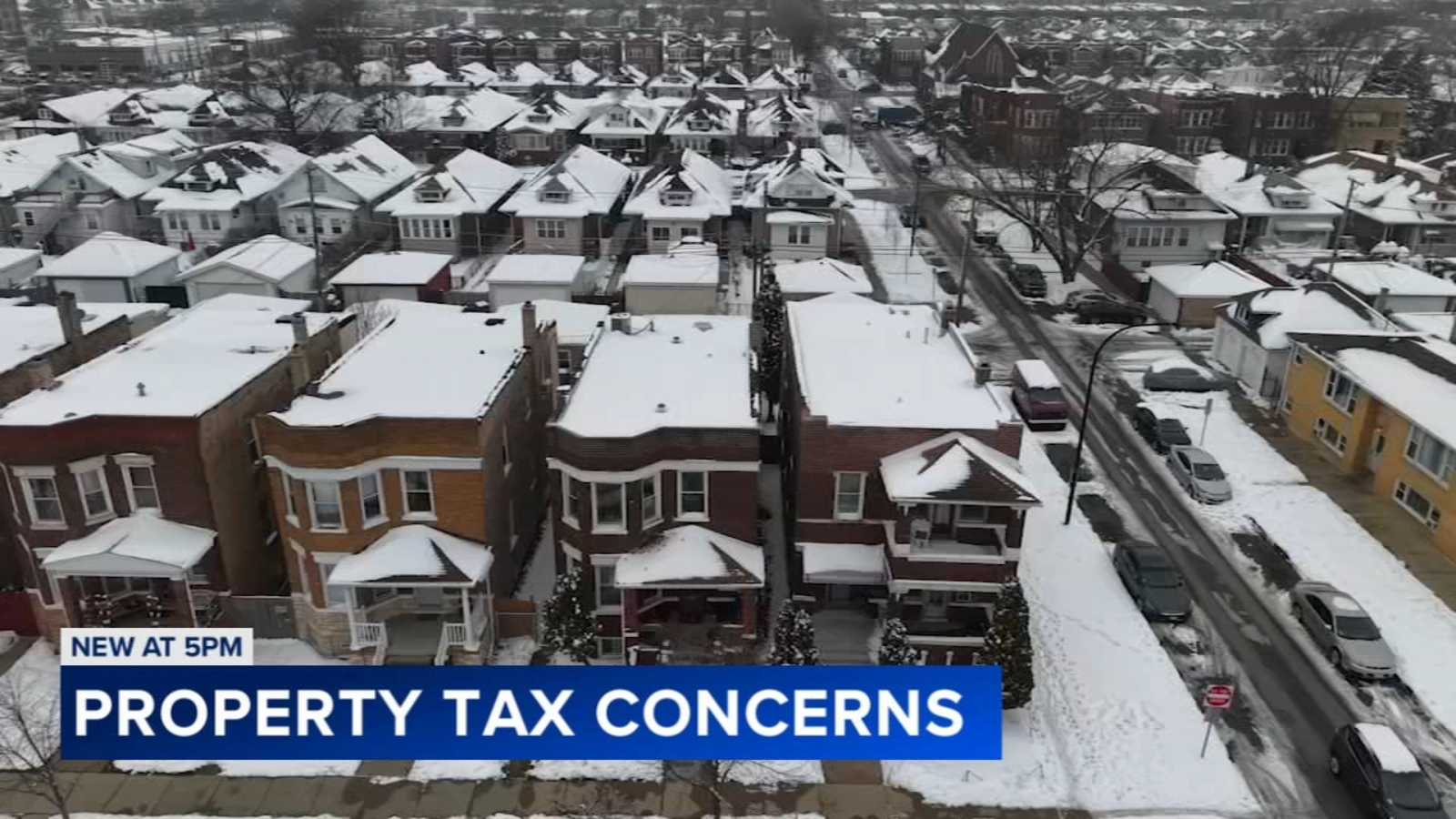
As the deadline for property tax payments approaches, homeowners in Cook County, Illinois, are expressing significant concern regarding steep increases in their bills. Many residents, particularly those in neighborhoods on Chicago’s West and South Sides, are feeling the financial strain as payments become due on March 1, 2024.
Abraham House-El, a retiree from North Lawndale, shared his experience of taking on a rideshare job to meet the rising demands of his property taxes. “It’s got to change. We cannot go on like this. You will not tax us out of the community; we are here to stay,” he stated emphatically. His sentiments reflect the anxiety shared by many in the area about the potential impact of these tax hikes on their communities.
Community Leaders Demand Action
On Monday morning, residents and local pastors convened a press conference to voice their urgent need for assistance. They fear that the increased tax burdens may lead to vacant properties and exacerbate homelessness in their neighborhoods. Rev. Marshall Hatch, leader of New Mount Pilgrim Missionary Baptist Church, criticized the system, stating, “The people who can least afford to pay are given the highest bills; it means get out of town. We don’t want you in this city.”
According to Cook County Treasurer Maria Pappas, the value of commercial buildings in downtown Chicago has dropped significantly, resulting in a $129 million decrease in tax revenue for the current billing cycle. In contrast, many predominantly Black and brown neighborhoods have been historically undervalued, leading to dramatic increases in property taxes. For instance, residents in West Garfield Park are facing a staggering 133% rise in their bills, while North Lawndale has seen a 99% increase and Englewood over 80%.
Impact on Local Businesses
The financial pressures are also felt by local businesses. Malcolm Crawford, associated with the Sankofa Cultural Arts and Business Center in Austin, revealed that their property taxes surged by $10,000 this billing cycle. “I’m supposed to come up with this money by the 15th, and then March the first I’m going to get another bill for the same thing. No how we as business owners are going to be able to service our community,” Crawford lamented.
The Cook County Assessor’s Office provides opportunities for property owners to appeal their tax assessments if they believe they are not receiving eligible exemptions, such as homeowner and senior exemptions. Angelina Romero, Chief Communications Officer for the office, remarked, “It’s a zero-sum game. So when one group pays less, everyone else picks up the tab.”
While property owners can appeal their assessments to the Board of Review, any adjustments will not be reflected until the following year’s bills. George Cardenas, Chairman of the Cook County Board of Review, emphasized the need for a fair system, stating, “Everyone should have a fair system, a fair shot at proper assessments.” Unfortunately, the structural disparities within the property tax system are unlikely to be resolved before the upcoming payment deadline.
In light of these challenges, homeowners have the option to set up payment plans or appeal their assessments for future bills with the Board of Review. As the deadline looms, many residents are left grappling with the immediate financial crisis while advocating for long-term solutions to the inequities in the property tax system.

Orono Seeks Public Input on Urgent $11.6M Funding Plan

USDA Reviews All Programs to Restrict Food Stamp Access

Ancient Shell Trumpets Unveil Prehistoric Communication Methods

Lane Kiffin Leaves Ole Miss for LSU Amid Fan Backlash

Pope Leo XIV Visits Turkey and Lebanon, Promotes Faith and Unity

Chicago Homeowners Face Rising Property Taxes as Deadline Nears

Judi Dench Shares Struggles with Vision Loss Due to AMD

Seagate Unveils 6.9TB Platters, Promises 69TB Drives by 2030

Flight Delays Surge Across US; RDU Sees Record Thanksgiving Travel

New ‘Star Trek: Voyager’ Game Demo Released, Players Test Limits

Global Air Forces Ranked by Annual Defense Budgets in 2025

ALMA Discovers Companion Orbiting Giant Red Star π 1 Gruis

Mass Production of F-35 Fighter Jet Drives Down Costs

Electrification Challenges Demand Advanced Multiphysics Modeling

Gold Investment Surge: Top Mutual Funds and ETF Alternatives

Time Crystals Revolutionize Quantum Computing Potential

DirecTV to Launch AI-Driven Ads with User Likenesses in 2026

Freeport Art Gallery Transforms Waste into Creative Masterpieces
-
 Top Stories2 months ago
New ‘Star Trek: Voyager’ Game Demo Released, Players Test Limits
-
 World2 months ago
Global Air Forces Ranked by Annual Defense Budgets in 2025
-
 Science2 weeks ago
ALMA Discovers Companion Orbiting Giant Red Star π 1 Gruis
-
 World2 months ago
Mass Production of F-35 Fighter Jet Drives Down Costs
-
 World2 months ago
Electrification Challenges Demand Advanced Multiphysics Modeling
-
 Business2 months ago
Gold Investment Surge: Top Mutual Funds and ETF Alternatives
-
 Science2 months ago
Time Crystals Revolutionize Quantum Computing Potential
-
 Top Stories2 months ago
DirecTV to Launch AI-Driven Ads with User Likenesses in 2026
-
 Entertainment2 months ago
Freeport Art Gallery Transforms Waste into Creative Masterpieces
-

 Business2 months ago
US Government Denies Coal Lease Bid, Impacting Industry Revival Efforts
-

 Politics1 month ago
SEVENTEEN’s Mingyu Faces Backlash Over Alcohol Incident at Concert
-

 Health2 months ago
Gavin Newsom Critiques Trump’s Health and National Guard Plans