
Business
Treasury Secretary Scott Bessent Fact-Checked on Farming Claims

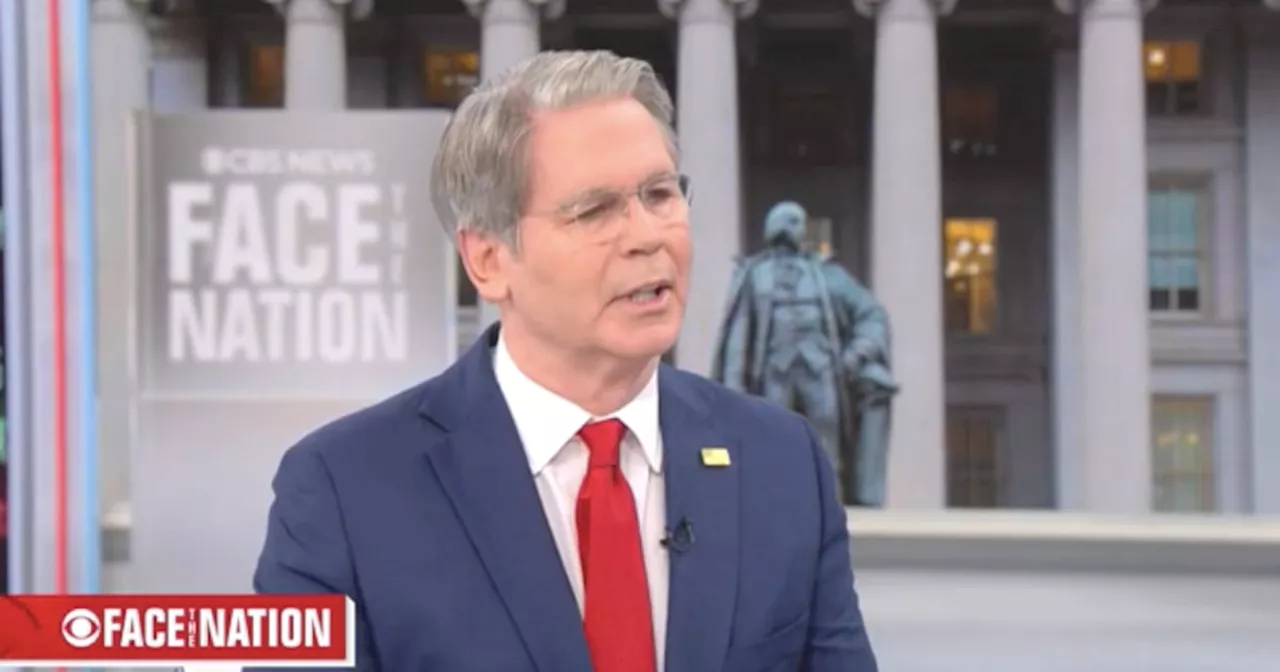
During a recent appearance on CBS, Treasury Secretary Scott Bessent faced scrutiny regarding his claims about his involvement in the agricultural sector. Host Margaret Brennan fact-checked Bessent’s assertion that he “runs a soybean farm” after he was compelled to acknowledge that he had divested his holdings due to ethics concerns. This exchange highlights ongoing discussions about the intersection of private interests and public service.
Bessent’s comments came during an interview where he discussed the government’s plans to alleviate financial pressures on farmers. He noted that the administration would soon announce a bridge payment aimed at providing short-term relief while negotiations on trade agreements continue. When Brennan inquired about Bessent’s conversations with China’s vice premier regarding soybean purchases, he stated that “they are in the cadence that we agreed to,” referring to a previous agreement that included purchasing commitments.
As the conversation shifted to Bessent’s farming background, he claimed, “I run a soybean farm.” Brennan promptly corrected him, stating, “You own, or invest in a soybean farm.” Bessent’s initial assertion was quickly followed by a clarification that he had recently divested his holdings valued at $25 million due to conflicts of interest identified by the Senate Finance Committee.
Bessent explained, “I actually just divested it this week as part of my ethics agreement, so I’m out of that business.” He attempted to assert his knowledge of agriculture, stating that he likely knows more than any treasury secretary since the 1800s. However, this claim was met with skepticism, given his recent divestiture.
Bessent’s former agricultural investments included thousands of acres of soybean and corn farmland in North Dakota. Reports suggest he may have earned approximately $1 million annually in rent from these investments. The timing of his divestment aligns with increasing scrutiny of officials’ financial interests amid discussions about trade and agriculture, demonstrating the complex relationship between personal wealth and public duty.
Brennan’s sharp questioning serves as a reminder of the importance of transparency and accountability for public officials. As the Biden administration navigates critical agricultural issues, the implications of Bessent’s statements raise questions about the influence of private investments on government policy and actions.
The dialogue illustrates the broader context of agricultural policy in the United States, particularly as farmers face ongoing challenges. As negotiations with China continue, the administration’s ability to balance the interests of farmers with ethical governance remains a significant concern.

Matt Campbell Introduced as Penn State’s New Head Coach Today

Urgent Rescue: NYC Hiker Stranded in Hudson Valley Wilderness

Kim Soo Hyun’s Fans Launch Urgent Support Effort Amid Crisis

Shedeur Sanders Shines With Historic Performance in NFL Debut

Flooding Damages Hundreds of Artifacts at Paris’s Louvre Museum

Respiree Gains Approval for AI Tool to Detect Patient Deterioration

Explore 10 Unforgettable Crime Epics That Redefine Cinema

Community Unites at Sun Santa Family Christmas Party to Spread Joy

Russian Official Praises Trump’s ‘Strong’ Strategy Amid Ukraine Talks

ALMA Discovers Companion Orbiting Giant Red Star π 1 Gruis

New ‘Star Trek: Voyager’ Game Demo Released, Players Test Limits

SEVENTEEN’s Mingyu Faces Backlash Over Alcohol Incident at Concert

Global Air Forces Ranked by Annual Defense Budgets in 2025

Mass Production of F-35 Fighter Jet Drives Down Costs

Electrification Challenges Demand Advanced Multiphysics Modeling

Gold Investment Surge: Top Mutual Funds and ETF Alternatives

Time Crystals Revolutionize Quantum Computing Potential

DirecTV to Launch AI-Driven Ads with User Likenesses in 2026
-
 Science3 weeks ago
ALMA Discovers Companion Orbiting Giant Red Star π 1 Gruis
-
 Top Stories2 months ago
New ‘Star Trek: Voyager’ Game Demo Released, Players Test Limits
-
 Politics2 months ago
SEVENTEEN’s Mingyu Faces Backlash Over Alcohol Incident at Concert
-
 World2 months ago
Global Air Forces Ranked by Annual Defense Budgets in 2025
-
 World2 months ago
Mass Production of F-35 Fighter Jet Drives Down Costs
-
 World2 months ago
Electrification Challenges Demand Advanced Multiphysics Modeling
-
 Business2 months ago
Gold Investment Surge: Top Mutual Funds and ETF Alternatives
-
 Science2 months ago
Time Crystals Revolutionize Quantum Computing Potential
-
 Top Stories2 months ago
DirecTV to Launch AI-Driven Ads with User Likenesses in 2026
-

 Entertainment2 months ago
Freeport Art Gallery Transforms Waste into Creative Masterpieces
-

 Health2 months ago
Gavin Newsom Critiques Trump’s Health and National Guard Plans
-

 Business2 months ago
US Government Denies Coal Lease Bid, Impacting Industry Revival Efforts