
Health
Researchers Develop Real-Time Tool to Detect DNA Damage

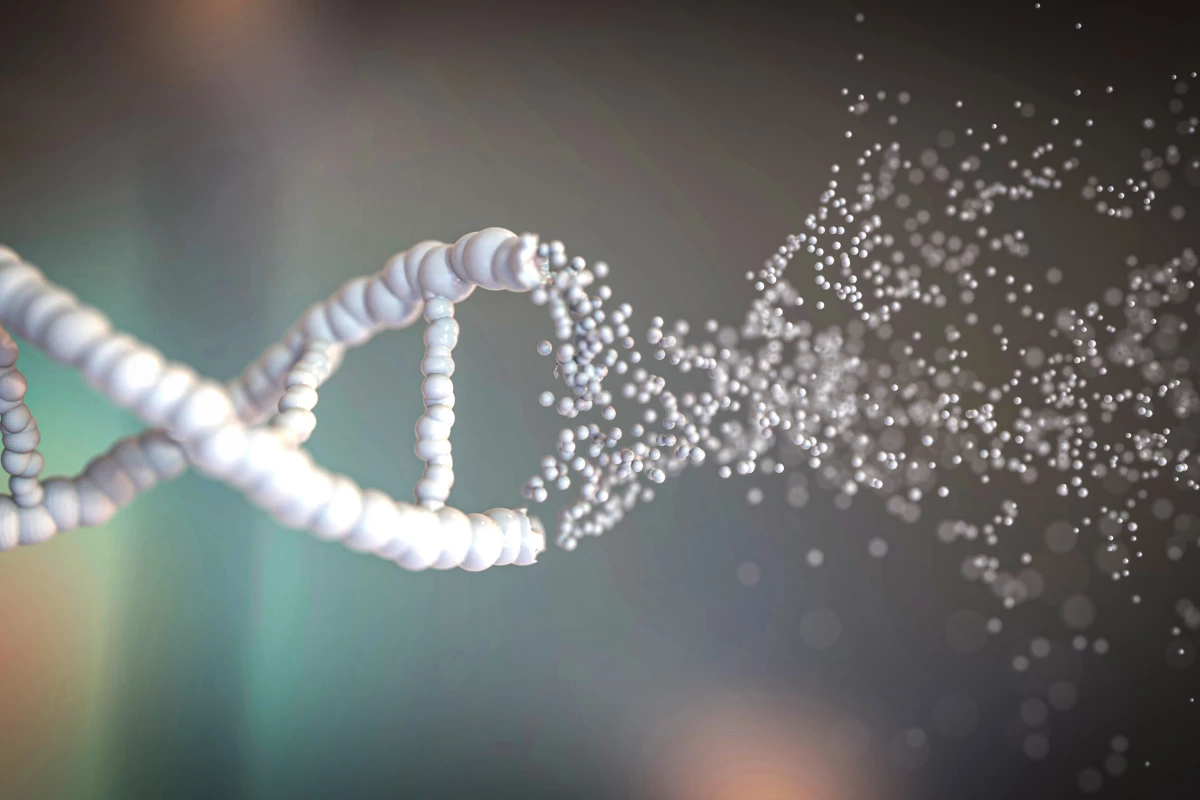
Scientists at Utrecht University have unveiled an innovative tool that allows for real-time observation of DNA damage and repair processes within living cells. This groundbreaking development addresses a significant challenge in cellular biology: understanding how cells respond to dangerous DNA breaks, known as double strand breaks, which can threaten genomic stability and lead to diseases.
Double strand breaks are among the most severe forms of DNA damage, triggering immediate cellular responses to repair the damage. Traditionally, researchers relied on methods that captured only snapshots of these processes, halting cellular activity at various stages. This approach limited their understanding of the dynamic repair mechanisms at play.
Now, researchers have created glowing sensors that highlight the exact locations of DNA breaks, providing an unprecedented live view of how cells manage DNA damage. Lead researcher Tuncay Baubec emphasized the significance of this innovation, stating, “Our sensor is different. It’s built from parts taken from a natural protein that the cell already uses. It goes on and off the damage site by itself, so what we see is the genuine behavior of the cell.”
New Sensor Technology
The newly developed tool operates effectively in both fixed and live cells, serving as an antibody substitute in standard laboratory techniques. Using Cas9 technology to induce specific DNA breaks, researchers demonstrated that the sensor can accurately detect single breaks even within tightly packed heterochromatin. This versatility enhances the study of DNA repair across various chromatin environments.
The sensor operates through a glowing tag connected to a small protein domain from the cell. This domain temporarily binds to a marker on broken DNA, revealing the damage without interfering with the repair process. Researchers confirmed that the DNA damage sensor does not disrupt the natural repair mechanisms, allowing it to safely track DNA breaks in living cells and organisms.
By utilizing this tool, researchers can observe how DNA damage and repair unfold over time in a range of systems. The research team also tested the sensor in a common worm model organism, finding that it effectively revealed natural DNA breaks during development. This versatility indicates that the tool is not confined to lab-grown cells and can track DNA damage in genuine living organisms.
Implications for Medical Research
Beyond merely observing DNA repair, the sensor can be linked to other molecules, enabling scientists to map where DNA breaks occur, track which proteins respond to the damage, and manipulate damaged DNA within the nucleus to assess the factors influencing repair.
Baubec further explained the potential impact of this technology on medical research methodologies. “Right now, clinical researchers often use antibodies to assess this,” he noted. “Our tool could make these tests cheaper, faster, and more accurate.”
The findings from this study have been published in the journal Nature Communications, signifying a crucial step forward in understanding DNA repair processes and their implications for developing new therapies. The innovative sensor promises to enhance our comprehension of cellular mechanisms, potentially leading to breakthroughs in treating diseases linked to DNA damage.

Urgent: Man Arrested for Attempted Murder in Gilroy Safeway Stabbing

Urgent: 28 Dogs Rescued from Cruel Conditions in Windsor Home

OpenAI’s Sam Altman Claims He Can’t Parent Without ChatGPT

Verdigris Falls to Holland Hall in First-Round Playoff Loss

49ers Eye Playoffs: The Winning Formula for Final Games

Bali Police Arrest British Sex Worker Bonnie Blue Amid Controversy

Biggby Coffee Recognizes Barista of the Year: A Story of Connection

Iconic Game Show ‘The Wheel’ Launches Live Show in Sarasota

Emotional Connection Key to Effective AI Therapy, Study Finds

ALMA Discovers Companion Orbiting Giant Red Star π 1 Gruis

New ‘Star Trek: Voyager’ Game Demo Released, Players Test Limits

SEVENTEEN’s Mingyu Faces Backlash Over Alcohol Incident at Concert

Global Air Forces Ranked by Annual Defense Budgets in 2025

Mass Production of F-35 Fighter Jet Drives Down Costs

Electrification Challenges Demand Advanced Multiphysics Modeling

Gold Investment Surge: Top Mutual Funds and ETF Alternatives

Time Crystals Revolutionize Quantum Computing Potential

DirecTV to Launch AI-Driven Ads with User Likenesses in 2026
-
 Science4 weeks ago
ALMA Discovers Companion Orbiting Giant Red Star π 1 Gruis
-
 Top Stories2 months ago
New ‘Star Trek: Voyager’ Game Demo Released, Players Test Limits
-
 Politics2 months ago
SEVENTEEN’s Mingyu Faces Backlash Over Alcohol Incident at Concert
-
 World2 months ago
Global Air Forces Ranked by Annual Defense Budgets in 2025
-
 World2 months ago
Mass Production of F-35 Fighter Jet Drives Down Costs
-
 World2 months ago
Electrification Challenges Demand Advanced Multiphysics Modeling
-
 Business2 months ago
Gold Investment Surge: Top Mutual Funds and ETF Alternatives
-
 Science2 months ago
Time Crystals Revolutionize Quantum Computing Potential
-
 Top Stories2 months ago
DirecTV to Launch AI-Driven Ads with User Likenesses in 2026
-

 Entertainment2 months ago
Freeport Art Gallery Transforms Waste into Creative Masterpieces
-

 Health2 months ago
Gavin Newsom Critiques Trump’s Health and National Guard Plans
-
 Business2 months ago
US Government Denies Coal Lease Bid, Impacting Industry Revival Efforts