
Lifestyle
Pulitzer Prize-Winning Reporter John Noble Wilford Dies at 92

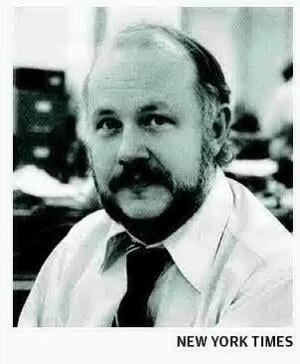
John Noble Wilford, a distinguished science reporter for The New York Times, passed away at the age of 92. Wilford was renowned for his coverage of significant events in space exploration, most notably the historic moon landing on July 20, 1969. His passion for science journalism resonated with readers, as he vividly captured the excitement of humanity’s first footsteps on the lunar surface alongside astronauts like Neil Armstrong.
Born in 1931, Wilford’s career spanned several decades, during which he earned the prestigious Pulitzer Prize for his exceptional reporting. He joined The New York Times in 1955, where he quickly became a prominent voice in science journalism. His commitment to accurate and engaging storytelling not only informed the public but also inspired a generation to look toward the stars.
Wilford’s coverage of the Apollo 11 mission exemplified his unique ability to convey the gravity of scientific achievements. As Armstrong and Buzz Aldrin made their historic descent onto the moon, Wilford’s articles allowed readers to feel as though they were part of the journey. His writing often included detailed descriptions of the technology involved and the challenges faced by astronauts, bringing the complexities of space exploration into the homes of millions.
Legacy and Impact on Science Journalism
Throughout his career, Wilford wrote extensively on various scientific topics, including climate change, genetics, and medical advances. His work has left an indelible mark on the field, as he championed the importance of science literacy in an ever-evolving world. In 1996, he was awarded the National Medal of Science for his contributions to public understanding of science.
Wilford’s influence extended beyond the pages of The New York Times. He authored several books, including “The Mapmakers” and “We Reach the Moon,” which dissected the intricacies of space exploration and the individuals involved in these monumental achievements. His narratives were not just informative; they sparked curiosity and fostered a deeper appreciation for scientific endeavors.
In addition to his writing, Wilford served as a mentor to aspiring journalists, emphasizing the need for integrity and clarity in science reporting. His dedication to the craft inspired many to pursue careers in journalism, particularly within the realm of science.
A Fond Farewell
The news of Wilford’s passing has prompted an outpouring of tributes from colleagues and admirers alike. Many have expressed their gratitude for his influential role in science journalism and the lasting impact of his work. His ability to communicate complex scientific concepts in a relatable manner made him a beloved figure among readers and professionals in the field.
Wilford is survived by his family, who take pride in his legacy. As the world reflects on his contributions, his stories will continue to resonate, reminding us of the profound connection between humanity and the universe.

Mars’ Influence on Earth’s Climate Revealed in New Research

Urgent: Man Arrested for Attempted Murder in Gilroy Safeway Stabbing

Urgent: 28 Dogs Rescued from Cruel Conditions in Windsor Home

OpenAI’s Sam Altman Claims He Can’t Parent Without ChatGPT

Verdigris Falls to Holland Hall in First-Round Playoff Loss

49ers Eye Playoffs: The Winning Formula for Final Games

Bali Police Arrest British Sex Worker Bonnie Blue Amid Controversy

Biggby Coffee Recognizes Barista of the Year: A Story of Connection

Iconic Game Show ‘The Wheel’ Launches Live Show in Sarasota

ALMA Discovers Companion Orbiting Giant Red Star π 1 Gruis

New ‘Star Trek: Voyager’ Game Demo Released, Players Test Limits

SEVENTEEN’s Mingyu Faces Backlash Over Alcohol Incident at Concert

Global Air Forces Ranked by Annual Defense Budgets in 2025

Mass Production of F-35 Fighter Jet Drives Down Costs

Electrification Challenges Demand Advanced Multiphysics Modeling

Gold Investment Surge: Top Mutual Funds and ETF Alternatives

Time Crystals Revolutionize Quantum Computing Potential

DirecTV to Launch AI-Driven Ads with User Likenesses in 2026
-
 Science4 weeks ago
ALMA Discovers Companion Orbiting Giant Red Star π 1 Gruis
-
 Top Stories2 months ago
New ‘Star Trek: Voyager’ Game Demo Released, Players Test Limits
-
 Politics2 months ago
SEVENTEEN’s Mingyu Faces Backlash Over Alcohol Incident at Concert
-
 World2 months ago
Global Air Forces Ranked by Annual Defense Budgets in 2025
-
 World2 months ago
Mass Production of F-35 Fighter Jet Drives Down Costs
-
 World2 months ago
Electrification Challenges Demand Advanced Multiphysics Modeling
-
 Business2 months ago
Gold Investment Surge: Top Mutual Funds and ETF Alternatives
-
 Science2 months ago
Time Crystals Revolutionize Quantum Computing Potential
-
 Top Stories2 months ago
DirecTV to Launch AI-Driven Ads with User Likenesses in 2026
-

 Entertainment2 months ago
Freeport Art Gallery Transforms Waste into Creative Masterpieces
-

 Health2 months ago
Gavin Newsom Critiques Trump’s Health and National Guard Plans
-

 Business2 months ago
US Government Denies Coal Lease Bid, Impacting Industry Revival Efforts