
Politics
Sandy Snodgrass Advocates Fentanyl as WMD During White House Visit

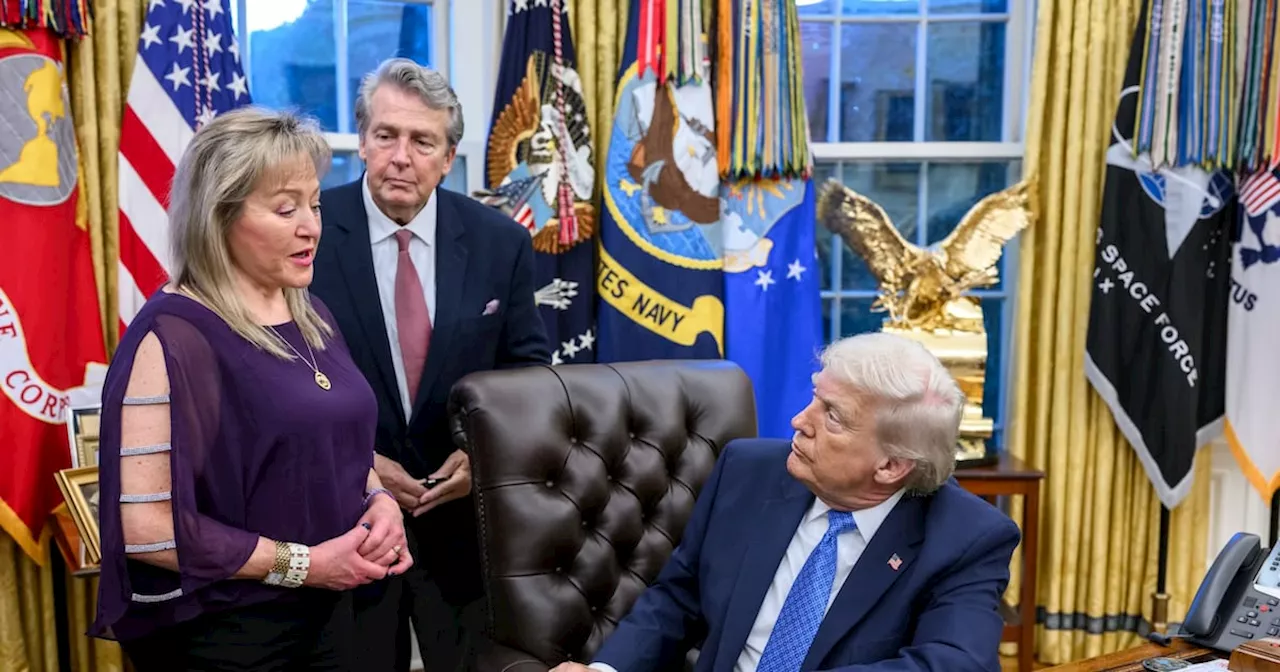
An Anchorage activist has successfully influenced federal policy regarding fentanyl, a potent synthetic opioid. During a recent visit to the White House, Sandy Snodgrass engaged with President Donald Trump, advocating for the classification of fentanyl as a weapon of mass destruction (WMD). This significant declaration aligns fentanyl with nuclear and chemical weapons in the federal government’s categorization of substances that can cause widespread harm.
Snodgrass attended the White House on December 1, 2025, for the signing of new fentanyl education legislation, named in memory of her son, Bruce Snodgrass, who tragically died from a fentanyl overdose in an Anchorage parking lot at the age of 22. The event saw her shaking hands with the president, posing for photographs, and sharing a cherished image of her son beside a glacial lake in Alaska.
While discussing her ongoing efforts to combat the opioid crisis, Snodgrass seized the opportunity to express her ambition to see fentanyl classified as a WMD. In their exchange, she stated, “I said, ‘President Trump, the next thing in the fight against fentanyl is to declare fentanyl a weapon of mass destruction.’” She recalled Trump’s response: “That’s a good idea. Why haven’t we done that?”
The following day, Snodgrass received an email from White House staff requesting a short policy memo her niece had crafted on the topic. This indicated a direct interest from the president’s office, which she described as a promising development. Shortly thereafter, she was invited back to the White House for a meeting with high-ranking officials, including the administration’s drug czar and representatives from Vice President J.D. Vance’s office. During this meeting, officials posed questions about the rationale behind classifying fentanyl as a WMD, to which Snodgrass provided her insights.
In response to inquiries regarding Snodgrass’s influence on the president’s decision, White House Deputy Press Secretary Abigail Jackson initially sent a message that questioned the appropriateness of crediting Snodgrass. When pressed further, the White House released a statement that acknowledged Trump’s commitment to addressing the fentanyl crisis but did not mention Snodgrass specifically. The statement emphasized that Trump had long been concerned about the impact of fentanyl on Americans and regularly consulted various individuals on effective policies.
Despite this, Snodgrass believes her conversation with Trump brought the idea to the forefront of his mind. She has dedicated herself to advocating for greater awareness of fentanyl and stricter penalties for drug dealers and traffickers since her son’s death in 2022.
The designation of fentanyl as a WMD carries substantial implications, though experts caution that the practical effects of this classification will take time to unfold. The announcement comes at a critical moment as the Trump administration continues to respond to the opioid epidemic, which has affected countless families across the nation.
As the landscape evolves, it remains to be seen how this new classification will influence federal approaches to combating fentanyl trafficking and usage. Snodgrass, along with many others impacted by the opioid crisis, hopes this designation will lead to enhanced measures against the drug that has claimed so many lives.

Brown University Shooting Suspect Claudio Valente Found Dead

Ice Loss Hits Mount Rainier, Elevation Drops Nearly 21 Feet

Urgent: Suspected Brown University Shooter Also Kills MIT Professor

Maine Demands Health Care Reform as Federal Support Fades

Preserve Holiday Plant Beauty with Expert Care Tips

Local Leaders Assess Development Challenges in Florida’s Suncoast

NASA Reveals Stunning Image of France as Science Calendar Highlight

Sonora Girls Soccer Triumphs Over La Habra in Thrilling Rivalry Match

Australia Launches Gun Buyback Program After Bondi Attack

ALMA Discovers Companion Orbiting Giant Red Star π 1 Gruis

SEVENTEEN’s Mingyu Faces Backlash Over Alcohol Incident at Concert

New ‘Star Trek: Voyager’ Game Demo Released, Players Test Limits

Global Air Forces Ranked by Annual Defense Budgets in 2025

Electrification Challenges Demand Advanced Multiphysics Modeling

Mass Production of F-35 Fighter Jet Drives Down Costs

Gold Investment Surge: Top Mutual Funds and ETF Alternatives

Time Crystals Revolutionize Quantum Computing Potential

DirecTV to Launch AI-Driven Ads with User Likenesses in 2026
-
 Science1 month ago
ALMA Discovers Companion Orbiting Giant Red Star π 1 Gruis
-
 Politics2 months ago
SEVENTEEN’s Mingyu Faces Backlash Over Alcohol Incident at Concert
-
 Top Stories2 months ago
New ‘Star Trek: Voyager’ Game Demo Released, Players Test Limits
-
 World2 months ago
Global Air Forces Ranked by Annual Defense Budgets in 2025
-
 World2 months ago
Electrification Challenges Demand Advanced Multiphysics Modeling
-
 World2 months ago
Mass Production of F-35 Fighter Jet Drives Down Costs
-
 Business2 months ago
Gold Investment Surge: Top Mutual Funds and ETF Alternatives
-
 Science2 months ago
Time Crystals Revolutionize Quantum Computing Potential
-
 Top Stories2 months ago
DirecTV to Launch AI-Driven Ads with User Likenesses in 2026
-

 Entertainment2 months ago
Freeport Art Gallery Transforms Waste into Creative Masterpieces
-

 Business2 months ago
US Government Denies Coal Lease Bid, Impacting Industry Revival Efforts
-

 Health2 months ago
Gavin Newsom Critiques Trump’s Health and National Guard Plans