
Politics
Senators Introduce Bill to Protect U.S. Farmland from Solar Expansion

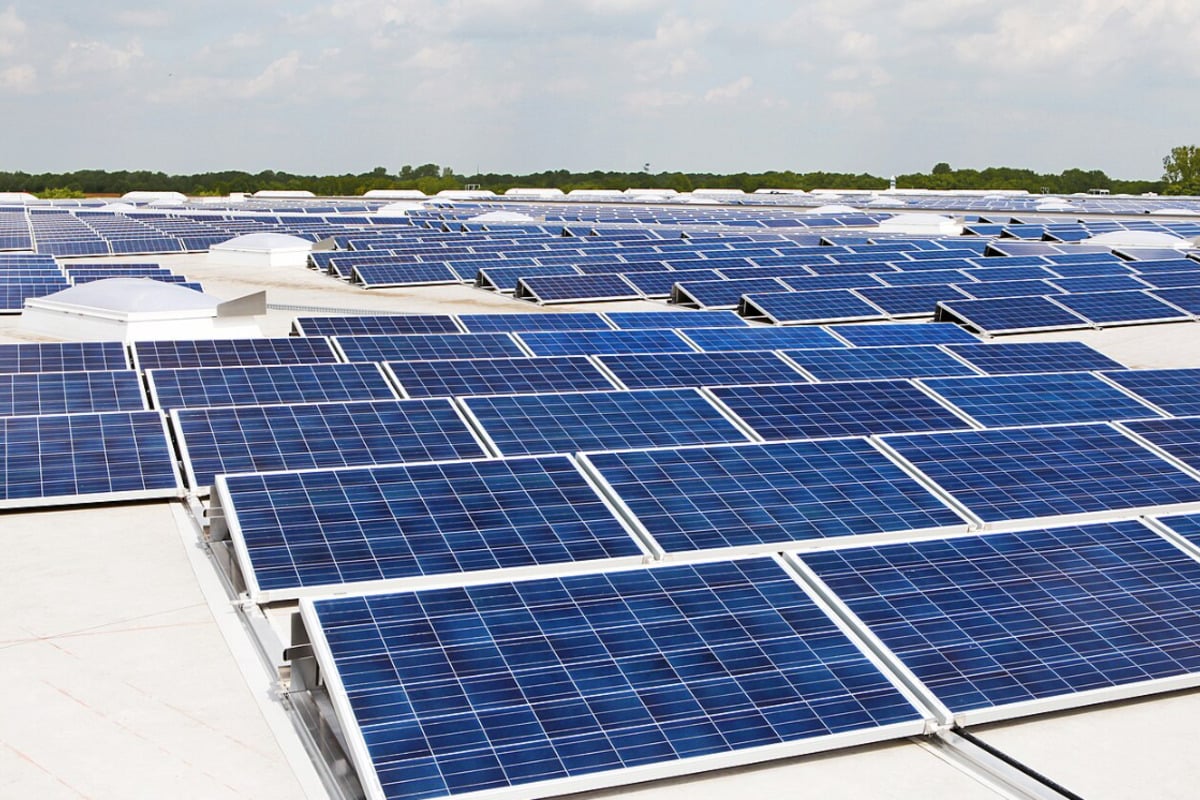
U.S. Senators Marsha Blackburn (R-Tenn.) and Cynthia Lummis (R-Wyo.) have introduced the Protecting American Farmland Act to safeguard prime agricultural land from solar projects funded by federal subsidies. The proposed legislation aims to reverse incentives provided under the Green New Deal that facilitate the construction of solar farms on some of the nation’s most fertile land. This initiative has garnered the support of the Tennessee Farm Bureau, highlighting the critical importance of farmland for food security.
Senator Blackburn emphasized the necessity of preserving farmland, stating, “Tennessee’s farmland is critical to America’s food supply, and the federal government should not be endorsing Green New Scam projects that subsidize ruining fertile American farmland by building solar panels.” This statement reflects a growing concern among lawmakers about the impact of subsidized solar projects on agricultural productivity.
Senator Lummis joined Blackburn in voicing strong opposition to the use of taxpayer money for what they term ‘climate-alarmist schemes.’ They argue that these projects divert resources from more productive uses and do not contribute meaningfully to the nation’s economic prosperity. The legislation aims to protect farmland from being transformed into large solar installations that could hinder agricultural output.
Legislative Background and Agricultural Impact
The push for the Protecting American Farmland Act stems from directives issued by former President Trump and U.S. Department of Agriculture (USDA) Secretary Brooke Rollins. They called for measures to prevent the loss of farmland to subsidized solar projects. Currently, over 1.2 million acres of Tennessee’s farmland have already been converted for solar use, with projections indicating that this figure could rise to 2 million acres by 2027.
This rapid conversion of agricultural land is raising alarm among farmers who are already facing escalating costs linked to these projects. With decreasing availability of fertile land, farmers find themselves struggling to maintain productive operations. The Protecting American Farmland Act seeks to eliminate federal funding for solar installations on prime farmland, encompassing various financial instruments including tax credits, loans, and grants.
While the legislation restricts federal support for solar projects on critical agricultural land, it allows private landowners the choice to pursue solar installations independently of government incentives. This distinction aims to balance the protection of farmland with the rights of private property owners.
Support and Opposition
Representative Dave Taylor (R-Ohio), who introduced a companion bill in the House of Representatives, articulated the need for energy independence without compromising the nation’s agricultural capability. He stated, “Our Nation must be energy independent, but it shouldn’t come at the cost of feeding our families.” This perspective underscores the delicate balance the legislation seeks to achieve between renewable energy development and agricultural sustainability.
The Protecting American Farmland Act reflects a broader political debate over land use and energy policy in the United States. As lawmakers grapple with the implications of renewable energy initiatives, the protection of agricultural land remains a contentious issue. The outcome of this legislative proposal could significantly impact the future of both farming and solar energy development in America.

World CopperSmith and Anna Dinger Unveil Stunning Kitchen Renovation

Fever’s Candlelight Concerts Offer Up to 30% Off for Cyber Monday

Prepare for Tooth Extraction: Key Steps for a Smooth Process

Thomas University Celebrates New Inductees into Beta Beta Beta Honor Society

NYPD Officer Accidentally Maced During Immigration Protests in NYC

Macaque Monkeys Prove They Can Tap to the Beat of Music

Wentzville Launches Urgent Initiative for Smart Waste Disposal

Western Maine Food Pantries Expand Aid as Winter Approaches

Cyber Monday Countdown: Grab 25 Hot Deals Under $25 Now!

New ‘Star Trek: Voyager’ Game Demo Released, Players Test Limits

Global Air Forces Ranked by Annual Defense Budgets in 2025

ALMA Discovers Companion Orbiting Giant Red Star π 1 Gruis

Mass Production of F-35 Fighter Jet Drives Down Costs

Electrification Challenges Demand Advanced Multiphysics Modeling

Gold Investment Surge: Top Mutual Funds and ETF Alternatives

Time Crystals Revolutionize Quantum Computing Potential

DirecTV to Launch AI-Driven Ads with User Likenesses in 2026

Freeport Art Gallery Transforms Waste into Creative Masterpieces
-
 Top Stories2 months ago
New ‘Star Trek: Voyager’ Game Demo Released, Players Test Limits
-
 World2 months ago
Global Air Forces Ranked by Annual Defense Budgets in 2025
-
 Science2 weeks ago
ALMA Discovers Companion Orbiting Giant Red Star π 1 Gruis
-
 World2 months ago
Mass Production of F-35 Fighter Jet Drives Down Costs
-
 World2 months ago
Electrification Challenges Demand Advanced Multiphysics Modeling
-
 Business2 months ago
Gold Investment Surge: Top Mutual Funds and ETF Alternatives
-
 Science2 months ago
Time Crystals Revolutionize Quantum Computing Potential
-
 Top Stories2 months ago
DirecTV to Launch AI-Driven Ads with User Likenesses in 2026
-
 Entertainment2 months ago
Freeport Art Gallery Transforms Waste into Creative Masterpieces
-

 Business2 months ago
US Government Denies Coal Lease Bid, Impacting Industry Revival Efforts
-

 Health2 months ago
Gavin Newsom Critiques Trump’s Health and National Guard Plans
-

 Politics1 month ago
SEVENTEEN’s Mingyu Faces Backlash Over Alcohol Incident at Concert