
Politics
South Korea’s Judicial Reforms Spark Concerns Over Power Balance

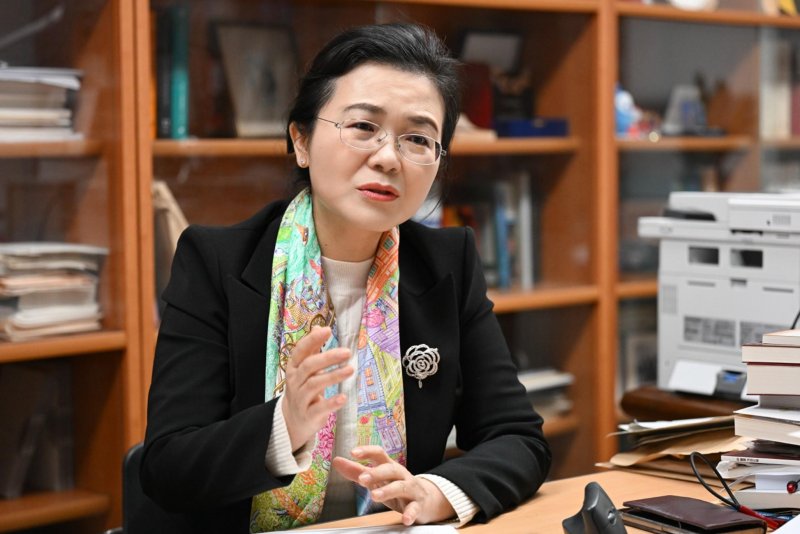
A law professor from Korea University has raised serious concerns regarding proposed judicial reforms in South Korea, warning that they may undermine judicial independence and threaten the separation of powers. On December 17, 2023, Cha Jin-ah, a specialist in constitutional law, expressed her apprehensions about a package of reform bills backed by the ruling party, stating, “unchecked power leads to dictatorship.”
Cha, who previously served as a constitutional researcher at the Constitutional Court and worked with the National Assembly on constitutional revisions, supports certain reform ideas, such as a limited increase in the number of Supreme Court justices and a new court petition system. However, she raised alarms about the details of these proposals and the push to process them simultaneously, suggesting potential political motivations behind the reforms.
The proposed changes include expanding the number of Supreme Court justices, creating an appellate court, establishing a special court for treason, and introducing a crime of “distorting the law.” Additionally, the plans call for abolishing the court administration office and creating a judicial administration committee.
Concerns Over Judicial Independence
In an interview conducted on Tuesday, Cha discussed the ruling party’s assertion that expanding the Supreme Court and introducing a court petition system are necessary reforms. She acknowledged the need for some adjustments, stating, “Increasing the number of Supreme Court justices to some extent is necessary. Adding about one division—meaning four justices—is appropriate.” However, she cautioned that a proposed increase of twelve justices would be excessive and could lead to blatant political appointments.
Cha criticized the proposed court petition system as “too naive,” questioning how the Constitutional Court would manage reviews of all final judgments alleged to violate due process or fundamental rights. “Can the Constitutional Court handle that?” she asked, emphasizing the need for vigilance regarding judicial independence.
Potential Risks of New Legal Provisions
Addressing the ruling party’s intention to revise potentially unconstitutional elements within the proposals, Cha expressed skepticism about the motivations behind the simultaneous introduction of a special court for treason and a crime of distorting the law. She suggested that these measures may be aimed at manipulating treason or insurrection trials to politically disadvantage opposing factions.
“A special court for treason itself is unconstitutional. Fair trials become meaningless, and the result is a predetermined tribunal,” she stated. Cha further condemned the proposed crime of distorting the law as “barbaric,” comparing it to a clause in German law that punishes judges and prosecutors from the Nazi regime. She warned that if adopted in South Korea, it could lead to misuse and create an environment conducive to political pressure on judicial officials.
Cha also voiced concerns over the plans to abolish the court administration office and create a judicial administration committee, asserting that stripping judicial administrative authority from the courts is unconstitutional. “Judicial power includes not only adjudication but also judicial administration such as case assignment and division of duties,” she noted.
The prospect of the ruling party holding a majority in the National Assembly raises questions about the fate of these bills. Cha emphasized that public opinion is the key to stopping any legislative overreach. “Winning an election does not mean everything the ruling party does equals the people’s will. Democracy does not operate only on election day,” she remarked.
Cha concluded by underscoring the responsibility of the opposition to actively challenge attempts to undermine judicial independence and provide constructive alternatives. “The opposition’s failure to check power is also significant. It must wake up,” she stated.
As South Korea navigates these proposed reforms, the balance of power and the integrity of its judiciary remain at the forefront of national discourse.

Urgent Advice for Holiday Etiquette Amid Family Strains

Netflix Secures Pardon My Take in Major 2026 Streaming Shift

PETA Accuses Simone Biles of Supporting Puppy Breeding Crisis

EUR/GBP Rises as Bank of England Expected to Cut Rates

Ana Urushadze’s ‘Supporting Role’ Trailer Launches Ahead of Rotterdam Premiere

City Council Advances Bill for New Community Safety Agency

Fisher Caught on Camera in Ohio After 100-Year Absence

Albanese Announces Hate Speech Legislation After Bondi Beach Attack

Regulating International Trade in Wildlife: A Global Imperative

ALMA Discovers Companion Orbiting Giant Red Star π 1 Gruis

SEVENTEEN’s Mingyu Faces Backlash Over Alcohol Incident at Concert

New ‘Star Trek: Voyager’ Game Demo Released, Players Test Limits

Global Air Forces Ranked by Annual Defense Budgets in 2025

Electrification Challenges Demand Advanced Multiphysics Modeling

Mass Production of F-35 Fighter Jet Drives Down Costs

Time Crystals Revolutionize Quantum Computing Potential

Gold Investment Surge: Top Mutual Funds and ETF Alternatives

DirecTV to Launch AI-Driven Ads with User Likenesses in 2026
-
 Science1 month ago
ALMA Discovers Companion Orbiting Giant Red Star π 1 Gruis
-
 Politics2 months ago
SEVENTEEN’s Mingyu Faces Backlash Over Alcohol Incident at Concert
-
 Top Stories2 months ago
New ‘Star Trek: Voyager’ Game Demo Released, Players Test Limits
-
 World2 months ago
Global Air Forces Ranked by Annual Defense Budgets in 2025
-
 World2 months ago
Electrification Challenges Demand Advanced Multiphysics Modeling
-
 World2 months ago
Mass Production of F-35 Fighter Jet Drives Down Costs
-
 Science2 months ago
Time Crystals Revolutionize Quantum Computing Potential
-
 Business2 months ago
Gold Investment Surge: Top Mutual Funds and ETF Alternatives
-
 Top Stories2 months ago
DirecTV to Launch AI-Driven Ads with User Likenesses in 2026
-

 Entertainment2 months ago
Freeport Art Gallery Transforms Waste into Creative Masterpieces
-

 Business2 months ago
US Government Denies Coal Lease Bid, Impacting Industry Revival Efforts
-

 Health2 months ago
Gavin Newsom Critiques Trump’s Health and National Guard Plans