
Politics
Utah’s Redistricting Battle: Who Should Draw the Maps?

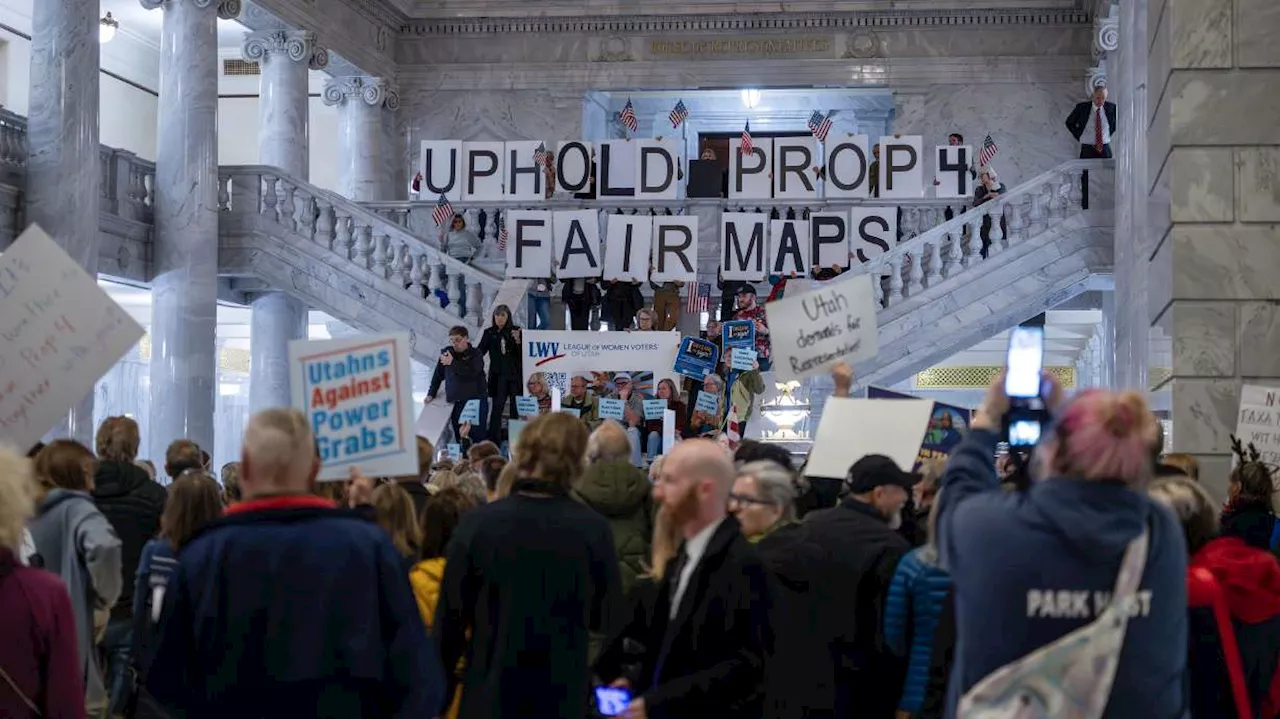
SALT LAKE CITY — A contentious debate over who holds the authority to draw congressional district maps in Utah has intensified, as state lawmakers, voters, and the judiciary grapple with the implications of recent court rulings and legislative actions. The Republican-controlled Legislature asserts that it possesses the sole constitutional right to determine district boundaries, while the Utah Supreme Court has pushed back, indicating that lawmakers overstepped their authority when they amended Proposition 4, a 2018 ballot initiative that aimed to establish nonpartisan guidelines for redistricting and create an independent commission for map recommendations.
Legislative Actions and Court Rulings
The issue remains unresolved following a ruling by 3rd District Judge Dianna Gibson, who rejected a map created by the Legislature in favor of one proposed by plaintiffs alleging gerrymandering. This alternative map would establish a district in northern Salt Lake County that is expected to lean Democratic, contrasting sharply with the current reality where all four of Utah’s congressional seats are held by Republicans.
In response to the ongoing legal uncertainty, the Legislature convened a special session on Tuesday evening to adjust the filing deadline for congressional candidates to March, allowing time for their appeal against Judge Gibson’s ruling to progress through the court system.
Voter Preferences and Poll Results
Public sentiment indicates a desire for a commission to play a role in the redistricting process. Top Republicans, including House Speaker Mike Schultz, have consistently opposed the involvement of external groups, arguing that the responsibility falls within their constitutional duties. Schultz shared a poll on social media, claiming it demonstrates that “Utahns overwhelmingly want their elected representatives — not the courts — leading the redistricting process.”
While the poll, commissioned by the conservative Sutherland Institute, reveals that only 8% of voters support judges selecting maps, the results show greater complexity. The survey presented seven options for determining congressional district boundaries, with the last three categories—county-level elected officials, state-level elected officials, and bodies elected by the people—collectively garnering 71% of responses. None of the other options exceeded 10%.
Leah Murray, director of Weber State University’s Walker Institute of Politics, noted that the poll’s design allowed for more genuine responses from voters, steering clear of triggering partisan biases. The findings reflect a significant appetite among Utah voters for a more collaborative approach to redistricting, raising important questions about future legislative actions and the role of independent commissions.
The ongoing discussions around redistricting in Utah highlight a critical intersection of politics, law, and public opinion, as stakeholders continue to navigate a path forward amidst competing interests and legal challenges.

Denver’s Dazzling Holiday Lights Displays Launch for 2025 Season

US Drops Charges Against Hernan Lopez in FIFA Bribery Case

Botulism Outbreak Linked to ByHeart Formula Affects 51 Infants

Christian’s Furniture Spreads Holiday Cheer with 12 Days of Giveaways

Utah’s Redistricting Battle: Who Should Draw the Maps?

Roman Urbanism Linked to Decline in Health of Ancient Populations

US Dismisses Charges Against Hernan Lopez in FIFA Bribery Case

Opposition Leader María Corina Machado Escapes Venezuela’s Grip

New Metro Transit Route 345 Launches, Cutting Travel Times by 30 Minutes

ALMA Discovers Companion Orbiting Giant Red Star π 1 Gruis

New ‘Star Trek: Voyager’ Game Demo Released, Players Test Limits

SEVENTEEN’s Mingyu Faces Backlash Over Alcohol Incident at Concert

Global Air Forces Ranked by Annual Defense Budgets in 2025

Mass Production of F-35 Fighter Jet Drives Down Costs

Electrification Challenges Demand Advanced Multiphysics Modeling

Gold Investment Surge: Top Mutual Funds and ETF Alternatives

Time Crystals Revolutionize Quantum Computing Potential

DirecTV to Launch AI-Driven Ads with User Likenesses in 2026
-
 Science4 weeks ago
ALMA Discovers Companion Orbiting Giant Red Star π 1 Gruis
-
 Top Stories2 months ago
New ‘Star Trek: Voyager’ Game Demo Released, Players Test Limits
-
 Politics2 months ago
SEVENTEEN’s Mingyu Faces Backlash Over Alcohol Incident at Concert
-
 World2 months ago
Global Air Forces Ranked by Annual Defense Budgets in 2025
-
 World2 months ago
Mass Production of F-35 Fighter Jet Drives Down Costs
-
 World2 months ago
Electrification Challenges Demand Advanced Multiphysics Modeling
-
 Business2 months ago
Gold Investment Surge: Top Mutual Funds and ETF Alternatives
-
 Science2 months ago
Time Crystals Revolutionize Quantum Computing Potential
-
 Top Stories2 months ago
DirecTV to Launch AI-Driven Ads with User Likenesses in 2026
-

 Entertainment2 months ago
Freeport Art Gallery Transforms Waste into Creative Masterpieces
-

 Business2 months ago
US Government Denies Coal Lease Bid, Impacting Industry Revival Efforts
-

 Health2 months ago
Gavin Newsom Critiques Trump’s Health and National Guard Plans