
Science
Celebrating 25 Years of Scientific Breakthroughs on the ISS

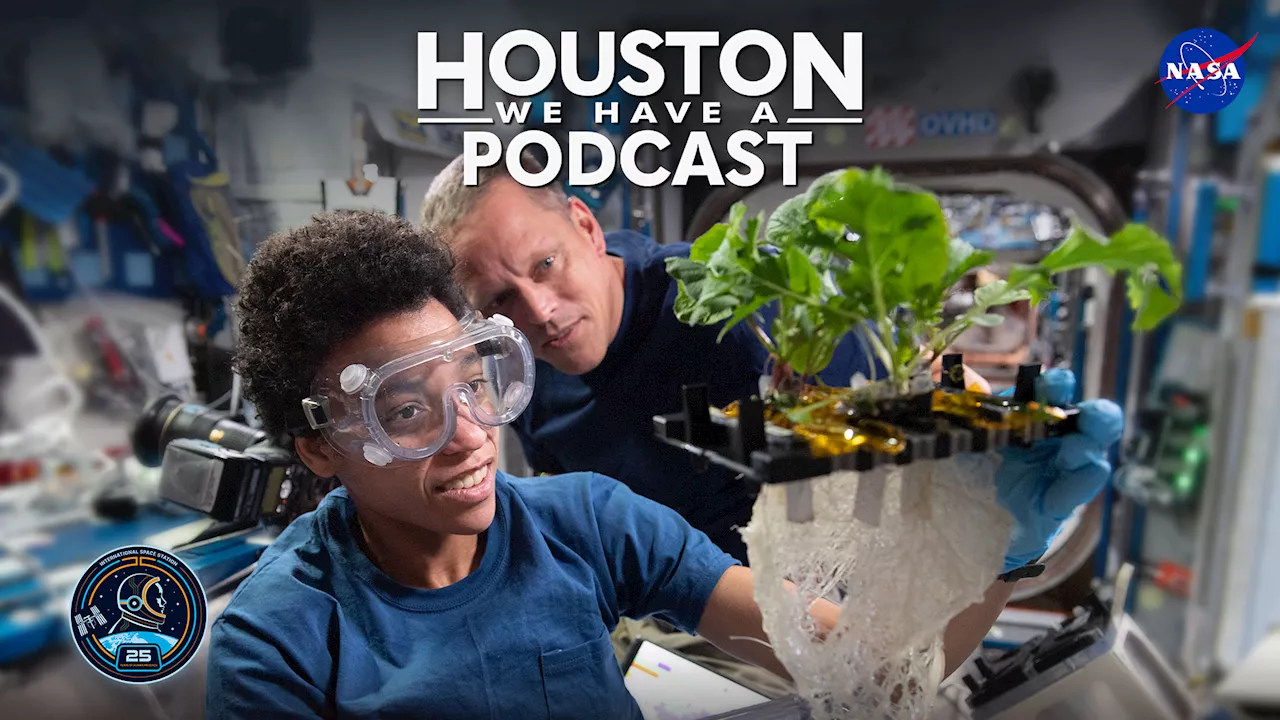
The International Space Station (ISS) is on the brink of a major milestone, marking 25 years of continuous human presence in orbit. Since Expedition 1 launched on November 2, 2000, the ISS has evolved into a hub of scientific discovery and international collaboration, paving the way for groundbreaking research that benefits life on Earth and beyond. In the latest episode of the official NASA podcast, Houston We Have a Podcast, ISS leaders Laura Shaw and Jennifer Buchli reflect on the transformative journey of the space station and its role in advancing human spaceflight.
The ISS has become a unique laboratory, allowing scientists to exploit the microgravity environment for various experiments. As Shaw, the deputy manager of the ISS vehicle office, explains, the station is equipped with extensive facilities to support a multitude of scientific disciplines, including biology, physics, and material science. “We have an incredible vantage point, both looking out into space and down on Earth,” she noted. This dual perspective enables researchers to conduct a wide range of experiments that are impossible under Earth’s gravitational constraints.
Buchli, the ISS Program chief scientist, emphasized the importance of international collaboration in achieving scientific goals. “We work closely with our international partners, ensuring that we are effectively utilizing our resources for scientific advancement,” she stated. The ISS supports research from various nations, including the European Space Agency, Japanese Space Agency, and Canadian Space Agency, making it a truly global endeavor.
As technology has advanced over the past 25 years, so too have the capabilities of the ISS. Initially, scientific endeavors were limited by equipment constraints and module availability. However, with the addition of new modules and facilities, the ISS has expanded its research capabilities significantly. For instance, the introduction of the Japanese Experiment Module and the Columbus module from the European Space Agency has allowed for more complex experiments and a greater variety of scientific inquiries.
One of the most notable breakthroughs has been in the field of pharmaceutical research. The ISS has contributed to the development of drugs like Keytruda, a treatment for cancer that has passed critical clinical trials and is now set to benefit patients worldwide. This highlights how research conducted in microgravity can enhance drug formulations and speed up the development process.
The ISS has also been a testing ground for advanced technologies that will be essential for future missions to the Moon and Mars. Shaw notes that the station has served as a life support system testbed for potential Mars missions, demonstrating technologies that recycle water and manage life support systems more efficiently. Current efforts aim to improve these systems to ensure they can sustain astronauts on longer journeys beyond low Earth orbit.
Looking ahead, both Shaw and Buchli express optimism about the future of science conducted in low Earth orbit. The ISS is funded through 2030, and as NASA begins to shift its focus toward lunar and Martian exploration, the ISS will continue to play a vital role in preparing for these ambitious missions. The station’s legacy will extend beyond its operational life, influencing the design and capabilities of upcoming commercial space stations.
Shaw and Buchli’s insights into the evolution of the ISS underscore its significance not only as a platform for scientific inquiry but also as a testament to international cooperation in space exploration. As we celebrate the achievements of the past 25 years, there is a palpable excitement for the future of human spaceflight and the endless possibilities that lie ahead.

Hudson Valley Restaurant Installs Game-Changing Foot-Pull Device

Turning Point USA’s AmericaFest Sparks MAGA Debate on Night Two

Ramaswamy Scolds GOP, MAGA Fans Demand His Deportation

US Imposes Urgent Sanctions on Maduro’s Family Network

Instacart Settles $60 Million FTC Claim Over Deceptive Fees

Major Shakeups in D-FW TV News: Departures and New Roles

Chef Gizela Ho Launches Good Morning 96, A New Culinary Venture

Ogden Police Respond to Assault, Confirm No Gunfire Reported

Texas Sees Rise in Infant Deaths, Families Advocate for Change

ALMA Discovers Companion Orbiting Giant Red Star π 1 Gruis

SEVENTEEN’s Mingyu Faces Backlash Over Alcohol Incident at Concert

New ‘Star Trek: Voyager’ Game Demo Released, Players Test Limits

Global Air Forces Ranked by Annual Defense Budgets in 2025

Electrification Challenges Demand Advanced Multiphysics Modeling

Mass Production of F-35 Fighter Jet Drives Down Costs

Gold Investment Surge: Top Mutual Funds and ETF Alternatives

Time Crystals Revolutionize Quantum Computing Potential

DirecTV to Launch AI-Driven Ads with User Likenesses in 2026
-
 Science1 month ago
ALMA Discovers Companion Orbiting Giant Red Star π 1 Gruis
-
 Politics2 months ago
SEVENTEEN’s Mingyu Faces Backlash Over Alcohol Incident at Concert
-
 Top Stories2 months ago
New ‘Star Trek: Voyager’ Game Demo Released, Players Test Limits
-
 World2 months ago
Global Air Forces Ranked by Annual Defense Budgets in 2025
-
 World2 months ago
Electrification Challenges Demand Advanced Multiphysics Modeling
-
 World2 months ago
Mass Production of F-35 Fighter Jet Drives Down Costs
-
 Business2 months ago
Gold Investment Surge: Top Mutual Funds and ETF Alternatives
-
 Science2 months ago
Time Crystals Revolutionize Quantum Computing Potential
-
 Top Stories2 months ago
DirecTV to Launch AI-Driven Ads with User Likenesses in 2026
-

 Entertainment2 months ago
Freeport Art Gallery Transforms Waste into Creative Masterpieces
-

 Business2 months ago
US Government Denies Coal Lease Bid, Impacting Industry Revival Efforts
-

 Health2 months ago
Gavin Newsom Critiques Trump’s Health and National Guard Plans