
Science
Exploring the Dark Matter Mystery: Evidence Unfolds

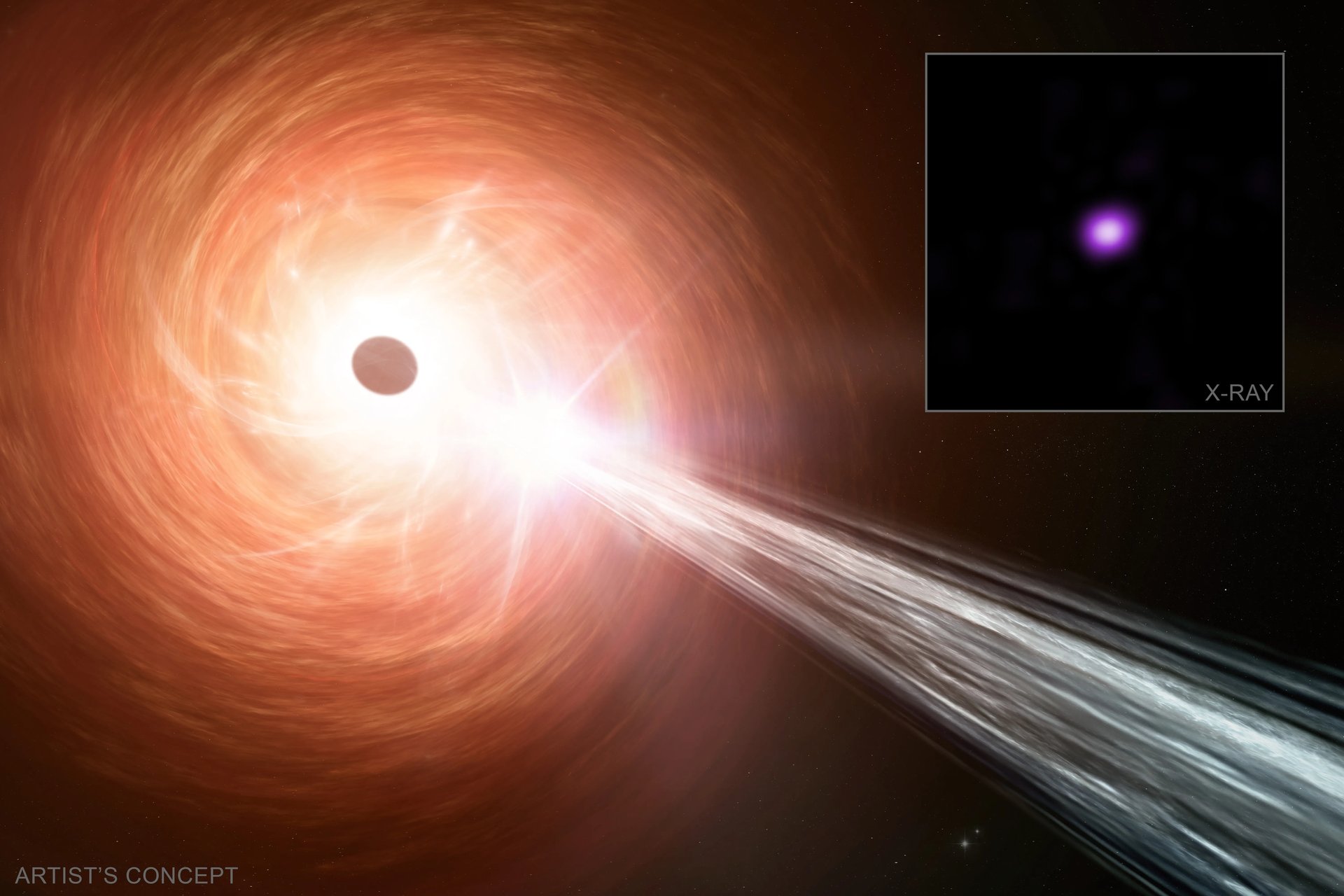
The quest to understand dark matter has taken a significant step forward as researchers delve into mounting evidence that suggests its existence is crucial for comprehending the universe. From early discoveries in the 1930s to groundbreaking observations in more recent decades, scientists have gradually pieced together the dark matter puzzle, a mystery that continues to challenge our understanding of gravity and cosmic structure.
Historical Foundations of Dark Matter
The concept of dark matter emerged from the work of Swiss-American astronomer Fritz Zwicky in the 1930s. While studying the Coma cluster, located over 300 light-years from Earth, Zwicky observed that the galaxies within the cluster were moving at speeds that defied the gravitational pull expected from their visible mass. According to his calculations, the galaxies should have dispersed due to insufficient mass to hold them together, yet the cluster remained intact. Zwicky’s findings marked the first indication of a missing mass problem, although he did not pursue the matter further.
Fast forward to the 1970s, when American astronomer Vera Rubin revisited the idea while examining the Andromeda Galaxy. Rubin found that stars were orbiting far too quickly for the mass visible to the naked eye. Her extensive research throughout the decade provided compelling evidence that suggested the presence of an unseen gravitational force, leading to the term “dark matter.” Rubin published numerous papers that highlighted this phenomenon across various galaxies, reinforcing the foundational concept first proposed by Zwicky.
Modern Evidence and Observations
The notion of dark matter gained further traction through advancements in observational techniques. One notable method is gravitational lensing, which allows scientists to measure the mass of galaxy clusters without counting all visible matter. A prime example is the Bullet Cluster, a galaxy cluster that has merged recently and provides a clear illustration of the discrepancy between visible mass, hot gas, and the total mass inferred through gravitational lensing. The findings from the Bullet Cluster indicate that the visible matter and the gravitational mass do not align, further supporting the existence of dark matter.
Another critical piece of evidence comes from the cosmic microwave background (CMB), the afterglow of the Big Bang. The CMB’s properties suggest that some form of invisible matter must have played a role in shaping the early universe. Researchers argue that without dark matter, the structure of the CMB would appear entirely different, highlighting its importance in cosmic evolution.
The growth of large-scale structures in the universe also suggests the need for additional gravitational sources. Current models indicate that the formation of galaxies, including our own Milky Way, would not have been possible without dark matter’s influence. It acts as a gravitational scaffold, helping to pull ordinary matter together during a time when it was too hot to coalesce.
Despite various attempts to modify gravitational theories to account for these observations, none have succeeded in explaining all phenomena without invoking dark matter. The persistent need for this elusive substance has left researchers questioning whether our understanding of gravity itself may require adjustments.
As scientists continue to investigate the enigma of dark matter, the late physicist Stephen Hawking famously remarked on the need for further exploration into the fabric of our universe. What remains clear is that the evidence supporting dark matter is extensive and growing, prompting ongoing research that may one day unlock its mysteries. The saga of primordial black holes and dark matter is only beginning to unfold, promising exciting developments in the field of cosmology.

AFD Battles Major Blaze at Austin Construction Site; Cause Unknown

Oak Fire Arsonist Edward Wackerman Released with Ankle Monitor

NFTA Launches New DL&W Metro Station in Buffalo Today

Judge Denies Extension, South Shore Residents Face Urgent Eviction

Germantown Residents Face Sidewalk Snow Removal Changes by 2026

Mexico Enacts New Subcontracting Protocol, Raises Minimum Wage for 2026

“One Battle After Another” Dominates 83rd Golden Globe Nominations

Understanding the Distinction Between Tumors and Cancer

“One Battle After Another” Dominates Golden Globe Nominations

ALMA Discovers Companion Orbiting Giant Red Star π 1 Gruis

New ‘Star Trek: Voyager’ Game Demo Released, Players Test Limits

SEVENTEEN’s Mingyu Faces Backlash Over Alcohol Incident at Concert

Global Air Forces Ranked by Annual Defense Budgets in 2025

Electrification Challenges Demand Advanced Multiphysics Modeling

Mass Production of F-35 Fighter Jet Drives Down Costs

Gold Investment Surge: Top Mutual Funds and ETF Alternatives

Time Crystals Revolutionize Quantum Computing Potential

DirecTV to Launch AI-Driven Ads with User Likenesses in 2026
-
 Science4 weeks ago
ALMA Discovers Companion Orbiting Giant Red Star π 1 Gruis
-
 Top Stories2 months ago
New ‘Star Trek: Voyager’ Game Demo Released, Players Test Limits
-
 Politics2 months ago
SEVENTEEN’s Mingyu Faces Backlash Over Alcohol Incident at Concert
-
 World2 months ago
Global Air Forces Ranked by Annual Defense Budgets in 2025
-
 World2 months ago
Electrification Challenges Demand Advanced Multiphysics Modeling
-
 World2 months ago
Mass Production of F-35 Fighter Jet Drives Down Costs
-
 Business2 months ago
Gold Investment Surge: Top Mutual Funds and ETF Alternatives
-
 Science2 months ago
Time Crystals Revolutionize Quantum Computing Potential
-
 Top Stories2 months ago
DirecTV to Launch AI-Driven Ads with User Likenesses in 2026
-

 Entertainment2 months ago
Freeport Art Gallery Transforms Waste into Creative Masterpieces
-

 Health2 months ago
Gavin Newsom Critiques Trump’s Health and National Guard Plans
-

 Business2 months ago
US Government Denies Coal Lease Bid, Impacting Industry Revival Efforts