
Science
Exploring the Unseen Bonds of Nature: Crown Shyness and Kind Objects

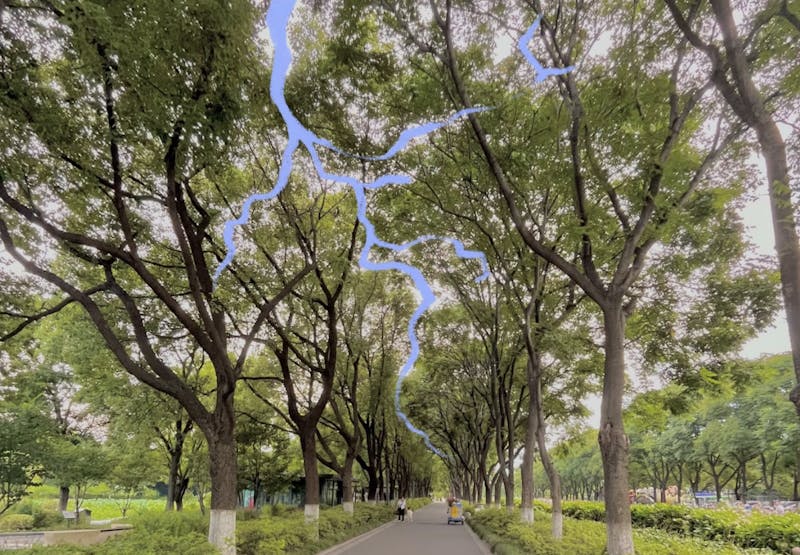
In a reflective exploration of natural phenomena and everyday objects, poet Danusha Laméris highlights the subtle connections that often go unnoticed in our fast-paced lives. Her poignant line from the poem “Small Kindnesses” emphasizes a fundamental truth: “Mostly, we don’t want to harm each other.” This observation serves as a gateway to understanding both the natural world and the overlooked moments of kindness that surround us.
Nature’s Silent Agreements
One of the most fascinating examples of mutual care in nature is the phenomenon known as crown shyness. This occurs when trees in dense forests maintain a respectful distance from one another, allowing each to access sunlight without competition. This behavior raises intriguing questions about evolution. Why would trees choose cooperation over competition for essential resources?
Crown shyness is frequently observed in various tree species, resulting in breathtaking formations where branches align against a clear blue sky. Although trees lack the ability to communicate verbally, they have developed remarkable methods of support. When a tree falls, it releases pheromones that alert nearby trees to the danger, prompting them to extend their roots and provide nutrients to their fallen companion. This silent yet powerful network exemplifies the deep connections that exist among living organisms.
Everyday Kindnesses
Beyond the forest, ordinary objects also convey stories of kindness and connection. For instance, a pair of cotton socks drying on a line sways gently in the wind, reaching out in a silent dance. The process of crushing star anise into a fine powder creates a vibrant hue when combined with cooking oil, showcasing the beauty in everyday actions. Even the well-worn velcro straps of a pair of shoes tell tales of stability and support over the years.
As rain begins to fall, Laméris reflects on the shared experience of navigating a storm with others. The brief moment when umbrellas tilt away from each other, avoiding collision, creates a collective understanding among strangers. The droplets that splash onto the pavement transform the world into a blurry canvas, prompting thoughts of warmth and shelter. Rain serves as a reminder of nature’s cyclical generosity, replenishing the earth with the very water that sustains life.
While Laméris celebrates these moments of kindness, she also acknowledges the less inviting aspects of human design. Anti-roosting spikes adorn door frames, and park benches often feature multiple armrests, discouraging interaction. Such designs can create barriers, prompting reflection on how we shape our environments to control social interactions. In a world where we often move past one another without direct contact, it becomes essential to observe the potential for connection around us.
These insights encourage a deeper appreciation for the interconnectedness of life—both in nature and among people. By recognizing the quiet acts of care and consideration, we can foster a greater sense of community and understanding, embracing the notion that, despite our differences, we are all participants in this intricate tapestry of existence.
Crystal Wang, a sophomore studying Molecular and Cellular Biology at the University of Maryland in Baltimore, invites readers to reflect on these themes of kindness and connection as they navigate their own lives.

Neurosurgeon Dr. David Kelly Jr. Earns UNC Degree After 70 Years

Urgent Weather Alert: Dangerous Cold, Snow Hits Central Pa.

NTSB Confirms 1940s Gas Pipeline Explosion Injures Six in Ashland

Community Raises Over $25,000 for Families After Stewartville Shooting

Patrick Mahomes to Undergo Surgery for Torn ACL, Out for Season

Diamond Hill Investment Group Outperforms FXCM in Key Financial Metrics

Eight Groundbreaking Moments in Absolute Batman That Redefine the Icon

Scientists Develop First Fully Human Bone Marrow Model for Research

Discover Unique Holiday Gifts for Everyone on Your List

ALMA Discovers Companion Orbiting Giant Red Star π 1 Gruis

SEVENTEEN’s Mingyu Faces Backlash Over Alcohol Incident at Concert

New ‘Star Trek: Voyager’ Game Demo Released, Players Test Limits

Global Air Forces Ranked by Annual Defense Budgets in 2025

Mass Production of F-35 Fighter Jet Drives Down Costs

Electrification Challenges Demand Advanced Multiphysics Modeling

Gold Investment Surge: Top Mutual Funds and ETF Alternatives

Time Crystals Revolutionize Quantum Computing Potential

DirecTV to Launch AI-Driven Ads with User Likenesses in 2026
-
 Science1 month ago
ALMA Discovers Companion Orbiting Giant Red Star π 1 Gruis
-
 Politics2 months ago
SEVENTEEN’s Mingyu Faces Backlash Over Alcohol Incident at Concert
-
 Top Stories2 months ago
New ‘Star Trek: Voyager’ Game Demo Released, Players Test Limits
-
 World2 months ago
Global Air Forces Ranked by Annual Defense Budgets in 2025
-
 World2 months ago
Mass Production of F-35 Fighter Jet Drives Down Costs
-
 World2 months ago
Electrification Challenges Demand Advanced Multiphysics Modeling
-
 Business2 months ago
Gold Investment Surge: Top Mutual Funds and ETF Alternatives
-
 Science2 months ago
Time Crystals Revolutionize Quantum Computing Potential
-
 Top Stories2 months ago
DirecTV to Launch AI-Driven Ads with User Likenesses in 2026
-
 Entertainment2 months ago
Freeport Art Gallery Transforms Waste into Creative Masterpieces
-

 Business2 months ago
US Government Denies Coal Lease Bid, Impacting Industry Revival Efforts
-

 Health2 months ago
Gavin Newsom Critiques Trump’s Health and National Guard Plans