
Science
Mars Time Dilation: How Your Clock Would Tick Faster on the Red Planet

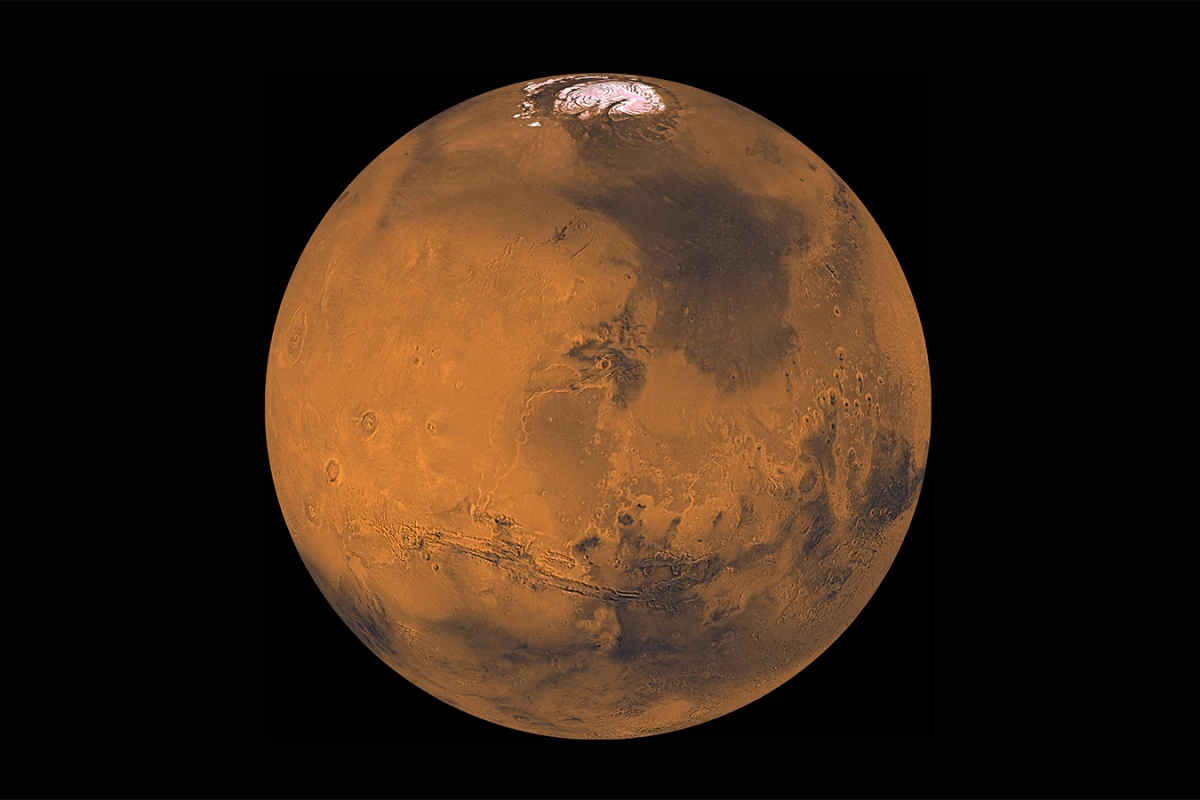
A recent study reveals that astronauts on Mars would experience time differently compared to Earth, aging faster by approximately 477 microseconds per day due to the effects of Einstein’s Theory of Relativity. This phenomenon, known as time dilation, has implications for future human missions to the Red Planet, as scientists attempt to understand the complexities of timekeeping in space.
Understanding how time behaves in different gravitational fields is critical. According to Neil Ashby and Bijunath Patla from the National Institute of Standards and Technology (NIST), calculations show that time on Mars runs faster than on Earth, but the situation is more complicated than it appears. The researchers published their findings in The Astronomical Journal, highlighting the intricacies involved in accounting for time discrepancies.
Time Dilation Explained
Time dilation arises from the relationship between speed and gravity. When objects move at high speeds or are in strong gravitational fields, time can pass differently for them compared to those in a more stable environment. The classic example is illustrated in Robert Heinlein’s 1956 novel, Time for the Stars, where a twin traveling at near light speed ages slower than his sibling on Earth. This relationship is not merely theoretical; it has practical applications, particularly in the realm of Global Positioning System (GPS) technology.
When GPS satellites orbit the Earth at about 17,500 mph (approximately 28,000 km/h), they experience a mix of time dilation effects. They gain time due to their speed but also lose time because they are farther from Earth’s gravitational pull. The net result is that GPS satellites run approximately 38 microseconds faster each day compared to clocks on Earth if adjustments are not made.
Challenges of Mars Timekeeping
As humanity prepares for more ambitious missions to Mars, maintaining accurate timekeeping becomes paramount. The calculations for Mars are significantly more complex than those for the Moon, requiring consideration of multiple gravitational influences, including the Earth, Moon, Sun, and Mars itself. This four-body problem complicates the mathematical models needed to accurately determine how time functions on the Red Planet.
The elliptical orbit of Mars further complicates matters, as its speed around the Sun varies throughout its year. Ashby and Patla’s research indicates that time on Mars runs 477 microseconds faster than on Earth, with fluctuations of 266 microseconds throughout the Martian year. This discrepancy means that without precise adjustments, navigation systems could be off by as much as 89 miles (approximately 143 kilometers) per day.
The implications extend beyond navigation. As humanity expands its presence in space, a reliable system for correcting time discrepancies is essential. With plans for lunar missions and Martian colonies, scientists are considering specialized time zones for celestial bodies, including a proposed time zone for the Moon, which runs 56 microseconds faster than Earth.
Ashby emphasizes the importance of this research, stating, “It’s good to know for the first time what is happening on Mars timewise. Nobody knew that before.” Understanding how various factors influence timekeeping enhances our grasp of relativity and its practical applications in space exploration.
As missions to Mars become more frequent, the challenges of timekeeping and navigation will continue to grow. Addressing these issues is critical for the success of future human endeavors beyond Earth. The research conducted by Ashby and Patla lays the groundwork for further developments in managing time in space, ensuring that humanity can navigate the cosmos with greater precision.

Germany’s Trade Surplus Soars to €16.9 Billion in October

Urgent: New Berkeley Jewelry Studio Hit by $10K Burglary

Recognizing Dementia Signs While Shopping: Key Symptoms to Watch For

Navigating Friendships and Gift-Giving in Challenging Times

North Dakota Governor Calls for Sabotage Vigilance Amid War Declaration

Mars Time Dilation: How Your Clock Would Tick Faster on the Red Planet

Eagles Fall to Chargers 22-19 as Hurts Struggles in Overtime

Victorian Premier Apologizes to First Peoples for Colonization

Viewing and Funeral for Officer Andy Chan Scheduled Next Week

ALMA Discovers Companion Orbiting Giant Red Star π 1 Gruis

New ‘Star Trek: Voyager’ Game Demo Released, Players Test Limits

SEVENTEEN’s Mingyu Faces Backlash Over Alcohol Incident at Concert

Global Air Forces Ranked by Annual Defense Budgets in 2025

Mass Production of F-35 Fighter Jet Drives Down Costs

Electrification Challenges Demand Advanced Multiphysics Modeling

Gold Investment Surge: Top Mutual Funds and ETF Alternatives

Time Crystals Revolutionize Quantum Computing Potential

DirecTV to Launch AI-Driven Ads with User Likenesses in 2026
-
 Science4 weeks ago
ALMA Discovers Companion Orbiting Giant Red Star π 1 Gruis
-
 Top Stories2 months ago
New ‘Star Trek: Voyager’ Game Demo Released, Players Test Limits
-
 Politics2 months ago
SEVENTEEN’s Mingyu Faces Backlash Over Alcohol Incident at Concert
-
 World2 months ago
Global Air Forces Ranked by Annual Defense Budgets in 2025
-
 World2 months ago
Mass Production of F-35 Fighter Jet Drives Down Costs
-
 World2 months ago
Electrification Challenges Demand Advanced Multiphysics Modeling
-
 Business2 months ago
Gold Investment Surge: Top Mutual Funds and ETF Alternatives
-
 Science2 months ago
Time Crystals Revolutionize Quantum Computing Potential
-
 Top Stories2 months ago
DirecTV to Launch AI-Driven Ads with User Likenesses in 2026
-

 Entertainment2 months ago
Freeport Art Gallery Transforms Waste into Creative Masterpieces
-

 Business2 months ago
US Government Denies Coal Lease Bid, Impacting Industry Revival Efforts
-

 Health2 months ago
Gavin Newsom Critiques Trump’s Health and National Guard Plans