
Science
Metal Detectorist Unearths Rare Viking Age Grave in Norway

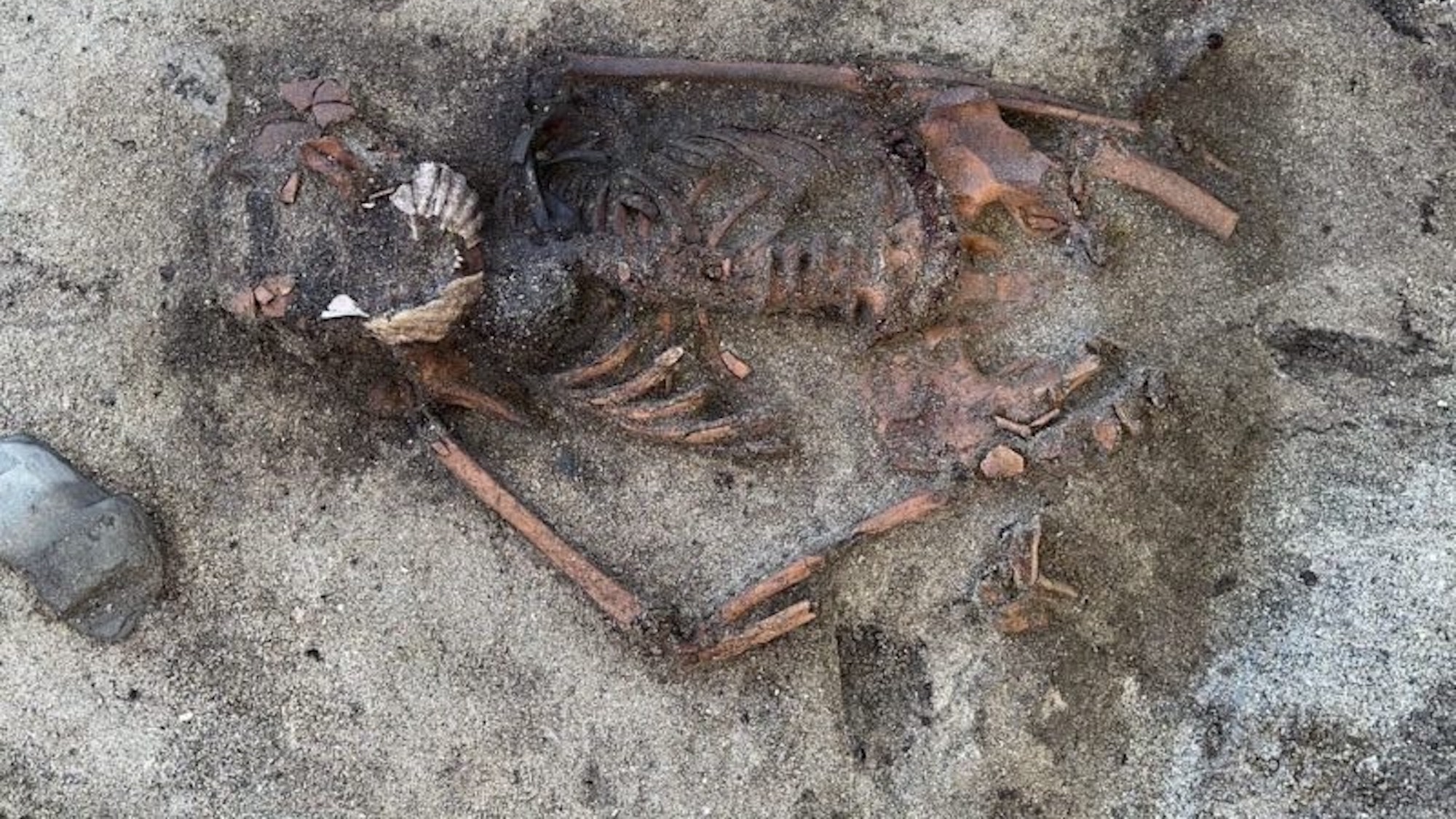
A recent discovery in Trøndelag County, Norway, has unveiled a Viking Age grave that could reshape our understanding of burial practices from that era. Metal detectorist Roy Søreng stumbled upon two oval brooches, one of which prompted archaeologists to excavate a grave containing the remains of a woman adorned with jewelry from the 800s.
The excavation was initiated after Søreng contacted researchers from the Norwegian University of Science and Technology (NTNU). The team, led by Raymond Sauvage, head engineer at the NTNU Museum’s Department of Archaeology and Cultural History, conducted the dig discreetly to protect the site and its archaeological significance.
Insights from the Excavation
The grave revealed a female skeleton, likely a free and possibly married woman, as inferred from her burial attire and artifacts. “This indicates that she was the mistress of the farm,” Sauvage stated, adding that the grave contained typical Viking Age items, including two oval brooches and a ring buckle.
A particularly intriguing aspect of the burial is the presence of two scallop shells partially covering the deceased’s mouth. In the Middle Ages, these shells were commonly associated with the cult of St. James and are exceptionally rare in pre-Christian graves. “This is a practice that is not previously known from pre-Christian graves in Norway,” Sauvage noted. The significance of these shells remains unclear, but they may have held symbolic meaning for those attending the burial.
Alongside the skeleton, the excavation also uncovered bird bones, likely wing bones, which further suggests a ritualistic aspect to the grave. The shells and bones were probably intended to convey a message to those witnessing the burial ceremony.
Future Research and Analysis
The excavation follows another significant find in the same location earlier this year, where a pristine skeleton was documented. According to Hanne Bryn, the field supervisor from the Department of Archaeology and Cultural History, the newly discovered individual appears to be one to three generations younger than the previous find. “During the inspection, we quickly realized that we were facing a new skeletal grave that was in acute danger of being damaged during the next ploughing,” Bryn explained. Fortunately, landowner Arve Innstrand permitted the excavation to proceed.
Next, researchers plan to analyze the skeleton, preserve the artifacts, and conduct dating and DNA tests. “The goal is to learn more about the person and about possible kinship to the previous find from the same place,” Sauvage stated. Investigations will also focus on determining body height, identifying gender-defining traits, and examining any potential traces of disease.
As the analysis unfolds, this remarkable find promises to contribute valuable insights into Viking Age customs and enrich the historical narrative surrounding this fascinating period. The collaboration between metal detectorists and archaeologists highlights the importance of community engagement in uncovering and preserving our shared heritage.

Army-Navy Game Unites Fans in Tribute to Veterans and Heroes

Russia and Ukraine Exchange Strikes Ahead of Peace Talks

Castle Biosciences and Seres Therapeutics: An Investment Comparison

Divine Ugochukwu Shines as Michigan State Edges Past Penn State

Trump Promises Retaliation Following Fatal Attack on U.S. Troops in Syria

EQB Inc. Increases Quarterly Dividend to $0.57 Per Share

Amy Schumer’s Friends Rally Around Her After Divorce Announcement

Russia Strikes Ukrainian Power Grid; Kyiv Counterattack Imminent

Maine’s Loons Surge as Conservation Efforts Bring Success

ALMA Discovers Companion Orbiting Giant Red Star π 1 Gruis

SEVENTEEN’s Mingyu Faces Backlash Over Alcohol Incident at Concert

New ‘Star Trek: Voyager’ Game Demo Released, Players Test Limits

Global Air Forces Ranked by Annual Defense Budgets in 2025

Electrification Challenges Demand Advanced Multiphysics Modeling

Mass Production of F-35 Fighter Jet Drives Down Costs

Gold Investment Surge: Top Mutual Funds and ETF Alternatives

Time Crystals Revolutionize Quantum Computing Potential

DirecTV to Launch AI-Driven Ads with User Likenesses in 2026
-
 Science4 weeks ago
ALMA Discovers Companion Orbiting Giant Red Star π 1 Gruis
-
 Politics2 months ago
SEVENTEEN’s Mingyu Faces Backlash Over Alcohol Incident at Concert
-
 Top Stories2 months ago
New ‘Star Trek: Voyager’ Game Demo Released, Players Test Limits
-
 World2 months ago
Global Air Forces Ranked by Annual Defense Budgets in 2025
-
 World2 months ago
Electrification Challenges Demand Advanced Multiphysics Modeling
-
 World2 months ago
Mass Production of F-35 Fighter Jet Drives Down Costs
-
 Business2 months ago
Gold Investment Surge: Top Mutual Funds and ETF Alternatives
-
 Science2 months ago
Time Crystals Revolutionize Quantum Computing Potential
-
 Top Stories2 months ago
DirecTV to Launch AI-Driven Ads with User Likenesses in 2026
-

 Entertainment2 months ago
Freeport Art Gallery Transforms Waste into Creative Masterpieces
-

 Business2 months ago
US Government Denies Coal Lease Bid, Impacting Industry Revival Efforts
-

 Health2 months ago
Gavin Newsom Critiques Trump’s Health and National Guard Plans