
Science
Researchers Innovate Battery Electrode Manufacturing with New Dry Process

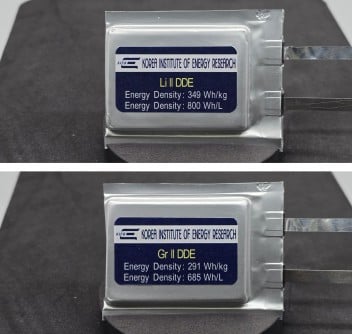
A team of researchers has unveiled a groundbreaking dry-process manufacturing technology for secondary battery electrodes, addressing key performance challenges. Led by Dr. Gyujin Song from the Korea Institute of Energy Research (KIER), alongside Dr. Kwon-Hyung Lee of the University of Cambridge and Professor Tae-Hee Kim from the University of Ulsan, the innovation aims to enhance the durability and overall performance of batteries.
The new technology creates a dual-fibrous structure within the electrode, combining thin “thread-like” and thick “rope-like” fibers. This design resolves common issues associated with traditional dry processes, particularly those related to low mixing strength and performance degradation. Conventional electrode manufacturing methods fall into two categories: wet and dry processes. The wet process relies on a binder dissolved in a solvent, ensuring uniform mixing but necessitating toxic organic solvents and lengthy drying times. In contrast, the dry process, which eliminates solvents, offers faster production and reduced environmental impact but has been limited by challenges in binder material selection.
To tackle these challenges, the research team utilized polytetrafluoroethylene (PTFE), a material known for its excellent heat resistance and stability, to develop a new binder with a unique dual-fiber architecture. This involved a multi-step addition process. Initially, a small amount of binder was added to create a fine fibrous network that connects the electrode’s active material and conductive additives. In a subsequent stage, more binder was introduced to form a robust fiber structure, enhancing the electrode’s cohesion and mechanical stability.
The results of this innovative approach indicate significant improvements in battery performance. The fine fibrous network allows for uniform dispersion of materials, enhancing electrochemical reactions. Simultaneously, the thick fibers ensure the electrode maintains its form during production, which is crucial for mass manufacturing. Analysis of the electrochemical reaction-resistance demonstrated consistent and rapid reaction kinetics across the electrode, minimizing energy loss during operation and extending the overall lifespan of the battery.
In performance evaluations, the dry electrode achieved an impressive areal capacity of 10.1 mAh/cm2. A pouch-type lithium metal anode cell utilizing this electrode reached an energy density of 349 Wh/kg, approximately 40% higher than that of conventional electrodes, which typically average around 250 Wh/kg. A pouch cell using a graphite anode also demonstrated superior performance, achieving an energy density of 291 Wh/kg, about 20% more than a comparable wet-process cell.
Dr. Gyujin Song emphasized the significance of this research, stating, “This study is highly significant in that we have established an original process technology capable of simultaneously resolving the two core challenges of dry electrodes: electrochemical uniformity and mechanical durability. We expect it to not only enhance the cost competitiveness of the secondary battery industry but also be applicable to electric vehicles and energy storage systems (ESS), which require high energy density.”
The research received support from the Ministry of Science and ICT through its “Global TOP Research Program” and “Creative Allied Project.” The findings were published in the September 2023 issue of Energy & Environmental Science, a leading journal in the energy and environmental sectors.

OpenAI Reverses ChatGPT Ad Feature After User Backlash

Yoon Kye Sang Delves Deeper into Explosions Mystery in “Heroes Next Door”

Early Immunotherapy Administration Boosts Survival in Cancer Patients

Discover Fun White Elephant Gifts Under $30 for Everyone

New Strategies Proposed to Combat Subway Surfing in NYC

Supernova Discovery Unveils Key Elements for Life’s Origins

Affordable White Elephant Gifts Under $30 Just Revealed!

James Cameron Backs K-Pop Demon Hunters Amid Cinema Concerns

Germany’s Industrial Production Surges 1.8% in October, Beats Forecasts

ALMA Discovers Companion Orbiting Giant Red Star π 1 Gruis

New ‘Star Trek: Voyager’ Game Demo Released, Players Test Limits

SEVENTEEN’s Mingyu Faces Backlash Over Alcohol Incident at Concert

Global Air Forces Ranked by Annual Defense Budgets in 2025

Electrification Challenges Demand Advanced Multiphysics Modeling

Mass Production of F-35 Fighter Jet Drives Down Costs

Gold Investment Surge: Top Mutual Funds and ETF Alternatives

Time Crystals Revolutionize Quantum Computing Potential

DirecTV to Launch AI-Driven Ads with User Likenesses in 2026
-
 Science3 weeks ago
ALMA Discovers Companion Orbiting Giant Red Star π 1 Gruis
-
 Top Stories2 months ago
New ‘Star Trek: Voyager’ Game Demo Released, Players Test Limits
-
 Politics2 months ago
SEVENTEEN’s Mingyu Faces Backlash Over Alcohol Incident at Concert
-
 World2 months ago
Global Air Forces Ranked by Annual Defense Budgets in 2025
-
 World2 months ago
Electrification Challenges Demand Advanced Multiphysics Modeling
-
 World2 months ago
Mass Production of F-35 Fighter Jet Drives Down Costs
-
 Business2 months ago
Gold Investment Surge: Top Mutual Funds and ETF Alternatives
-
 Science2 months ago
Time Crystals Revolutionize Quantum Computing Potential
-
 Top Stories2 months ago
DirecTV to Launch AI-Driven Ads with User Likenesses in 2026
-

 Entertainment2 months ago
Freeport Art Gallery Transforms Waste into Creative Masterpieces
-

 Health2 months ago
Gavin Newsom Critiques Trump’s Health and National Guard Plans
-

 Business2 months ago
US Government Denies Coal Lease Bid, Impacting Industry Revival Efforts