
Science
Researchers Launch LimbNET to Revolutionize Limb Development Studies

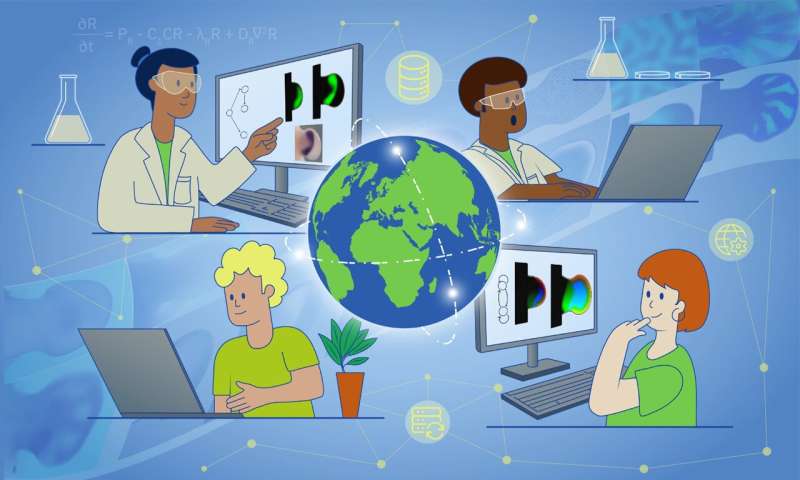
Researchers at the **European Molecular Biology Laboratory (EMBL)** in Barcelona have unveiled **LimbNET**, an innovative online platform designed to enhance the study of limb development. Launched on **December 4, 2025**, LimbNET allows scientists to simulate and visualize the complex cellular choreography involved in forming biological structures, such as limbs, through computational modeling. This groundbreaking initiative aims to facilitate collaboration and transparency within the scientific community.
Features and Collaborative Potential of LimbNET
LimbNET is not merely a data repository; it represents a comprehensive platform where researchers can define and simulate custom gene regulatory networks. This capability enables scientists to test and compare hypotheses within a unified framework. By consolidating existing models of limb development, LimbNET empowers users to explore, simulate, and build upon one another’s research, fostering cumulative knowledge.
“Our aim with LimbNET is to have everything in one place, so that the data, the models, and the simulations are not scattered across research groups, countries, and institutes,” stated **Antoni Matyjaszkiewicz**, the study’s first author and a Research Staff Scientist in EMBL’s Sharpe Group. He emphasized the platform’s potential to enhance collaboration among the relatively small limb development community.
One of the standout features of LimbNET is its accessibility. Researchers can utilize the platform directly from their web browsers without the need for software downloads or installations. This democratization of advanced modeling tools aims to broaden participation in limb development research globally.
Transforming Scientific Publishing and Engagement
LimbNET also seeks to redefine the approach to scientific publishing. According to **James Sharpe**, Head of EMBL Barcelona and senior author of the study, the platform allows researchers to present interactive, extendable versions of their work. This new model contrasts with traditional methods that present findings as static articles.
“This is like going from a static cookbook with text and photos to a kitchen where you can try the recipe yourself,” Sharpe explained. LimbNET enables scientists to share not just their findings but the logic behind their ideas, allowing others to adjust, explore, and challenge simulations.
By making all components of a study—experimental images, mathematical models, and dynamic simulations—openly accessible, the platform fosters reproducibility and critical engagement. This shift creates a living ecosystem of models, which can evolve as new insights and data become available.
The authors hope LimbNET will encourage those with little or no experience in computational simulations to engage with modeling. Its user-friendly interface allows researchers to modify existing models rather than starting from scratch, promoting interdisciplinary collaboration and discussion.
“Creating conversations between experimentalists and computational researchers is vital,” Matyjaszkiewicz noted. “This tool helps refine experiments and rethink hypotheses, making it easier to translate verbal models into tangible, quantitative simulations.”
Community feedback has been overwhelmingly positive, with experts recognizing LimbNET’s innovative approach to limb development research. **Rolf Zeller**, a Professor at the University of Basel, remarked, “LimbNET opens an exciting and innovative new avenue as it facilitates moving from studying gene interactions to integrative analysis of complex networks.”
As LimbNET continues to evolve, it stands poised to become a crucial resource for researchers in the field of developmental biology, enhancing collaboration and fostering a deeper understanding of the intricate processes that shape limb formation.

Lanes Reopen on I-290 After Fiery Crash; Traffic Diverted

Zonta Club Delivers Joy to Kauai’s Children’s Justice Center

Researchers Launch LimbNET to Revolutionize Limb Development Studies

Ryan Preece Gears Up for Snowball Derby Amid Exciting Offseason

IRS Tightens RMD Rules, Urges Retirees to Act by December 31

Phemex Launches $450,000 Futures Trading Competition for Traders

Celebrate the Season: Groton Hill Music Center Unveils Festive Lineup

Aroma Joe’s Unveils Festive Holiday Drinks in Connecticut NOW

UK Construction PMI Plummets to 39.4, Hitting 5.5-Year Low

ALMA Discovers Companion Orbiting Giant Red Star π 1 Gruis

New ‘Star Trek: Voyager’ Game Demo Released, Players Test Limits

Global Air Forces Ranked by Annual Defense Budgets in 2025

Electrification Challenges Demand Advanced Multiphysics Modeling

Mass Production of F-35 Fighter Jet Drives Down Costs

Time Crystals Revolutionize Quantum Computing Potential

Gold Investment Surge: Top Mutual Funds and ETF Alternatives

SEVENTEEN’s Mingyu Faces Backlash Over Alcohol Incident at Concert

DirecTV to Launch AI-Driven Ads with User Likenesses in 2026
-
 Science3 weeks ago
ALMA Discovers Companion Orbiting Giant Red Star π 1 Gruis
-
 Top Stories2 months ago
New ‘Star Trek: Voyager’ Game Demo Released, Players Test Limits
-
 World2 months ago
Global Air Forces Ranked by Annual Defense Budgets in 2025
-
 World2 months ago
Electrification Challenges Demand Advanced Multiphysics Modeling
-
 World2 months ago
Mass Production of F-35 Fighter Jet Drives Down Costs
-
 Science2 months ago
Time Crystals Revolutionize Quantum Computing Potential
-
 Business2 months ago
Gold Investment Surge: Top Mutual Funds and ETF Alternatives
-
 Politics1 month ago
SEVENTEEN’s Mingyu Faces Backlash Over Alcohol Incident at Concert
-
 Top Stories2 months ago
DirecTV to Launch AI-Driven Ads with User Likenesses in 2026
-

 Entertainment2 months ago
Freeport Art Gallery Transforms Waste into Creative Masterpieces
-

 Business2 months ago
US Government Denies Coal Lease Bid, Impacting Industry Revival Efforts
-

 Health2 months ago
Gavin Newsom Critiques Trump’s Health and National Guard Plans