
Top Stories
China Hits Historic $1 Trillion Trade Surplus Amid Tariff Challenges

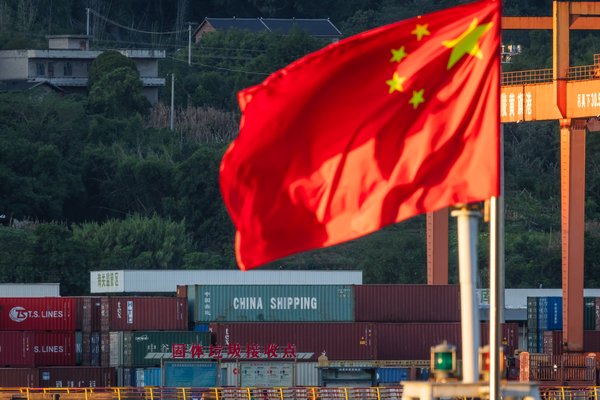
UPDATE: China has just achieved an unprecedented $1 trillion trade surplus for 2025, making history as the first country ever to reach this milestone. This groundbreaking data, released earlier today, underlines China’s resilience in the wake of Donald Trump’s trade wars, as the nation pivots from U.S. exports to new global partnerships.
China’s export growth surged almost 6% year-over-year last month, recovering from a slight dip in October. Meanwhile, imports rose only marginally, leading to a staggering trade surplus of approximately $1.08 trillion for the year to date. This significant gap shows that China is successfully selling far more to the world than it is purchasing.
Despite a dramatic 29% drop in exports to the United States last month—continuing a year-long trend—China’s overall exports flourished, particularly in regions such as Southeast Asia, Africa, Europe, and Latin America. This shift illustrates how China has emerged from the trade conflicts largely unscathed, re-routing its trade networks away from dependency on U.S. markets.
As recently as a decade ago, the U.S. accounted for about 25% of China’s exports. Today, that number has plummeted to around 10%. This decline reflects China’s strategic efforts to build solid trade relationships globally, effectively mitigating the impact of steep tariffs imposed by the U.S.
While the record trade surplus showcases China’s export dominance, it raises pressing concerns about the health of its domestic economy. Analysts have noted potential weaknesses within China, with some suggesting that a large surplus might signal a decline in domestic demand. Such imbalances can also provoke political backlash from trading partners, who may view these figures as destabilizing.
Economists urge caution in interpreting the latest data. Although November’s figures are impressive, China’s factory activity continues to contract, and the effects of recent tariff reductions may take time to manifest in trade statistics. Despite this, China’s focus on advanced manufacturing—particularly in sectors like electric vehicles, robotics, and batteries—signals a clear long-term strategy aimed at maximizing profitability and meeting future demand.
As this monumental surplus unfolds amidst global tariffs and slowing economic growth, it raises critical questions for other nations. If China can achieve a historic $1 trillion surplus despite significant trade barriers, what does this mean for the power dynamics of international trade?
Stay tuned for more updates as this story develops.

Bethesda Announces Skyrim Port for Switch 2 – Available Now!

Ionia County Approves Urgent Road Budget Revisions Today

UCF Knights Seek New Defensive Backs Coach After Harris Departure

MP Demands Nationwide Ban on Toxic Biobeads After Spill

First Trust Advisors Reduces Stake in ADT Inc. by 26.7%

Survivor 49 Shocks Fans as Steven Ramm Eliminated Before Finale

States Defend Obamacare Subsidies, Call for Federal Reforms

Washington Township Officer Weaver Achieves Elite Drug Recognition Certification

Urgent Update: Hellenic to Reopen for 123 Evacuated Residents Tuesday

ALMA Discovers Companion Orbiting Giant Red Star π 1 Gruis

New ‘Star Trek: Voyager’ Game Demo Released, Players Test Limits

SEVENTEEN’s Mingyu Faces Backlash Over Alcohol Incident at Concert

Global Air Forces Ranked by Annual Defense Budgets in 2025

Mass Production of F-35 Fighter Jet Drives Down Costs

Electrification Challenges Demand Advanced Multiphysics Modeling

Gold Investment Surge: Top Mutual Funds and ETF Alternatives

Time Crystals Revolutionize Quantum Computing Potential

DirecTV to Launch AI-Driven Ads with User Likenesses in 2026
-
 Science4 weeks ago
ALMA Discovers Companion Orbiting Giant Red Star π 1 Gruis
-
 Top Stories2 months ago
New ‘Star Trek: Voyager’ Game Demo Released, Players Test Limits
-
 Politics2 months ago
SEVENTEEN’s Mingyu Faces Backlash Over Alcohol Incident at Concert
-
 World2 months ago
Global Air Forces Ranked by Annual Defense Budgets in 2025
-
 World2 months ago
Mass Production of F-35 Fighter Jet Drives Down Costs
-
 World2 months ago
Electrification Challenges Demand Advanced Multiphysics Modeling
-
 Business2 months ago
Gold Investment Surge: Top Mutual Funds and ETF Alternatives
-
 Science2 months ago
Time Crystals Revolutionize Quantum Computing Potential
-
 Top Stories2 months ago
DirecTV to Launch AI-Driven Ads with User Likenesses in 2026
-

 Entertainment2 months ago
Freeport Art Gallery Transforms Waste into Creative Masterpieces
-

 Business2 months ago
US Government Denies Coal Lease Bid, Impacting Industry Revival Efforts
-

 Health2 months ago
Gavin Newsom Critiques Trump’s Health and National Guard Plans