
Top Stories
COP30 Concludes Amid Chaos, Global Climate Action Hangs by Thread

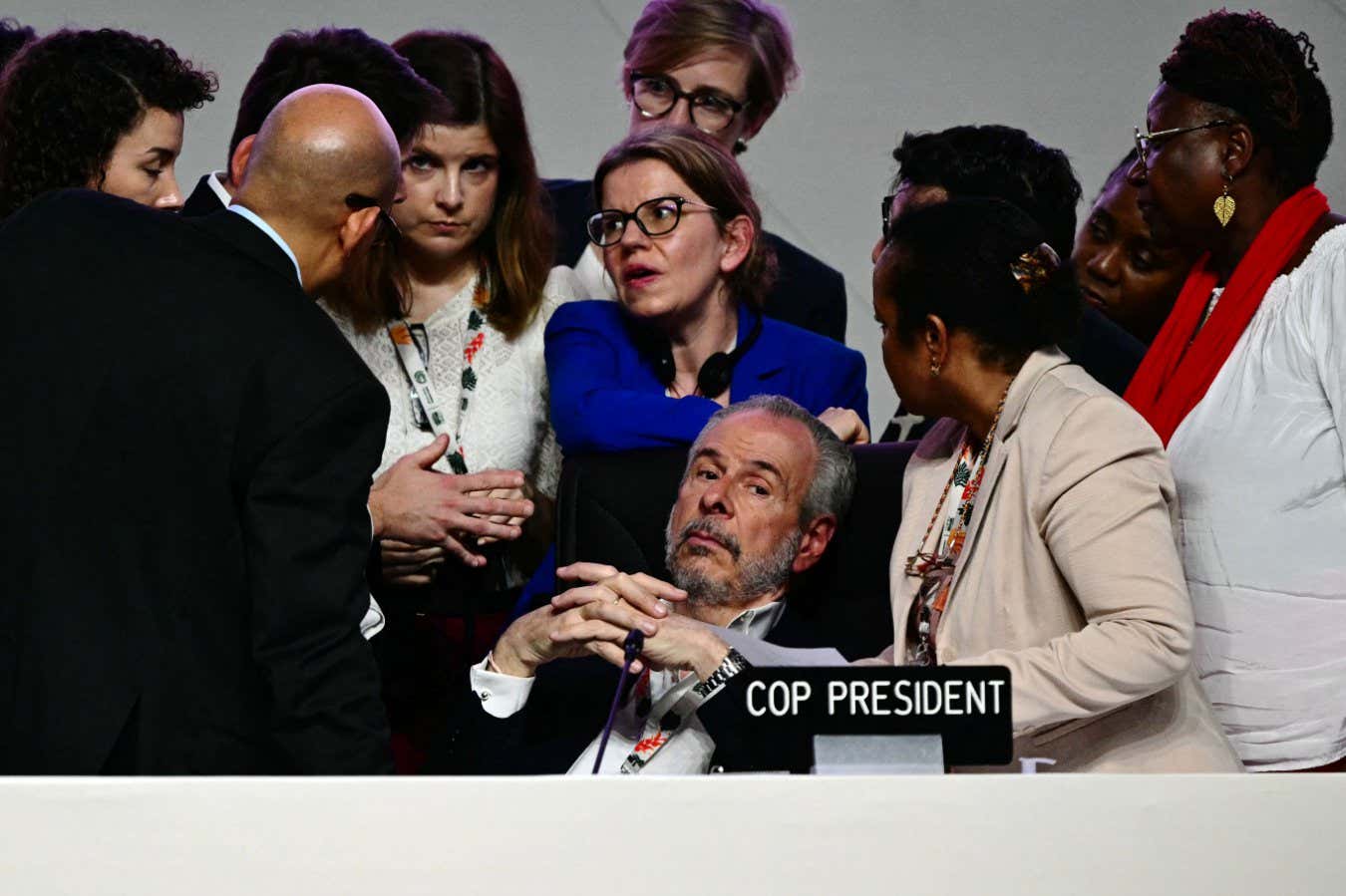
UPDATE: The United Nations COP30 climate summit in Belém, Brazil, concluded amidst dramatic events, including torrential rainfall, protests, and an electrical fire that caused significant disruptions. The final session was temporarily halted as countries voiced strong objections to the agreed texts, deeming them inadequate for meaningful climate action.
Despite these challenges, the summit demonstrated that the only global process for climate cooperation remains active, with 194 nations participating, excluding the United States. Over the past 12 days, negotiators sought a unified approach to combat climate change, but tensions simmered over the exclusion of fossil fuel discussions from the final decision.
More than 80 countries pressed for a roadmap to transition away from fossil fuels, which are responsible for nearly 75% of greenhouse gas emissions. However, oil-producing nations succeeded in removing these discussions, leaving critics frustrated. Colombian delegate Diana Mejia called the consensus “a failed agreement,” highlighting the discontent echoed by representatives from Panama and Uruguay.
“A consensus imposed under climate denialism is a failed agreement,” said Mejia, stressing the need for stronger commitments.
Brazil, which presided over COP30, promised to help develop a fossil fuel transition roadmap outside of the UN process, though many remain skeptical. Natalie Jones from the International Institute for Sustainable Development pointed out the difficulties in reaching consensus, likening it to “playing a game while some players argue about the rules.”
In his closing remarks, UN climate secretary Simon Stiell acknowledged the “heavy blows” faced in climate negotiations this year but emphasized that international cooperation has not faltered completely. The summit’s final decision, termed the “global mutirão”—an Indigenous Brazilian term meaning “collective efforts”—reflects ongoing support for the Paris Agreement.
With the backdrop of the US withdrawing from climate commitments and Argentina threatening to exit, the consensus at COP30 serves as a critical indicator of resilience among countries committed to climate action. Experts, including Joanna Depledge from the University of Cambridge, noted this agreement as a “powerful pushback against the forces of climate denialism.”
However, amid these developments, calls for increased financial support for low-income countries became a focal point. As the US reduces its foreign aid, nations vulnerable to climate impacts have expressed dissatisfaction with the lack of support from major historical emitters. COP30 agreed to develop a “just transition mechanism” aimed at addressing these inequities.
The summit did achieve a pledge to triple adaptation finance, although the specifics regarding funding remain unclear, with the initial deadline for implementation pushed back to 2035.
“Apart from the just transition mechanism… I don’t have anything to celebrate,” stated Harjeet Singh of the Satat Sampada Climate Foundation, reflecting widespread disappointment with the outcomes.
Despite these challenges, COP30 also introduced the Tropical Forests Forever Facility, a $6.6 billion investment fund aimed at incentivizing countries to preserve their forests. While the goal of $25 billion remains unmet, experts view this initiative as a step forward from ineffective carbon offsetting schemes.
Marco Duso, a sustainability consultant at Ernst and Young, remarked, “Brazil taking a bit of leadership on deforestation is one of the best outcomes we could hope for COP30.” This initiative aligns with the broader goal of combating climate change while supporting sustainable development.
As COP30 wraps up, the global climate community faces a pivotal moment. With ongoing challenges and an urgent need for decisive action, the world watches to see if nations can unite to forge a path toward a sustainable future. The implications of this summit will resonate far beyond Brazil, influencing the global climate agenda in the years to come.

NYCFC Announces Todd Dunivant as Chief Soccer Officer NOW

San Jose Woman Arrested for Murder in Fatal Hit-and-Run

Cancer Survivors Find Healing Through Art at UCSF Program

Fayetteville Woman Launches Urgent Food Pantry for Families

Dollar Tree Launches $1.50 Organizers, Transforming Home Storage

Uber Driver Shot in Head Released from Hospital, Police Confirm

Orono Seeks Public Input on Urgent $11.6M Funding Plan

USDA Reviews All Programs to Restrict Food Stamp Access

Ancient Shell Trumpets Unveil Prehistoric Communication Methods

New ‘Star Trek: Voyager’ Game Demo Released, Players Test Limits

Global Air Forces Ranked by Annual Defense Budgets in 2025

ALMA Discovers Companion Orbiting Giant Red Star π 1 Gruis

Mass Production of F-35 Fighter Jet Drives Down Costs

Electrification Challenges Demand Advanced Multiphysics Modeling

Gold Investment Surge: Top Mutual Funds and ETF Alternatives

Time Crystals Revolutionize Quantum Computing Potential

DirecTV to Launch AI-Driven Ads with User Likenesses in 2026

Freeport Art Gallery Transforms Waste into Creative Masterpieces
-
 Top Stories2 months ago
New ‘Star Trek: Voyager’ Game Demo Released, Players Test Limits
-
 World2 months ago
Global Air Forces Ranked by Annual Defense Budgets in 2025
-
 Science3 weeks ago
ALMA Discovers Companion Orbiting Giant Red Star π 1 Gruis
-
 World2 months ago
Mass Production of F-35 Fighter Jet Drives Down Costs
-
 World2 months ago
Electrification Challenges Demand Advanced Multiphysics Modeling
-
 Business2 months ago
Gold Investment Surge: Top Mutual Funds and ETF Alternatives
-
 Science2 months ago
Time Crystals Revolutionize Quantum Computing Potential
-
 Top Stories2 months ago
DirecTV to Launch AI-Driven Ads with User Likenesses in 2026
-
 Entertainment2 months ago
Freeport Art Gallery Transforms Waste into Creative Masterpieces
-

 Business2 months ago
US Government Denies Coal Lease Bid, Impacting Industry Revival Efforts
-

 Politics1 month ago
SEVENTEEN’s Mingyu Faces Backlash Over Alcohol Incident at Concert
-

 Health2 months ago
Gavin Newsom Critiques Trump’s Health and National Guard Plans