
Top Stories
Revolutionary Victorian Technique Boosts Peach Harvests Now!

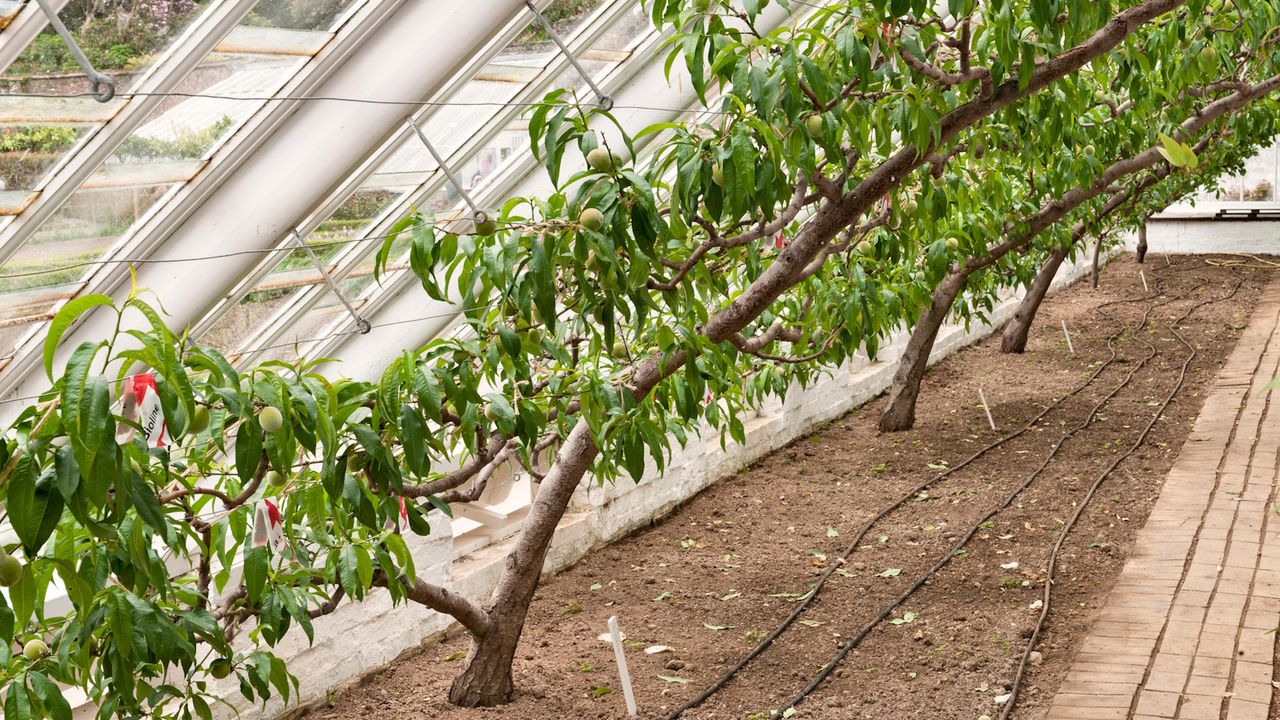
BREAKING NEWS: A Victorian gardening technique is transforming peach cultivation in cold, wet climates, allowing fruit enthusiasts to achieve bumper harvests where once it seemed impossible. Gravetye Manor in Sussex, England, has become a beacon of hope for gardeners, showcasing how a historic glasshouse can ensure thriving peach trees.
This groundbreaking method, rooted in history since 1884, is currently generating buzz among horticulturists and gardening aficionados. During a recent visit, Head Gardener Tom Coward revealed how the glasshouse prevents severe issues like peach leaf curl, frost damage, and pest problems, allowing for high-quality fruit production year after year.
Peach leaf curl, a fungal disease that can devastate trees, thrives in excessively wet conditions, a common challenge in regions where peach trees are typically grown. By utilizing a Victorian glasshouse, Gravetye Manor effectively shields peach trees from these threats. Coward states, “By putting them under glass, you don’t get peach leaf curl. You get high-quality fruit early in the season, and you can keep the squirrels away.”
The glasshouse not only protects against diseases but also prevents frost from damaging the blossoms, which is crucial for fruiting. “The blossom also never gets frosted,” Coward explains, emphasizing that this method yields peaches with superior flavor that can ripen perfectly on the tree.
This innovation is particularly relevant as colder regions, including parts of the United States, grapple with similar climate challenges. Peach trees are typically best suited to hardiness zones 6 to 8, but thanks to this technique, gardeners in harsher climates can now dream of homegrown peaches.
Gravetye Manor’s historic glasshouse was restored in 2012, ensuring that this Victorian tradition continues to flourish. The advancement of glasshouse technology during the Victorian era, including improved ventilation and heating, played a crucial role in the ability to grow delicate fruits like peaches.
For those looking to replicate this success, Coward offers practical tips: “If you have space for a sizeable greenhouse, you can use this trick in your backyard with compact peach trees.” He suggests opting for well-draining soil and considers training techniques like oblique cordon training or espalier for better ventilation.
With the season for harvesting peaches approaching, gardeners should be on the lookout for fruit that turns yellow, blushes, and gives slightly when pressed. This careful attention can lead to an earlier harvest, especially when using a greenhouse.
The impact of this Victorian technique is immense, allowing those in colder regions to experience the joy of growing their own peaches. As interest surges, more gardeners are likely to explore this historic method, making homegrown peaches a reality for many.
Stay tuned for further updates on this exciting development in horticulture and how it could reshape gardening practices worldwide.

Colorado Residents Turn to Home Battery Backup Amid Power Outages

American Airlines Celebrates a Century of Aviation Excellence

Cupid Kannapolis Event Sparks Local Business Promotions

Carolina Artists Guild Launches Monthly Art Sales for Local Artists

Orlando High School Basketball Championships: Key Scores and Highlights

Four Arrested, Including Mastermind, in Islamabad Mosque Bombing

Transdermal HRT Significantly Enhances Bone Density in Women

Stony Brook Secures Victory Over Northeastern with 69-55 Win

Haiti’s Transitional Council Dissolves, PM Fils-Aime Takes Charge

ALMA Discovers Companion Orbiting Giant Red Star π 1 Gruis

Doctoral Candidate Trivanni Yadav Advances Battery Research at UTulsa

Global Air Forces Ranked by Annual Defense Budgets in 2025

New ‘Star Trek: Voyager’ Game Demo Released, Players Test Limits

Mass Production of F-35 Fighter Jet Drives Down Costs

NASCAR Faces Fan Backlash as Steve Phelps’ Texts Surface

Gold Investment Surge: Top Mutual Funds and ETF Alternatives

DirecTV to Launch AI-Driven Ads with User Likenesses in 2026

SEVENTEEN’s Mingyu Faces Backlash Over Alcohol Incident at Concert
-
 Science3 months ago
ALMA Discovers Companion Orbiting Giant Red Star π 1 Gruis
-
 Science3 months ago
Doctoral Candidate Trivanni Yadav Advances Battery Research at UTulsa
-
 World4 months ago
Global Air Forces Ranked by Annual Defense Budgets in 2025
-
 Top Stories4 months ago
New ‘Star Trek: Voyager’ Game Demo Released, Players Test Limits
-
 World4 months ago
Mass Production of F-35 Fighter Jet Drives Down Costs
-
 Sports3 months ago
NASCAR Faces Fan Backlash as Steve Phelps’ Texts Surface
-
 Business4 months ago
Gold Investment Surge: Top Mutual Funds and ETF Alternatives
-
 Top Stories4 months ago
DirecTV to Launch AI-Driven Ads with User Likenesses in 2026
-
 Politics4 months ago
SEVENTEEN’s Mingyu Faces Backlash Over Alcohol Incident at Concert
-

 Science4 months ago
Time Crystals Revolutionize Quantum Computing Potential
-

 Entertainment4 months ago
Freeport Art Gallery Transforms Waste into Creative Masterpieces
-

 Science4 months ago
Remembering David E. Brest: A Life Dedicated to Nature and Family