
Top Stories
Russia’s AI Task Force Announced: Aims for Tech Sovereignty Now

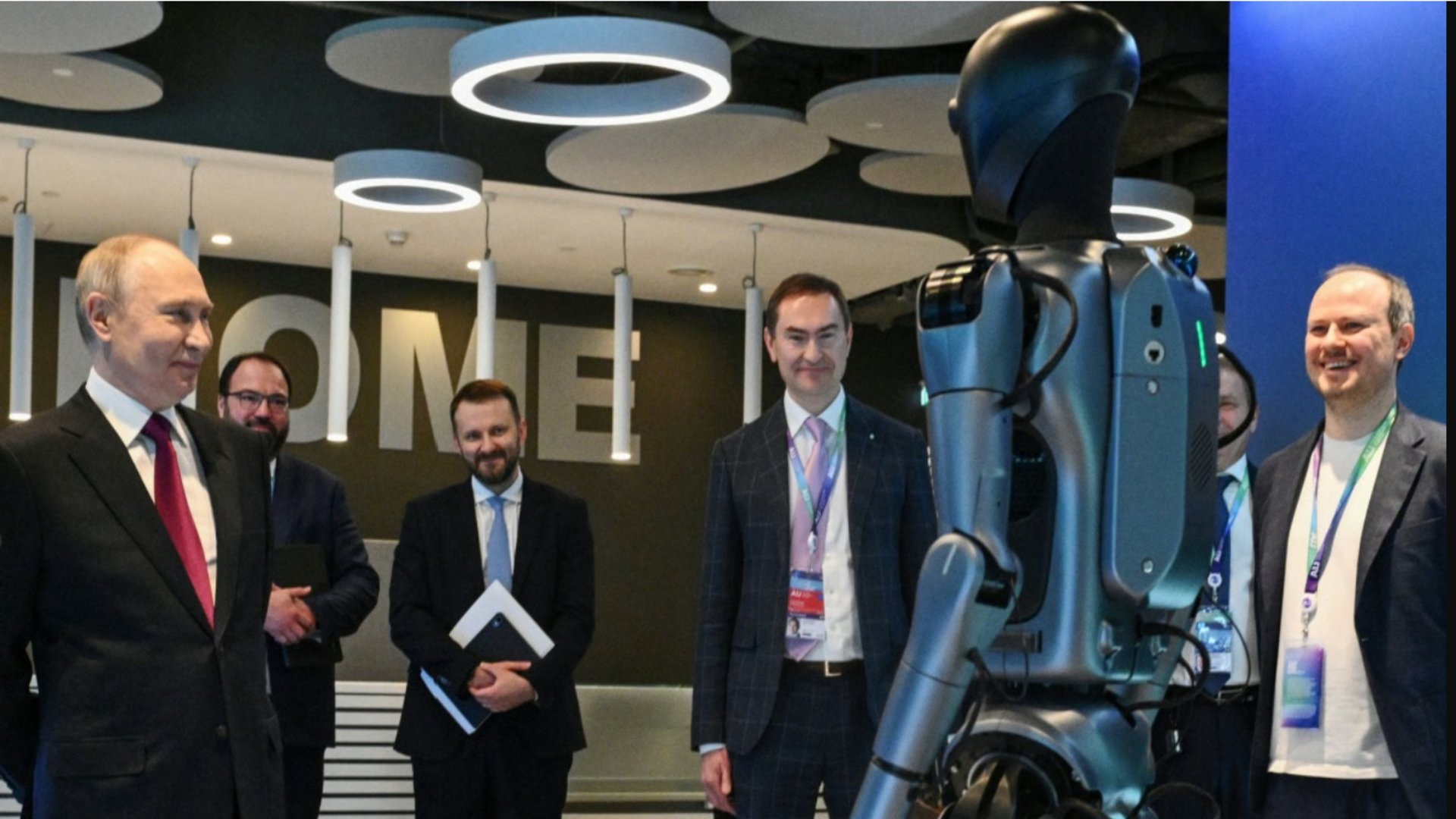
UPDATE: Russian President Vladimir Putin has just confirmed the formation of a national AI task force to spearhead the development of domestically produced artificial intelligence systems. This initiative, aimed at reinforcing Russia’s technological sovereignty, comes at a crucial time as the global race for AI dominance accelerates.
The task force will focus on creating new data centers and securing energy sources, including small-scale nuclear power stations, to support the infrastructure necessary for AI deployment. Putin emphasized that only Russian-designed AI systems will be permitted for national security and intelligence purposes, stating, “For Russia, it is a matter of national, technological and value-based sovereignty.”
The initiative is expected to significantly impact the economy, with projections estimating that AI technologies could contribute over 11 trillion roubles to the country’s gross domestic product by 2030. As part of this plan, Putin urged state institutions and private companies to integrate AI more fully into their operations.
Despite facing challenges, including lagging behind the United States and China, Russian firms like Sberbank and Yandex are making strides in AI development. They are reportedly working on large language models such as Gigachat and Yandex GPT. Sberbank has transitioned from a traditional banking model to a technology-focused company, showcasing innovations like humanoid robots and health-scanning ATMs.
The announcement comes as Russian authorities are also developing autonomous drones capable of coordinating attacks over distances of up to 100 kilometers (62 miles). Ukrainian drone experts have noted that these advancements could revolutionize military operations, enhancing AI-driven targeting and coordination.
Putin has made it clear that excessive regulation must not stifle AI innovation. He stated that both military and civilian applications will be developed under this new national framework. However, Western sanctions have restricted Russia’s access to essential hardware, particularly microchips, which has hindered its ability to expand AI capabilities. The national task force aims to address these issues by prioritizing domestic production of critical components.
This urgent move underscores the increasing importance of AI in national security and economic strategy for Russia, marking a pivotal moment in the global AI landscape. As developments unfold, all eyes will be on how effectively this task force can shift Russia’s technological trajectory.
Stay tuned for further updates as this story develops.

USDA Reviews All Programs to Restrict Food Stamp Access

Ancient Shell Trumpets Unveil Prehistoric Communication Methods

Lane Kiffin Leaves Ole Miss for LSU Amid Fan Backlash

Pope Leo XIV Visits Turkey and Lebanon, Promotes Faith and Unity

Chicago Homeowners Face Rising Property Taxes as Deadline Nears

Judi Dench Shares Struggles with Vision Loss Due to AMD

Seagate Unveils 6.9TB Platters, Promises 69TB Drives by 2030

Flight Delays Surge Across US; RDU Sees Record Thanksgiving Travel

Black Friday Sales Surge Signals Strong Consumer Confidence

New ‘Star Trek: Voyager’ Game Demo Released, Players Test Limits

Global Air Forces Ranked by Annual Defense Budgets in 2025

ALMA Discovers Companion Orbiting Giant Red Star π 1 Gruis

Mass Production of F-35 Fighter Jet Drives Down Costs

Electrification Challenges Demand Advanced Multiphysics Modeling

Gold Investment Surge: Top Mutual Funds and ETF Alternatives

Time Crystals Revolutionize Quantum Computing Potential

DirecTV to Launch AI-Driven Ads with User Likenesses in 2026

Freeport Art Gallery Transforms Waste into Creative Masterpieces
-
 Top Stories2 months ago
New ‘Star Trek: Voyager’ Game Demo Released, Players Test Limits
-
 World2 months ago
Global Air Forces Ranked by Annual Defense Budgets in 2025
-
 Science2 weeks ago
ALMA Discovers Companion Orbiting Giant Red Star π 1 Gruis
-
 World2 months ago
Mass Production of F-35 Fighter Jet Drives Down Costs
-
 World2 months ago
Electrification Challenges Demand Advanced Multiphysics Modeling
-
 Business2 months ago
Gold Investment Surge: Top Mutual Funds and ETF Alternatives
-
 Science2 months ago
Time Crystals Revolutionize Quantum Computing Potential
-
 Top Stories2 months ago
DirecTV to Launch AI-Driven Ads with User Likenesses in 2026
-
 Entertainment2 months ago
Freeport Art Gallery Transforms Waste into Creative Masterpieces
-

 Business2 months ago
US Government Denies Coal Lease Bid, Impacting Industry Revival Efforts
-

 Politics1 month ago
SEVENTEEN’s Mingyu Faces Backlash Over Alcohol Incident at Concert
-

 Health2 months ago
Gavin Newsom Critiques Trump’s Health and National Guard Plans