
Top Stories
Thanksgiving Turkey Theft: A Century-Old Crisis Returns

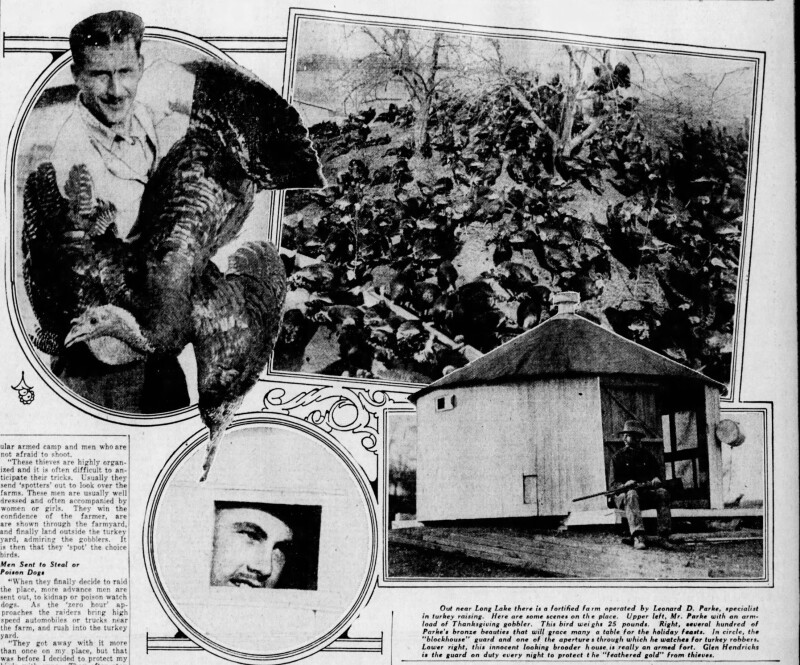
URGENT UPDATE: Thanksgiving turkey thefts are resurfacing, echoing a century-old crisis that once plagued farm families across the Midwest. Reports from Fargo, North Dakota, indicate that the struggle to secure turkeys has transformed from a simple inconvenience into a serious concern, reminiscent of the notorious “turkey bandits” of the early 1900s.
Historically, farmers faced dire financial losses during Thanksgiving, with turkey thieves striking nightly. In 1911, the People’s Press warned, “Turkey thieves are abroad in the land,” a sentiment that resonated deeply among anxious farmers. This year, as families prepare for the holiday, the fear of losing prized turkeys is palpable once again.
The dangers of turkey theft were not trivial. Farmers reported missing birds after nighttime raids, often leading to confrontations. In November 1924, a shootout ensued at the Charlie Darknell farm in Ripley, Minnesota, as farmers defended their flocks. “Rifles cracked, lights flashed, and the hunt was on,” stated the Claremont News, emphasizing the lengths to which farmers went to protect their livelihoods.
The historic thefts weren’t merely acts of petty crime; they were serious threats to family finances. Turkeys were once a crucial cash crop for farmers, and losing them could spell disaster. In 1927, the Fargo Forum reported a significant heist involving the breeding stock of a local farm, showcasing the high stakes involved.
As the Great Depression hit, turkey thefts escalated, with police urging farmers to report every incident to trace the culprits. Farmers employed various tactics to safeguard their turkeys, from elaborate burglar alarms to armed guards. One farmer even resorted to marking his flock to deter thieves, as noted by the New Richland Star in 1931.
The conflict between farmers and thieves reached a boiling point, leading to extreme measures. In December 1893, John McDougal lost dozens of chickens and turkeys and sought revenge with his shotgun, reflecting the prevailing attitude toward these audacious criminals. The Bottineau Courant in 1922 suggested that armed vigilance was the only way to deter turkey thefts.
Interestingly, some instances of turkey theft drew sympathy rather than scorn. In 1933, a sheriff in Sisseton, South Dakota, paid for stolen turkeys out of his own pocket after apprehending thieves who confessed they stole to feed themselves. This act of compassion highlights the complex human element intertwined with the holiday spirit.
As families gear up for Thanksgiving this year, the anxiety surrounding turkey thefts is a sobering reminder of the past. Farmers are urged to remain vigilant as the season approaches. With a resurgence in turkey thefts, it is essential to revisit the lessons of history and ensure that the Thanksgiving feast remains secure.
The next few weeks will be crucial. Will local authorities step up enforcement to protect farmers, or will this century-old crisis escalate once more? As Thanksgiving approaches, the community watches closely, hoping to celebrate the holiday with their cherished birds intact.

Dallas Pension Vote Sparks Outrage Among First Responders

Urgent: Winter Weather Advisory Issued for South Central PA

ECB Confirms Current Interest Rates Are Appropriate as Year Ends

Debate Dynamics: Bregman and Haaland Gear Up for Gubernatorial Race

University of Arizona Identifies Key Immune Cell Linked to Fibrosis

Titans Lead 2026 NFL Draft Race, Raiders and Saints Lurk Behind

Delta A350 Diverts to Tokyo After Hydraulic Emergency Mid-Flight

Zacks Research Lowers Earnings Forecast for Avanos Medical

“All’s Fair Season 1 Episode 7 to Release on December 2, 2025”

New ‘Star Trek: Voyager’ Game Demo Released, Players Test Limits

Global Air Forces Ranked by Annual Defense Budgets in 2025

ALMA Discovers Companion Orbiting Giant Red Star π 1 Gruis

Mass Production of F-35 Fighter Jet Drives Down Costs

Electrification Challenges Demand Advanced Multiphysics Modeling

Gold Investment Surge: Top Mutual Funds and ETF Alternatives

Time Crystals Revolutionize Quantum Computing Potential

DirecTV to Launch AI-Driven Ads with User Likenesses in 2026

Freeport Art Gallery Transforms Waste into Creative Masterpieces
-
 Top Stories2 months ago
New ‘Star Trek: Voyager’ Game Demo Released, Players Test Limits
-
 World2 months ago
Global Air Forces Ranked by Annual Defense Budgets in 2025
-
 Science2 weeks ago
ALMA Discovers Companion Orbiting Giant Red Star π 1 Gruis
-
 World2 months ago
Mass Production of F-35 Fighter Jet Drives Down Costs
-
 World2 months ago
Electrification Challenges Demand Advanced Multiphysics Modeling
-
 Business2 months ago
Gold Investment Surge: Top Mutual Funds and ETF Alternatives
-
 Science2 months ago
Time Crystals Revolutionize Quantum Computing Potential
-
 Top Stories2 months ago
DirecTV to Launch AI-Driven Ads with User Likenesses in 2026
-
 Entertainment2 months ago
Freeport Art Gallery Transforms Waste into Creative Masterpieces
-

 Business2 months ago
US Government Denies Coal Lease Bid, Impacting Industry Revival Efforts
-

 Health2 months ago
Gavin Newsom Critiques Trump’s Health and National Guard Plans
-

 Lifestyle2 months ago
Discover Reese Witherspoon’s Chic Dining Room Style for Under $25