
Top Stories
Urgent Discovery: 20,000 Dinosaur Footprints Found Near 2026 Olympics

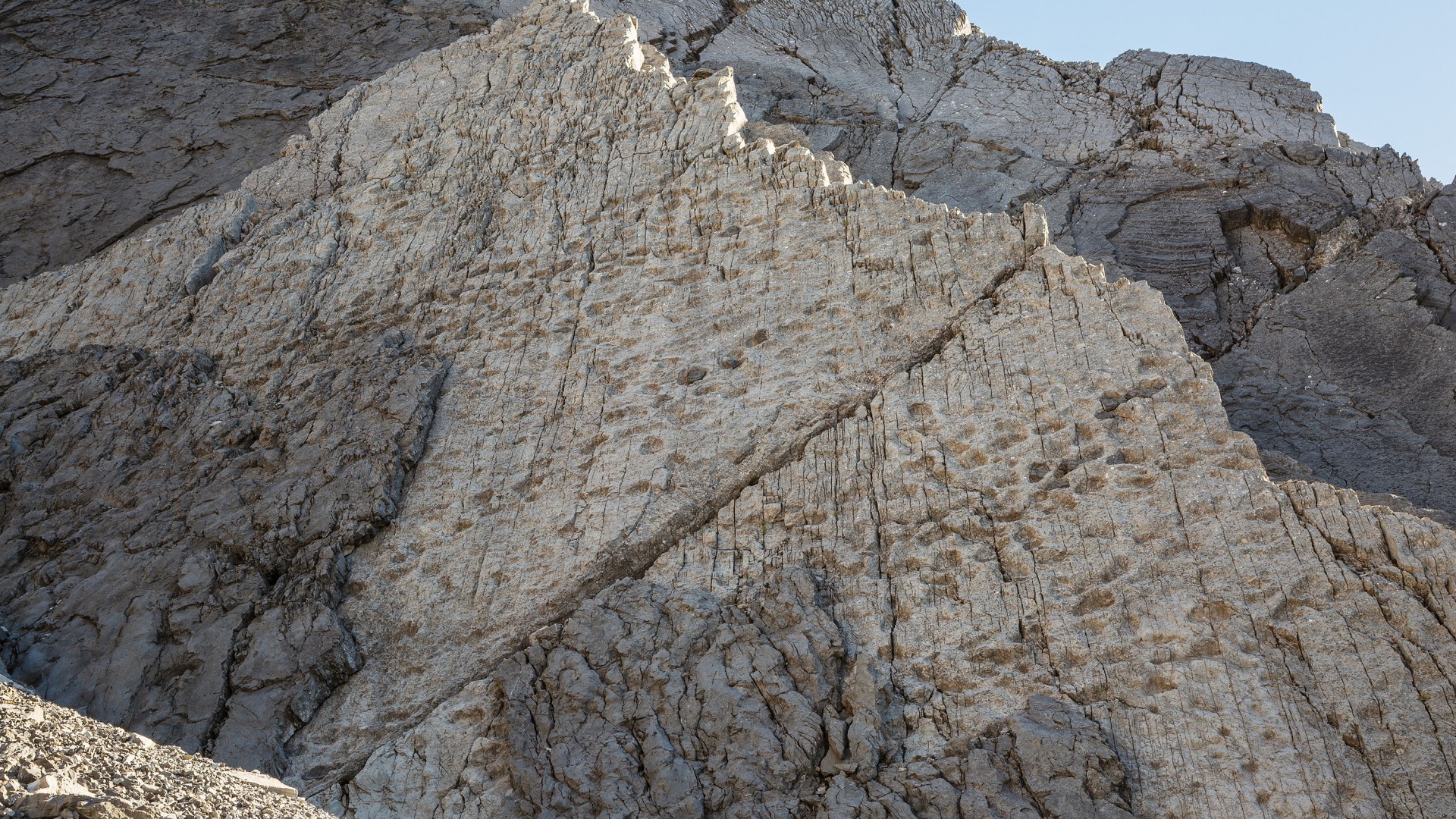
BREAKING: A staggering 20,000 dinosaur footprints have been uncovered in Stelvio National Park, just miles from the venues for the upcoming 2026 Winter Olympics. This remarkable discovery, made in the central Alps of northern Italy, dates back 210 million years to the Triassic period, and is already being hailed as one of the most significant fossil finds in the world.
The Milan Natural History Museum (MNHM) reported that the footprints were discovered in Fraele Valley, between Livigno and Bormio, slated to host Olympic events from February 6 to 22, 2026. “This represents one of the most important deposits of Triassic trace fossils globally,” the MNHM stated, underscoring the find’s extraordinary significance.
Experts from the MNHM revealed that the tracks, which span hundreds of meters on nearly vertical dolomite walls, are exceptionally well-preserved, showcasing distinct traces of toes and claws. “The footprints were imprinted on tidal flats at the end of the Triassic,” MNHM added, highlighting their unique geological context.
Located less than a mile from where the men’s alpine skiing events will occur, the site covers an area of about three miles and contains tracks from long-necked bipedal herbivores, some measuring up to 33 feet in length and weighing four tons. According to MNHM paleontologist Cristiano Dal Sasso, “There are very obvious traces of individuals that have walked at a slow, calm, quiet rhythmic pace, without running.”
The sheer quantity of footprints is astonishing. Dal Sasso noted, “The huge surprise was not just in discovering the footprints, but in uncovering such a vast quantity… tens of thousands of prints up there.”
The MNHM explained that the remote area, inaccessible by trails, required the use of drones and remote sensing technologies for study. “It is the largest site in the Alps and one of the richest in the world,” the museum emphasized, marking it as a treasure for geologists and paleontologists for decades to come.
Regional governor, Attilio Fontana, dubbed the discovery the “gift of the Olympics,” and expressed plans to eventually open the site to the public, allowing visitors to experience this awe-inspiring glimpse into the past.
As excitement builds for the Winter Games, this groundbreaking fossil find adds a unique layer of intrigue and wonder to the event. Authorities are now focused on ensuring the area is studied thoroughly while considering public access in the future.
Stay tuned as we bring you more updates on this incredible discovery and its implications for both science and the upcoming 2026 Winter Olympics.

US Stocks Surge on Cooler Inflation and Strong Micron Earnings

Pope Leo XIV Appoints Ronald Hicks as New Archbishop of New York

UK Lawmakers Receive Detailed Climate Risk Scenarios for Planning

LIV Golf Team Championship Returns to Michigan in August 2026

Congresswoman Janelle Bynum Makes History in Oregon’s 5th District

Inflation Slows in November, Boosting S&P 500 Outlook

Loveland Hosts Festive Events: Menorah Lighting and Holiday Shows

Clinton Requested Epstein, Maxwell at Moroccan Royal Wedding

Urgent: NYC Reports Nearly 14,000 Flu Cases As ‘Super Flu’ Emerges

ALMA Discovers Companion Orbiting Giant Red Star π 1 Gruis

SEVENTEEN’s Mingyu Faces Backlash Over Alcohol Incident at Concert

New ‘Star Trek: Voyager’ Game Demo Released, Players Test Limits

Global Air Forces Ranked by Annual Defense Budgets in 2025

Electrification Challenges Demand Advanced Multiphysics Modeling

Mass Production of F-35 Fighter Jet Drives Down Costs

Time Crystals Revolutionize Quantum Computing Potential

Gold Investment Surge: Top Mutual Funds and ETF Alternatives

DirecTV to Launch AI-Driven Ads with User Likenesses in 2026
-
 Science1 month ago
ALMA Discovers Companion Orbiting Giant Red Star π 1 Gruis
-
 Politics2 months ago
SEVENTEEN’s Mingyu Faces Backlash Over Alcohol Incident at Concert
-
 Top Stories2 months ago
New ‘Star Trek: Voyager’ Game Demo Released, Players Test Limits
-
 World2 months ago
Global Air Forces Ranked by Annual Defense Budgets in 2025
-
 World2 months ago
Electrification Challenges Demand Advanced Multiphysics Modeling
-
 World2 months ago
Mass Production of F-35 Fighter Jet Drives Down Costs
-
 Science2 months ago
Time Crystals Revolutionize Quantum Computing Potential
-
 Business2 months ago
Gold Investment Surge: Top Mutual Funds and ETF Alternatives
-
 Top Stories2 months ago
DirecTV to Launch AI-Driven Ads with User Likenesses in 2026
-

 Entertainment2 months ago
Freeport Art Gallery Transforms Waste into Creative Masterpieces
-

 Business2 months ago
US Government Denies Coal Lease Bid, Impacting Industry Revival Efforts
-

 Health2 months ago
Gavin Newsom Critiques Trump’s Health and National Guard Plans