
World
Air Force Advances Delivery of New Presidential Jets to Mid-2028

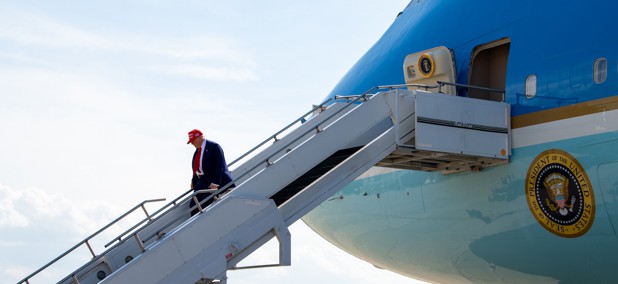
The delivery of the next presidential transport aircraft, the VC-25B, is now anticipated in mid-2028, according to the United States Air Force. This timeline is sooner than previously projected, reflecting ongoing pressure from the Trump administration regarding the program’s progress. An Air Force spokesperson confirmed this new date on Friday in correspondence with Defense One.
In addition to the revised delivery schedule, the Air Force announced it will provide Boeing with an extra $15.5 million to enhance the communications systems of the two VC-25Bs. The spokesperson explained that these costs are linked to integrating new communications capabilities that have evolved since the program was initially defined.
“This modification can be accomplished within the current program schedule with the projected delivery date for the first VC-25B aircraft in mid-2028,” the spokesperson stated in an email. Notably, this modification is separate from the existing firm-fixed-price engineering and manufacturing development contract, which now totals over $4.3 billion. The work on the communication upgrades is expected to be finalized by December 2024.
Air Force Secretary Troy Meink expressed optimism about the project’s timeline earlier this year, indicating confidence that the development of the VC-25Bs is on track. At the Air & Space Force Association’s annual conference in September, Meink stated, “What I’d say on both aircraft is, and I’ve had an opportunity to work with the contractors closely over the last couple of months, I think they’re on schedule. I think we’re able to deliver them when the President needs them.”
The initiative to replace the aging VC-25 aircraft, which have been in service since 1990, began in 2015 when Boeing secured the contract to produce two new 747 jets for an estimated cost of $4 billion. However, the project faced challenges after President-elect Donald Trump inaccurately tweeted in December 2016 that the program was over budget and should be canceled.
In response to the concerns, Boeing shifted its strategy, opting to utilize two 747s that had been built for a defunct Russian airline but remained unpaid for. Work on the new planes commenced in 2020 but was hampered by workforce and supply shortages. By 2022, the expected delivery date had slipped to 2026, and subsequent delays pushed it to 2027, then to a range of 2028 or 2029 by May 2025.
Following these delays, Trump accepted a Boeing 747 luxury jet from Qatar, intended for conversion into Air Force One. In August, Meink estimated that the cost to upgrade this aircraft would be less than $400 million. He revealed to Congress that funds from the service’s Sentinel intercontinental ballistic missile program were reallocated to finance modifications for the 747. The retrofit is expected to take “just short of a year,” according to Meink.
The ongoing developments in the Air Force One program highlight the complexities and challenges of modern military contracts and showcase the importance of timely delivery for national assets. As the new delivery date approaches, the Air Force remains focused on ensuring the new VC-25Bs meet the evolving needs of presidential air travel.

Putin Reinforces Security with 20 Air Defense Systems at Valdai Palace

2025’s Words of the Year Reveal Frustration with Digital Life

Aimee Semple McPherson’s 1928 Red Bluff Visit Sparks Hype

Black Hills State Secures Thrilling 97-92 Victory Over UC-Colorado Springs

Air Force Advances Delivery of New Presidential Jets to Mid-2028

BNP Paribas Increases Stake in iShares J.P. Morgan USD ETF

Local News Subscription Service Launches to Connect Communities

Oreo Launches Sugar-Free Cookies for Health-Conscious Consumers

Jewish Federation of Cleveland Raises Record $39 Million for Community

ALMA Discovers Companion Orbiting Giant Red Star π 1 Gruis

SEVENTEEN’s Mingyu Faces Backlash Over Alcohol Incident at Concert

New ‘Star Trek: Voyager’ Game Demo Released, Players Test Limits

Global Air Forces Ranked by Annual Defense Budgets in 2025

Electrification Challenges Demand Advanced Multiphysics Modeling

Mass Production of F-35 Fighter Jet Drives Down Costs

Gold Investment Surge: Top Mutual Funds and ETF Alternatives

Time Crystals Revolutionize Quantum Computing Potential

DirecTV to Launch AI-Driven Ads with User Likenesses in 2026
-
 Science4 weeks ago
ALMA Discovers Companion Orbiting Giant Red Star π 1 Gruis
-
 Politics2 months ago
SEVENTEEN’s Mingyu Faces Backlash Over Alcohol Incident at Concert
-
 Top Stories2 months ago
New ‘Star Trek: Voyager’ Game Demo Released, Players Test Limits
-
 World2 months ago
Global Air Forces Ranked by Annual Defense Budgets in 2025
-
 World2 months ago
Electrification Challenges Demand Advanced Multiphysics Modeling
-
 World2 months ago
Mass Production of F-35 Fighter Jet Drives Down Costs
-
 Business2 months ago
Gold Investment Surge: Top Mutual Funds and ETF Alternatives
-
 Science2 months ago
Time Crystals Revolutionize Quantum Computing Potential
-
 Top Stories2 months ago
DirecTV to Launch AI-Driven Ads with User Likenesses in 2026
-

 Entertainment2 months ago
Freeport Art Gallery Transforms Waste into Creative Masterpieces
-

 Health2 months ago
Gavin Newsom Critiques Trump’s Health and National Guard Plans
-

 Business2 months ago
US Government Denies Coal Lease Bid, Impacting Industry Revival Efforts