
World
Boeing Completes $4.7 Billion Acquisition of Spirit AeroSystems

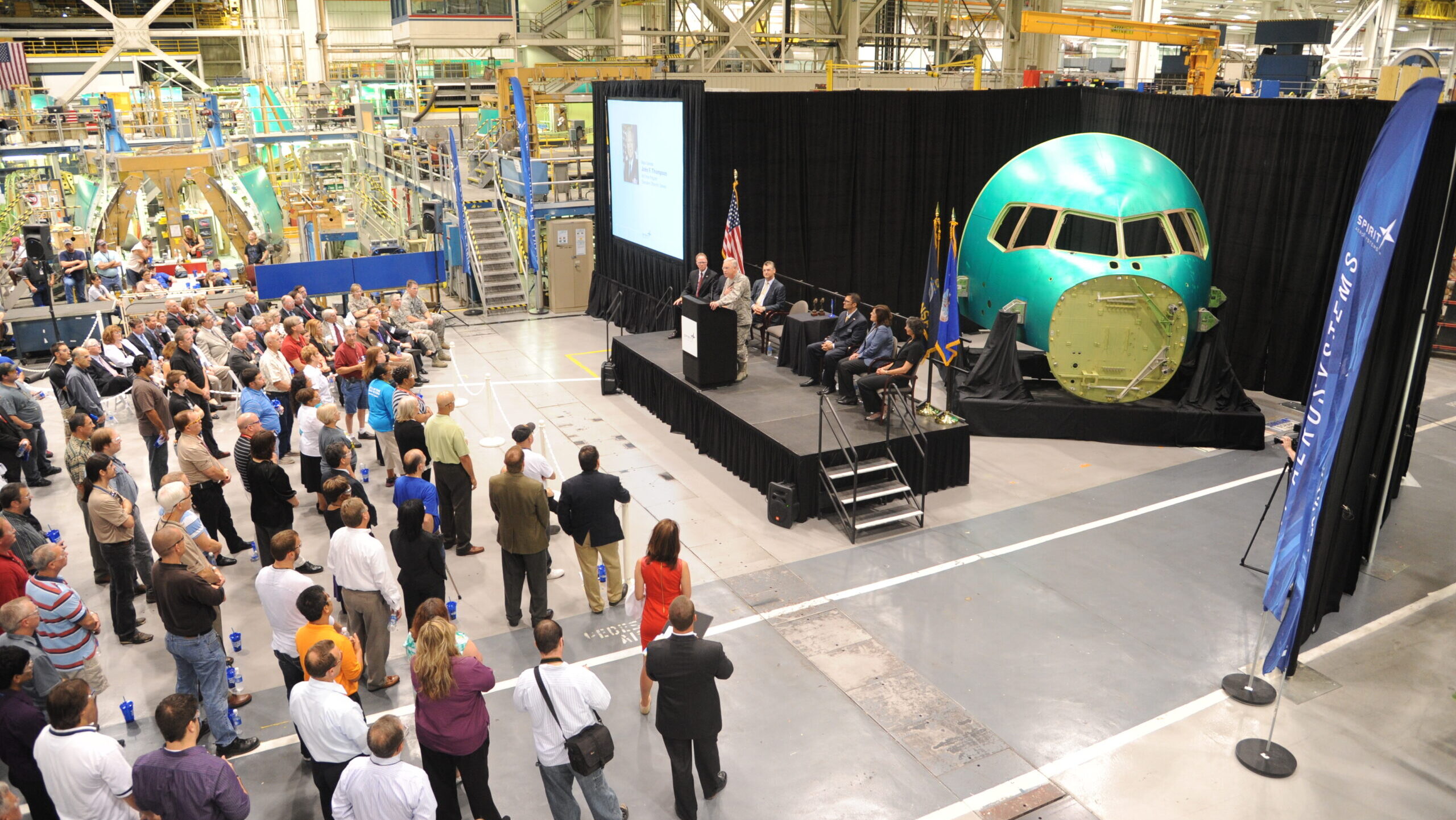
Boeing has finalized its acquisition of Spirit AeroSystems for a substantial $4.7 billion, effectively reabsorbing a major supplier of aircraft components. This strategic move allows Boeing to take control of Spirit’s operations that produce essential structures for commercial and defense aircraft, including the KC-46 and B-21. The Federal Trade Commission approved the acquisition on December 3, 2023, paving the way for Boeing to integrate Spirit’s capabilities.
Under the terms of the acquisition, Boeing will oversee all Boeing-related operations of Spirit, which includes the manufacturing of fuselages for the widely used Boeing 737. This aircraft serves not only commercial purposes but also underpins military models such as the P-8A Poseidon maritime patrol aircraft. Moving forward, Spirit Defense will operate as a “non-integrated” subsidiary within Boeing’s defense division. This structure aims to align financial reporting and select enterprise functions while allowing Spirit to maintain independent governance and operations.
Boeing’s CEO, Kelly Ortberg, described this moment as pivotal for the company’s future. “As we welcome our new teammates and bring our two companies together, our focus is on maintaining stability so we can continue delivering high-quality airplanes, differentiated services, and advanced defense capabilities for our customers and the industry,” he stated.
Spirit AeroSystems, which was originally spun off from Boeing in 2005, has made significant strides in diversifying its operations beyond its former parent company. During its independence, Spirit expanded its defense sector, contributing to projects like the B-21 bomber developed by Northrop Grumman and the V-280 rotorcraft produced by Bell. However, following the announcement of Boeing’s acquisition, Bell chose to sever ties with Spirit.
Approximately 15,000 employees will be added to Boeing’s workforce as a result of this acquisition, with operations spanning five locations: Wichita, Kansas; Dallas, Texas; Tulsa, Oklahoma; Belfast, Northern Ireland; and Prestwick, Scotland.
As a condition for the FTC’s approval, Boeing will divest all businesses Spirit conducted with its main competitor, Airbus, which will take over those entities. Additionally, the company is required to offload Spirit’s aerostructures business in Malaysia, which supplies components to both Boeing and Airbus, to Composites Technology Research Malaysia.
In response to the acquisition, Senator Jerry Moran of Kansas, who serves on the Senate Appropriations defense subcommittee, expressed his support. He emphasized the importance of this deal for fostering connections between Boeing’s headquarters in Seattle and Wichita. “I welcome Boeing back to Wichita and look forward to working with them to build a lasting relationship with the community and its workforce, as well as current and future suppliers,” he said.
This acquisition marks a significant chapter in Boeing’s history and reflects its commitment to enhancing its supply chain while maintaining a competitive stance in the aerospace industry.

AFD Battles Major Blaze at Austin Construction Site; Cause Unknown

Oak Fire Arsonist Edward Wackerman Released with Ankle Monitor

NFTA Launches New DL&W Metro Station in Buffalo Today

Judge Denies Extension, South Shore Residents Face Urgent Eviction

Germantown Residents Face Sidewalk Snow Removal Changes by 2026

Mexico Enacts New Subcontracting Protocol, Raises Minimum Wage for 2026

“One Battle After Another” Dominates 83rd Golden Globe Nominations

Understanding the Distinction Between Tumors and Cancer

“One Battle After Another” Dominates Golden Globe Nominations

ALMA Discovers Companion Orbiting Giant Red Star π 1 Gruis

New ‘Star Trek: Voyager’ Game Demo Released, Players Test Limits

SEVENTEEN’s Mingyu Faces Backlash Over Alcohol Incident at Concert

Global Air Forces Ranked by Annual Defense Budgets in 2025

Electrification Challenges Demand Advanced Multiphysics Modeling

Mass Production of F-35 Fighter Jet Drives Down Costs

Gold Investment Surge: Top Mutual Funds and ETF Alternatives

Time Crystals Revolutionize Quantum Computing Potential

DirecTV to Launch AI-Driven Ads with User Likenesses in 2026
-
 Science4 weeks ago
ALMA Discovers Companion Orbiting Giant Red Star π 1 Gruis
-
 Top Stories2 months ago
New ‘Star Trek: Voyager’ Game Demo Released, Players Test Limits
-
 Politics2 months ago
SEVENTEEN’s Mingyu Faces Backlash Over Alcohol Incident at Concert
-
 World2 months ago
Global Air Forces Ranked by Annual Defense Budgets in 2025
-
 World2 months ago
Electrification Challenges Demand Advanced Multiphysics Modeling
-
 World2 months ago
Mass Production of F-35 Fighter Jet Drives Down Costs
-
 Business2 months ago
Gold Investment Surge: Top Mutual Funds and ETF Alternatives
-
 Science2 months ago
Time Crystals Revolutionize Quantum Computing Potential
-
 Top Stories2 months ago
DirecTV to Launch AI-Driven Ads with User Likenesses in 2026
-

 Entertainment2 months ago
Freeport Art Gallery Transforms Waste into Creative Masterpieces
-

 Health2 months ago
Gavin Newsom Critiques Trump’s Health and National Guard Plans
-

 Business2 months ago
US Government Denies Coal Lease Bid, Impacting Industry Revival Efforts