
World
Delta A350 Diverts to Tokyo After Hydraulic Emergency Mid-Flight

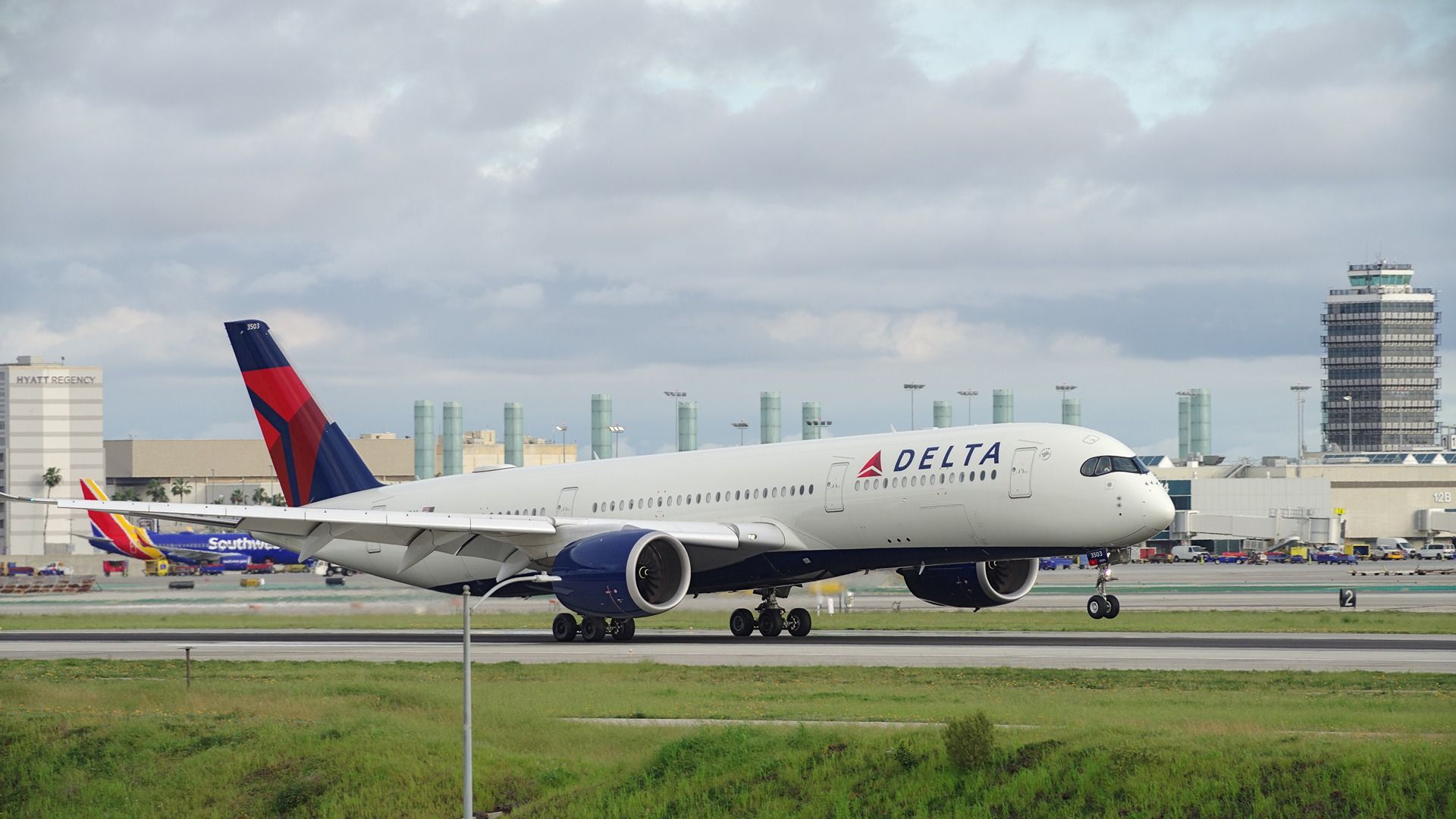
A Delta Air Lines flight traveling from Shanghai to Detroit was diverted to Tokyo on November 28, 2019, due to a hydraulic issue. The Airbus A350-900, operating as Delta Flight 388, was approximately 140 nautical miles (259 km) north of Tokyo when the crew decided to declare an emergency. As a precaution, the aircraft was met by emergency services upon landing at Tokyo Haneda Airport (HND), which temporarily closed the runway.
The flight had departed from Shanghai Pudong International Airport (PVG) at 17:46 local time and was scheduled to reach Detroit Metropolitan Wayne County Airport (DTW) after a typical 13-hour journey. Shortly after entering Japanese airspace, the flight crew identified a hydraulic problem, prompting the decision to divert to the nearest major airport for safety reasons.
According to a spokesperson for Delta Air Lines, “On November 28, the crew of Delta flight 388 followed procedures to divert to Tokyo-Haneda after reporting a mechanical issue while en route from Shanghai to Detroit. The aircraft landed safely, and we apologize to our customers for the delay in their travel plans. Nothing is more important than the safety of our customers and crew.”
Emergency Landing and Aftermath
The A350 was greeted by emergency teams upon its arrival at Haneda, where the runway remained closed for approximately 30 minutes. After landing on Runway 34R, the aircraft was towed to the gate, leading to the cancellation of the flight.
Flight data from Flightradar24 indicates that the aircraft, registered as N512DN, remained on the apron overnight. On November 29, the plane was repositioned to Seattle-Tacoma International Airport, departing Haneda as DL9888 at 23:14 and arriving in Seattle at 14:26 the following day. A corresponding flight was then added to Detroit, landing at 23:02 on the same day. The aircraft has since returned to service, operating routes from Detroit to Seoul and then to Atlanta.
The Airbus A350-900 involved in this incident has been in operation since its delivery to Delta on January 26, 2019. It is part of a fleet of 38 A350-900s and features a three-class configuration with 32 Business, 48 Premium Economy, and 226 Economy class seats.
Understanding Hydraulic Issues
Hydraulic problems on aircraft like the Airbus A350 are uncommon but can lead to serious safety concerns, including uncommanded flight surface movements. Such risks necessitate immediate and cautious action from flight crews, as demonstrated in this incident. Delta Air Lines has a history of prioritizing safety, and the decision to divert to Tokyo reflects their commitment to passenger well-being.
As the aviation industry continues to navigate challenges, incidents such as these highlight the importance of safety protocols and the quick responses of airline crews. Delta Air Lines is expected to conduct a thorough inspection of the aircraft to address the hydraulic issue and ensure its continued safe operation in the future.

ECB Confirms Current Interest Rates Are Appropriate as Year Ends

Debate Dynamics: Bregman and Haaland Gear Up for Gubernatorial Race

University of Arizona Identifies Key Immune Cell Linked to Fibrosis

Titans Lead 2026 NFL Draft Race, Raiders and Saints Lurk Behind

Delta A350 Diverts to Tokyo After Hydraulic Emergency Mid-Flight

Zacks Research Lowers Earnings Forecast for Avanos Medical

“All’s Fair Season 1 Episode 7 to Release on December 2, 2025”

Rolette Record Sold to Cando Editors, New Era Begins

Urgent Fire at Indigo Apartments in OKC Leaves Residents Shaken

New ‘Star Trek: Voyager’ Game Demo Released, Players Test Limits

Global Air Forces Ranked by Annual Defense Budgets in 2025

ALMA Discovers Companion Orbiting Giant Red Star π 1 Gruis

Mass Production of F-35 Fighter Jet Drives Down Costs

Electrification Challenges Demand Advanced Multiphysics Modeling

Gold Investment Surge: Top Mutual Funds and ETF Alternatives

Time Crystals Revolutionize Quantum Computing Potential

DirecTV to Launch AI-Driven Ads with User Likenesses in 2026

Freeport Art Gallery Transforms Waste into Creative Masterpieces
-
 Top Stories2 months ago
New ‘Star Trek: Voyager’ Game Demo Released, Players Test Limits
-
 World2 months ago
Global Air Forces Ranked by Annual Defense Budgets in 2025
-
 Science2 weeks ago
ALMA Discovers Companion Orbiting Giant Red Star π 1 Gruis
-
 World2 months ago
Mass Production of F-35 Fighter Jet Drives Down Costs
-
 World2 months ago
Electrification Challenges Demand Advanced Multiphysics Modeling
-
 Business2 months ago
Gold Investment Surge: Top Mutual Funds and ETF Alternatives
-
 Science2 months ago
Time Crystals Revolutionize Quantum Computing Potential
-
 Top Stories2 months ago
DirecTV to Launch AI-Driven Ads with User Likenesses in 2026
-
 Entertainment2 months ago
Freeport Art Gallery Transforms Waste into Creative Masterpieces
-

 Business2 months ago
US Government Denies Coal Lease Bid, Impacting Industry Revival Efforts
-

 Health2 months ago
Gavin Newsom Critiques Trump’s Health and National Guard Plans
-

 Lifestyle2 months ago
Discover Reese Witherspoon’s Chic Dining Room Style for Under $25