
World
Historic Traffic Lights in New York Still Confound Drivers

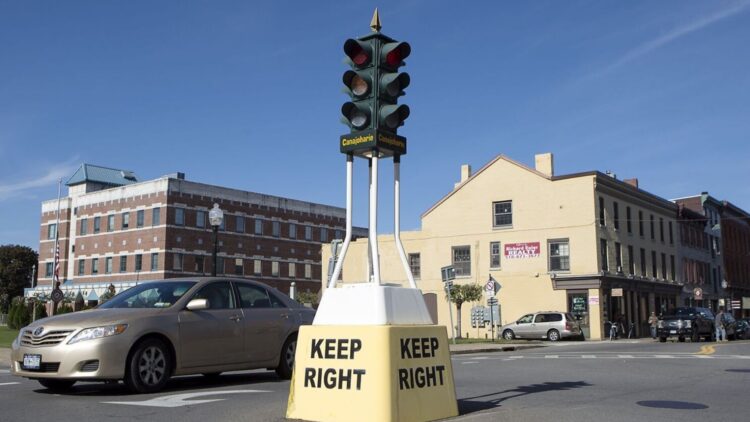
The nearly century-old traffic lights, known as dummy lights, continue to operate in New York City, raising safety concerns and confusing drivers. These historic signals, installed in the early 20th century, represent an outdated traffic system that many municipalities have since replaced with modern alternatives.
Traffic regulation in the United States underwent significant changes in the early 1900s. Before the advent of electric lights, police officers managed intersections manually. As the volume of vehicles surged, this method proved impractical. In 1912, the first electric traffic light was installed, featuring basic green and red lights. A yellow signal was later added in the 1920s, culminating in the three-color system familiar today.
Despite their historical significance, the presence of these dummy lights poses challenges in urban areas. Modern traffic systems have evolved to enhance road safety, with signals now typically suspended above intersections to improve visibility. In contrast, the remaining dummy lights are often mounted lower and can be hard to spot, particularly for unfamiliar drivers. These old signals have been preserved in some towns, including Beacon and Croton-on-Hudson in the Hudson Valley, where residents advocate for their historical value.
Preservation Efforts and Safety Concerns
Communities are divided over the retention of these old traffic lights. In Canajoharie, located in the Mohawk Valley, authorities removed dummy lights due to safety risks associated with collisions. However, after local outcry, they were reinstalled in May of this year, reflecting their importance to the community’s identity.
The outdated design of the dummy lights can lead to confusion among drivers who may not expect to encounter such signals. In addition to being less visible, their non-standard layout increases the risk of accidents. Recognizing these concerns, local governments have implemented safety measures to mitigate potential hazards. Enhancements include adding reflective paint, raising the bases of the lights, and installing warning signs to alert drivers to their presence.
Despite these adjustments, drivers still face challenges interpreting the signals. While dummy lights maintain a color code similar to modern traffic lights, their age and condition can create ambiguity. Unlike the blue traffic lights still found in parts of Japan, which present their own set of challenges, the dummy lights in New York retain a semblance of clarity that may help drivers navigate.
As these historic traffic lights continue to operate, their dual role as both a traffic control mechanism and a cultural artifact underscores the tension between modernization and preservation. Local residents and authorities must find a balance that honors history while ensuring the safety of all road users.

New York Governor Hochul Signs Bill for Holocaust Memorial Today

Lago Vista Issues Urgent Water Conservation Notice Amid Plant Failure

Urgent: Man Shot Dead in SoMa Near Civic Center in Midnight Attack

Study Links Hormone-Disrupting Chemicals to Skin Inflammation

Cape Cod Estate Near Kennedy Compound Hits Market at $21.5 Million

Trump’s Doctor Details MRI Findings from Annual Physical Exam

SpaceX Prepares for 60th Falcon 9 Launch from Vandenberg SFB

Giants Face Patriots in Key Monday Night Clash

Pakistan Petroleum Plans Artificial Island for Offshore Oil Production

New ‘Star Trek: Voyager’ Game Demo Released, Players Test Limits

Global Air Forces Ranked by Annual Defense Budgets in 2025

ALMA Discovers Companion Orbiting Giant Red Star π 1 Gruis

Mass Production of F-35 Fighter Jet Drives Down Costs

Electrification Challenges Demand Advanced Multiphysics Modeling

Gold Investment Surge: Top Mutual Funds and ETF Alternatives

Time Crystals Revolutionize Quantum Computing Potential

DirecTV to Launch AI-Driven Ads with User Likenesses in 2026

Freeport Art Gallery Transforms Waste into Creative Masterpieces
-
 Top Stories2 months ago
New ‘Star Trek: Voyager’ Game Demo Released, Players Test Limits
-
 World2 months ago
Global Air Forces Ranked by Annual Defense Budgets in 2025
-
 Science2 weeks ago
ALMA Discovers Companion Orbiting Giant Red Star π 1 Gruis
-
 World2 months ago
Mass Production of F-35 Fighter Jet Drives Down Costs
-
 World2 months ago
Electrification Challenges Demand Advanced Multiphysics Modeling
-
 Business2 months ago
Gold Investment Surge: Top Mutual Funds and ETF Alternatives
-
 Science2 months ago
Time Crystals Revolutionize Quantum Computing Potential
-
 Top Stories2 months ago
DirecTV to Launch AI-Driven Ads with User Likenesses in 2026
-
 Entertainment2 months ago
Freeport Art Gallery Transforms Waste into Creative Masterpieces
-

 Business2 months ago
US Government Denies Coal Lease Bid, Impacting Industry Revival Efforts
-

 Politics1 month ago
SEVENTEEN’s Mingyu Faces Backlash Over Alcohol Incident at Concert
-

 Health2 months ago
Gavin Newsom Critiques Trump’s Health and National Guard Plans