
World
James Webb Telescope Detects Potentially Revolutionary Dark Stars

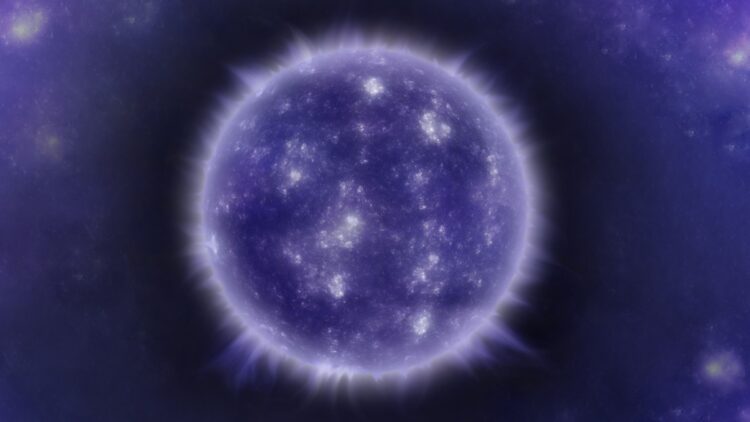
A team of researchers has identified what could be a new class of celestial body known as supermassive dark stars, using data from the James Webb Space Telescope (JWST). This groundbreaking discovery, if verified, may provide answers to some of the most profound questions in physics and cosmology. The researchers observed a “smoking gun” signal indicative of a dark star, marked by light absorption at a wavelength of 1,640 Angstroms, which is associated with helium in the atmospheres of these hypothetical stars.
Understanding Dark Stars
The term “dark star” does not imply a lack of light emission. Rather, these massive objects primarily consist of hydrogen and helium and exhibit behaviors that set them apart from typical stars like our Sun. While stars generate energy through nuclear fusion, dark stars are theorized to function via self-annihilating dark matter particles at their cores. According to Cosmin Ilie, an astrophysicist at Colgate University, “Supermassive dark stars are extremely bright, gigantic, and fluffy clouds composed mainly of hydrogen and helium, which resist gravitational collapse thanks to the minimal amounts of dark matter that self-annihilate within them.”
Through the JWST, researchers detected four of the most distant objects recorded in the universe, aligning with theoretical predictions of dark stars. Among these, one showed a distinct absorption feature at the aforementioned wavelength, suggesting a connection to dark stars through the presence of ionized helium.
Significance of the Discovery
This detection marks the first time a potential signature of a dark star has been observed, according to Ilie. He noted, “Although the signal-to-noise ratio of this feature is relatively low, it is the first time we have found a possible irrefutable signal of a dark star. Which, in itself, is extraordinary.” The discovery may also provide insight into the nature of dark matter and the origins of early supermassive black holes.
The researchers were investigating objects in large galaxies that appeared too small to have developed into the massive structures observed today. This exploration led them to the concept of dark stars, which could possess masses equivalent to 1 million solar masses and resemble galaxies in their appearance. Among the four objects examined, one appeared as a point source of light, while the others exhibited a more diffuse nature, hinting at their classification as dark stars amidst nebulas of ionized hydrogen and helium.
If confirmed, this research could answer critical questions in the field of astrophysics. Not only might it clarify the mechanics of dark matter, but it could also reshape our understanding of how supermassive black holes formed in the early universe. Despite the need for further observations to validate these findings, the study suggests that, regardless of the final classification, these objects are poised to challenge existing paradigms in physics.

49ers Dominate Browns 26-8 in Windy Cleveland Showdown

FDA Warns Millions Over Lead-Contaminated Cookware List

New Ownership Energizes Fargo’s Chick-fil-A with Fresh Vision

Exciting New Movie Trailers Released: Anticipation Builds

Regeneron Partners with Tessera Therapeutics in $150M Deal

Enhance Your Impact: 10 Guidelines for Effective Charity Giving

Yellowjackets Claim Third Place at Superior Showdown with 5-2 Victory

Urgent Crisis: Delaware’s Foster Care System Faces Severe Shortage

Fed Chair Powell to Speak Tonight, No Monetary Policy Insights Expected

New ‘Star Trek: Voyager’ Game Demo Released, Players Test Limits

Global Air Forces Ranked by Annual Defense Budgets in 2025

ALMA Discovers Companion Orbiting Giant Red Star π 1 Gruis

Mass Production of F-35 Fighter Jet Drives Down Costs

Electrification Challenges Demand Advanced Multiphysics Modeling

Gold Investment Surge: Top Mutual Funds and ETF Alternatives

Time Crystals Revolutionize Quantum Computing Potential

DirecTV to Launch AI-Driven Ads with User Likenesses in 2026

Freeport Art Gallery Transforms Waste into Creative Masterpieces
-
 Top Stories2 months ago
New ‘Star Trek: Voyager’ Game Demo Released, Players Test Limits
-
 World2 months ago
Global Air Forces Ranked by Annual Defense Budgets in 2025
-
 Science2 weeks ago
ALMA Discovers Companion Orbiting Giant Red Star π 1 Gruis
-
 World2 months ago
Mass Production of F-35 Fighter Jet Drives Down Costs
-
 World2 months ago
Electrification Challenges Demand Advanced Multiphysics Modeling
-
 Business2 months ago
Gold Investment Surge: Top Mutual Funds and ETF Alternatives
-
 Science2 months ago
Time Crystals Revolutionize Quantum Computing Potential
-
 Top Stories2 months ago
DirecTV to Launch AI-Driven Ads with User Likenesses in 2026
-
 Entertainment2 months ago
Freeport Art Gallery Transforms Waste into Creative Masterpieces
-

 Business2 months ago
US Government Denies Coal Lease Bid, Impacting Industry Revival Efforts
-

 Health2 months ago
Gavin Newsom Critiques Trump’s Health and National Guard Plans
-

 Lifestyle2 months ago
Discover Reese Witherspoon’s Chic Dining Room Style for Under $25