
World
Trump’s Drug War Strategy: Contradictions and Controversies Unveiled

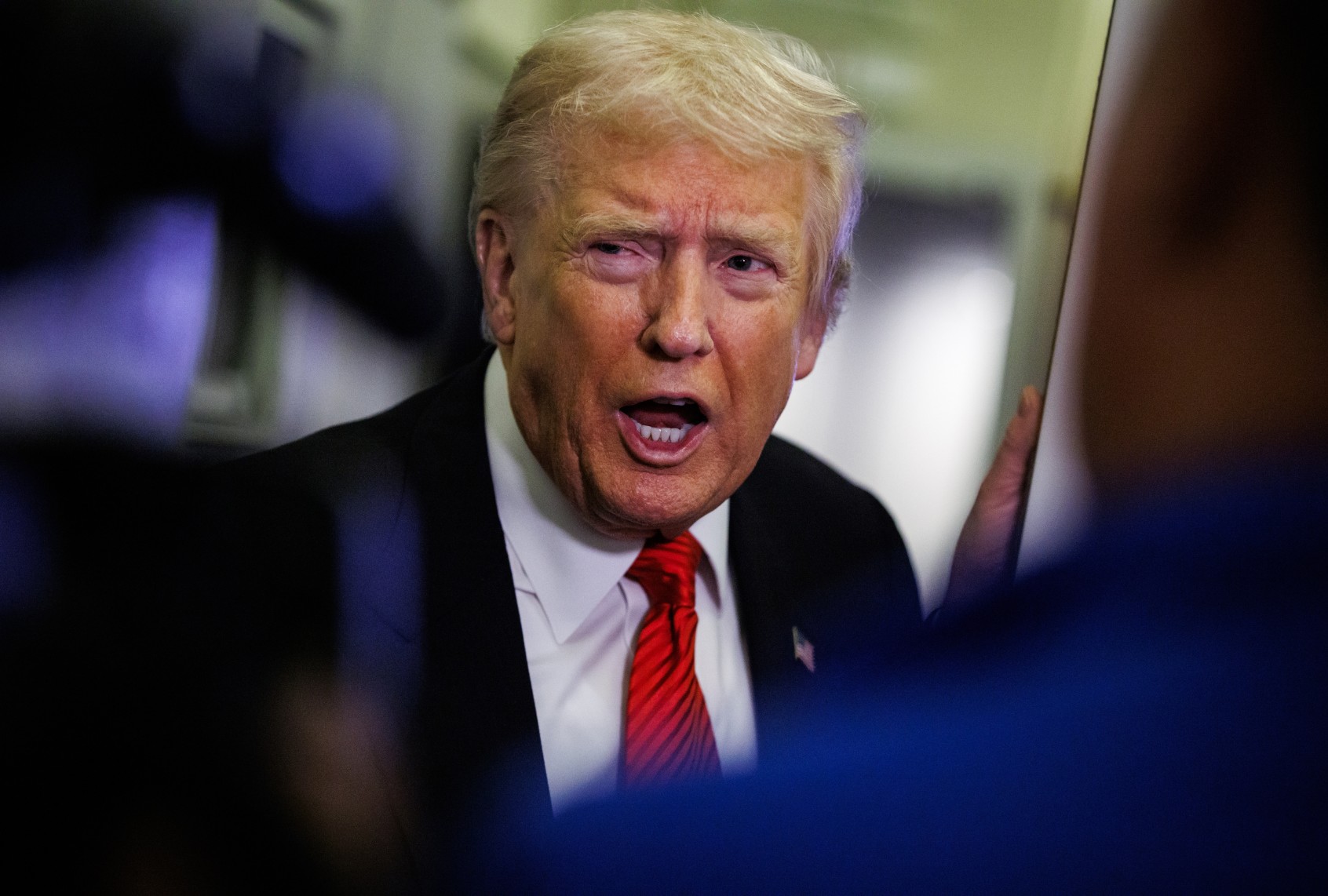
President Donald Trump has stirred significant controversy with his administration’s approach to drug trafficking and international relations, particularly regarding Venezuela and Honduras. His recent pronouncements and actions reveal a complicated narrative that seems to contradict the very principles he claims to uphold in the fight against drugs.
Over the Thanksgiving weekend, Trump issued a stark warning on Truth Social, stating, “To all Airlines, Pilots, Drug Dealers, and Human Traffickers, please consider THE AIRSPACE ABOVE AND SURROUNDING VENEZUELA TO BE CLOSED IN ITS ENTIRETY.” This announcement prompted speculation about potential military action against Venezuela, which Trump later downplayed by advising the media not to “read anything into it.” However, developments took a dramatic turn when reports emerged that Trump had privately told Venezuelan President Nicolás Maduro to vacate the country within a week.
The U.S. administration has intensified its military operations against alleged drug boats in the Caribbean, which it claims are linked to Maduro’s regime. Concurrently, allegations have surfaced that Secretary of Defense Pete Hegseth may have ordered the execution of unarmed survivors from an earlier military operation on September 2, 2023. Trump has distanced himself from these claims, asserting that Hegseth denied giving such orders. If evidence emerges to support these allegations, Hegseth’s position could be in jeopardy.
These actions are framed within Trump’s declared war on “narco-terrorists,” a term he uses to describe those he holds responsible for drug trafficking into the United States. In 2020, the U.S. Justice Department indicted Maduro and 14 others for charges including drug trafficking, alleging that they sought to flood the U.S. with cocaine. This indictment, however, largely focused on money laundering and corruption rather than direct drug shipments to the United States, as the majority of cocaine from Venezuela is directed toward Europe rather than North America.
Trump’s rhetoric has escalated, drawing comparisons to the Vietnam War from various lawmakers. Senator Dave McCormick of Pennsylvania remarked that drug-related deaths, which claimed over 100,000 lives in the past year, exceed those from the Vietnam conflict. Similar sentiments were echoed by Senator Markwayne Mullin of Oklahoma, who made alarming claims about the impact of Venezuelan drug trafficking on American lives.
Contradicting his hardline stance against drug traffickers, Trump recently announced plans to pardon Juan Orlando Hernández, the former president of Honduras, who is serving a 45-year sentence in the United States for trafficking over 500 tons of cocaine. Trump’s justification for this decision included claims that Hernández was treated unfairly and that the prosecution was politically motivated. He suggested that being a president should not automatically implicate one in the crimes of their countrymen.
This pardon has raised eyebrows, particularly given Hernández’s notorious reputation as a key player in drug trafficking networks. His previous boasts about smuggling drugs into the U.S., including a reported $1 million bribe from the infamous drug lord El Chapo, paint a stark picture of his involvement in drug-related crimes. Evidence presented during his trial included a machine gun bearing his name.
Trump’s decision to pardon Hernández appears to reflect broader political motivations. Lobbyists advocating for Hernández have been influential, and Trump’s connections to individuals promoting economic initiatives in Honduras, such as the Próspera charter city, also factor into the story. This venture, funded by prominent Silicon Valley figures, has garnered mixed reviews and faces opposition from the current Honduran government.
The narrative surrounding drug trafficking and pardons extends to Trump’s earlier commitment to pardon Ross Ulbricht, the founder of the Silk Road, a dark web marketplace linked to significant drug sales. Ulbricht’s conviction for facilitating the sale of over $200 million in illegal drugs has not deterred Trump, who categorizes Ulbricht’s circumstances as another example of unfair treatment.
The inconsistency in Trump’s drug policy raises critical questions about the administration’s objectives. While calling for stringent measures against drug dealers, he simultaneously grants pardons to high-profile traffickers, suggesting a disconnect between his public statements and private actions. Observers note that many individuals serving lengthy sentences for drug offenses might be deserving of clemency, yet the motivation behind these particular pardons appears more personally driven than principled.
In summary, Trump’s administration is navigating a complex landscape of drug policy and international relations, marked by contradictions and potential implications for U.S. foreign policy. As the situation evolves, the impact of these decisions on both domestic and international fronts remains to be seen.

Four Executives Charged in Fatal Hyperbaric Chamber Blast

New Analysis Links Hormone to Higher Breast Cancer Risk in Obese Women

POET Donates Radios to Enhance Safety for Mount Vernon Firefighters

Waterfowl Hunters Pursue Dreams of Perfect Duck Havens

Engineers Tackle Unique Challenges at Neumayer III Antarctic Base

Jaxson Dart’s Hit Sparks Skirmish as Giants Fall to Patriots

Trump’s Drug War Strategy: Contradictions and Controversies Unveiled

New Testimony Reveals Mangione’s Disturbing Jailhouse Claims

Students Urged to Stay Home as Raleigh School Faces Power Outage

ALMA Discovers Companion Orbiting Giant Red Star π 1 Gruis

New ‘Star Trek: Voyager’ Game Demo Released, Players Test Limits

Global Air Forces Ranked by Annual Defense Budgets in 2025

Mass Production of F-35 Fighter Jet Drives Down Costs

Electrification Challenges Demand Advanced Multiphysics Modeling

Gold Investment Surge: Top Mutual Funds and ETF Alternatives

Time Crystals Revolutionize Quantum Computing Potential

DirecTV to Launch AI-Driven Ads with User Likenesses in 2026

Freeport Art Gallery Transforms Waste into Creative Masterpieces
-
 Science3 weeks ago
ALMA Discovers Companion Orbiting Giant Red Star π 1 Gruis
-
 Top Stories2 months ago
New ‘Star Trek: Voyager’ Game Demo Released, Players Test Limits
-
 World2 months ago
Global Air Forces Ranked by Annual Defense Budgets in 2025
-
 World2 months ago
Mass Production of F-35 Fighter Jet Drives Down Costs
-
 World2 months ago
Electrification Challenges Demand Advanced Multiphysics Modeling
-
 Business2 months ago
Gold Investment Surge: Top Mutual Funds and ETF Alternatives
-
 Science2 months ago
Time Crystals Revolutionize Quantum Computing Potential
-
 Top Stories2 months ago
DirecTV to Launch AI-Driven Ads with User Likenesses in 2026
-
 Entertainment2 months ago
Freeport Art Gallery Transforms Waste into Creative Masterpieces
-

 Business2 months ago
US Government Denies Coal Lease Bid, Impacting Industry Revival Efforts
-

 Politics1 month ago
SEVENTEEN’s Mingyu Faces Backlash Over Alcohol Incident at Concert
-

 Health2 months ago
Gavin Newsom Critiques Trump’s Health and National Guard Plans