
World
US Designates Maduro-Linked Cartel as Terrorist Organization

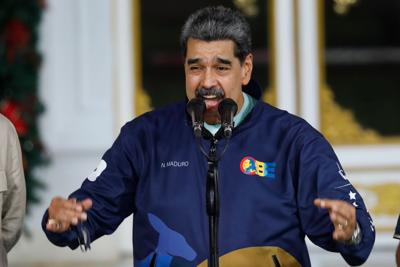
The United States has formally designated the Cartel de los Soles, allegedly linked to Venezuelan President Nicolas Maduro, as a foreign terrorist organization. This announcement, made on March 15, 2024, marks a significant escalation in the Trump administration’s efforts to combat drug trafficking and exert pressure on the Maduro regime.
The designation, published in the Federal Register, is part of a broader strategy aimed at addressing the flow of illegal drugs into the U.S. In a recent statement, Marco Rubio, U.S. Secretary of State, accused the Cartel de los Soles of being “responsible for terrorist violence” across the Western Hemisphere. This move occurs as discussions about potential military action against Venezuela intensify, despite Trump’s earlier suggestions of possible dialogue with Maduro.
While the U.S. claims the Cartel de los Soles is a drug-trafficking organization, some experts question this classification. Adam Isaacson, director for defense oversight at the Washington Office on Latin America, noted, “It is not a group… They don’t have regular meetings. They don’t have a hierarchy.” The term has historically referred to high-ranking military officers in Venezuela who have profited from drug trafficking, evolving over the years to include various government and police officials as corruption in the country grew under both Maduro and his predecessor, Hugo Chávez.
The naming of the Cartel de los Soles as a terrorist organization aligns with the U.S. government’s broader focus on combating drug-related crimes. Up until now, the label of foreign terrorist organization had primarily been applied to groups like Islamic State and al-Qaida, which are known for their political violence. This recent designation expands the criteria to include criminal organizations involved in drug trafficking, migrant smuggling, and more.
In response to the U.S. actions, Maduro’s government has vehemently denied the existence of the cartel, labeling the accusations as a “ridiculous fabrication” intended to justify military intervention. The Venezuelan leader has faced immense scrutiny, particularly after a disputed presidential election last year, which saw him declared the winner despite evidence suggesting his opponent won by a significant margin.
As the U.S. military continues operations in the Caribbean, including a significant buildup of forces, the Trump administration has indicated that it sees Maduro’s continued leadership as untenable. U.S. Defense Secretary Pete Hegseth stated that the designation of the Cartel de los Soles would create “a whole bunch of new options” for addressing the situation in Venezuela, though he did not disclose specifics on potential military actions.
The U.S. has accused Maduro and his close allies, including Diosdado Cabello and Vladimir Padrino López, of conspiring with Colombian rebels to utilize cocaine trafficking as a weapon against the United States. The U.S. Justice Department previously indicted Maduro’s inner circle on charges of narcoterrorism, further complicating the political landscape.
The backdrop to these developments involves a long-standing relationship between Colombian guerrilla groups, such as the Revolutionary Armed Forces of Colombia (FARC), and Venezuelan security forces. The porous border between the two countries has historically facilitated the movement of drugs, with evidence suggesting that not only the FARC but also the National Liberation Army guerrilla group has played a role in this illegal trade.
While the U.S. has doubled the reward for information leading to Maduro’s arrest to $50 million, the Venezuelan government argues that the narrative of widespread drug trafficking through Venezuela is overstated. They reference a United Nations report which claims that only a small fraction of cocaine produced in Colombia is trafficked through their territory.
As tensions mount, the implications of the U.S. designation of the Cartel de los Soles continue to unfold. The situation remains fluid, with the potential for further military engagement as the Trump administration weighs its options.

Western Maine Food Pantries Expand Aid as Winter Approaches

Cyber Monday Countdown: Grab 25 Hot Deals Under $25 Now!

USTR Confirms Urgent Agreement on Pharma Pricing with UK

Transform: Auto Launches in Europe to Drive Supplier Decarbonization

CD Projekt Red Reveals Disappointing Update on The Witcher 4

Researchers Discover New Material to Treat Urinary Incontinence

dōTERRA Launches Together Touch Blend to Boost Global Giving

Researchers Develop Advanced Algorithm for Spacecraft Control

Virginia High School Football Semifinals Scheduled for Saturday

New ‘Star Trek: Voyager’ Game Demo Released, Players Test Limits

Global Air Forces Ranked by Annual Defense Budgets in 2025

ALMA Discovers Companion Orbiting Giant Red Star π 1 Gruis

Mass Production of F-35 Fighter Jet Drives Down Costs

Electrification Challenges Demand Advanced Multiphysics Modeling

Gold Investment Surge: Top Mutual Funds and ETF Alternatives

Time Crystals Revolutionize Quantum Computing Potential

DirecTV to Launch AI-Driven Ads with User Likenesses in 2026

Freeport Art Gallery Transforms Waste into Creative Masterpieces
-
 Top Stories2 months ago
New ‘Star Trek: Voyager’ Game Demo Released, Players Test Limits
-
 World2 months ago
Global Air Forces Ranked by Annual Defense Budgets in 2025
-
 Science2 weeks ago
ALMA Discovers Companion Orbiting Giant Red Star π 1 Gruis
-
 World2 months ago
Mass Production of F-35 Fighter Jet Drives Down Costs
-
 World2 months ago
Electrification Challenges Demand Advanced Multiphysics Modeling
-
 Business2 months ago
Gold Investment Surge: Top Mutual Funds and ETF Alternatives
-
 Science2 months ago
Time Crystals Revolutionize Quantum Computing Potential
-
 Top Stories2 months ago
DirecTV to Launch AI-Driven Ads with User Likenesses in 2026
-
 Entertainment2 months ago
Freeport Art Gallery Transforms Waste into Creative Masterpieces
-

 Business2 months ago
US Government Denies Coal Lease Bid, Impacting Industry Revival Efforts
-
 Health2 months ago
Gavin Newsom Critiques Trump’s Health and National Guard Plans
-

 Politics1 month ago
SEVENTEEN’s Mingyu Faces Backlash Over Alcohol Incident at Concert