
Science
Genetic Breakthrough in Wheat Could Triple Grain Yields

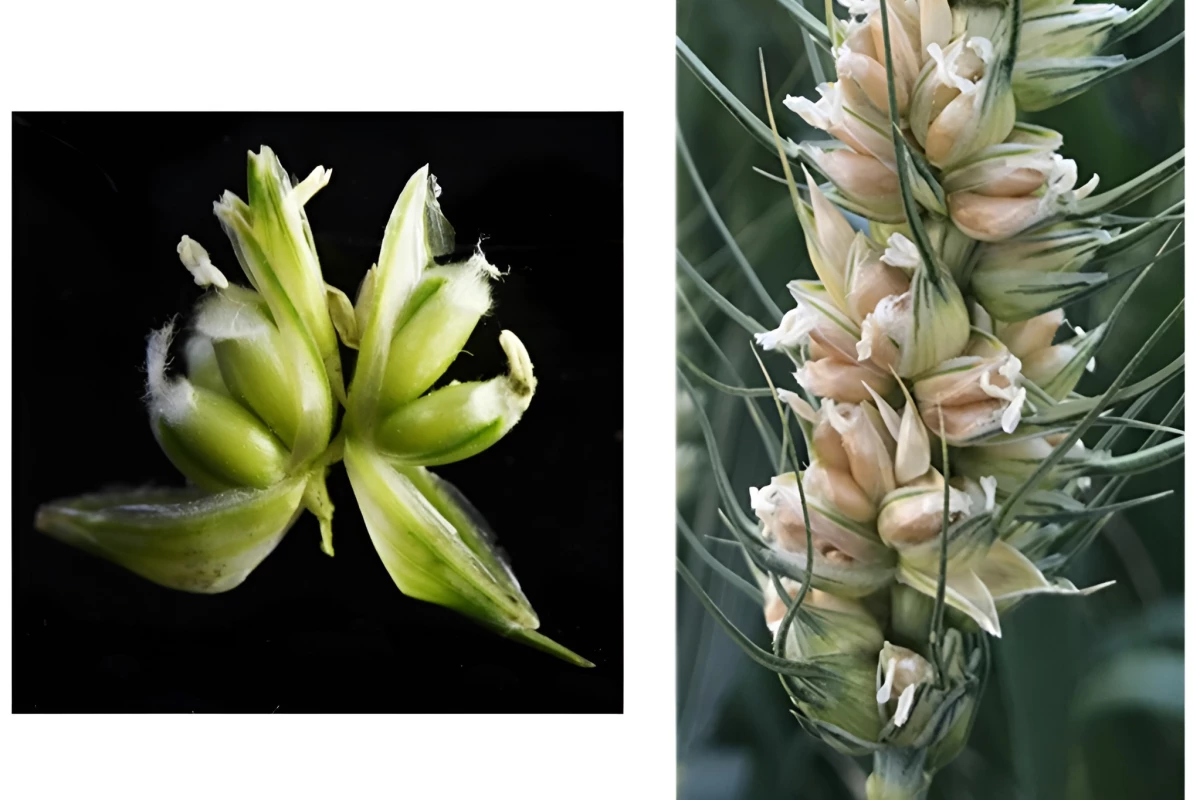
A groundbreaking genetic discovery may soon enable wheat farmers to triple grain yields without needing additional land, water, or fertilizer. Researchers from the University of Maryland have identified the genetic basis of a rare wheat mutation known as MOV (multi-ovary), which allows each floret to produce up to three grains instead of the typical single grain.
Traditionally, each floret in a wheat plant’s seed head develops one ovary, leading to one grain. The MOV mutation, however, enables certain plants to develop multiple ovaries per floret. This characteristic has the potential to significantly increase overall grain production, but the underlying genetic mechanism was not fully understood until recently.
In their study, scientists meticulously mapped the DNA of MOV wheat and compared it to that of standard bread wheat. Their research revealed that a dormant gene, known as WUSCHEL-D1 (WUS-D1), becomes active in MOV wheat. This gene plays a crucial role in enhancing the development of female flower parts, such as pistils and ovaries. By activating WUS-D1 in cultivated wheat, researchers believe they can boost grain production.
Pathway to Higher Yields
According to Assoc. Prof. Vijay Tiwari, a co-author of the study, “Pinpointing the genetic basis of this trait offers a path for breeders to incorporate it into new wheat varieties, potentially increasing the number of grains per spike and overall yield.”
The findings, published in the journal Proceedings of the National Academy of Sciences, suggest that employing modern gene editing techniques could further enhance this trait in wheat crops. By focusing on activating the WUS-D1 gene, scientists aim to develop higher-yielding wheat varieties, which could have significant implications for global food security.
With the world facing increasing challenges related to food production, advancements like these could be pivotal. If successful, the application of this genetic discovery may help meet the growing demand for wheat, a staple food for billions.
The research not only highlights the potential for increased agricultural productivity but also underscores the importance of genetic research in addressing food scarcity. As scientists continue to explore the applications of the MOV mutation, the agricultural sector awaits further developments that could reshape wheat cultivation practices.

Oak Fire Arsonist Edward Wackerman Released with Ankle Monitor

NFTA Launches New DL&W Metro Station in Buffalo Today

Judge Denies Extension, South Shore Residents Face Urgent Eviction

Germantown Residents Face Sidewalk Snow Removal Changes by 2026

Mexico Enacts New Subcontracting Protocol, Raises Minimum Wage for 2026

“One Battle After Another” Dominates 83rd Golden Globe Nominations

Understanding the Distinction Between Tumors and Cancer

“One Battle After Another” Dominates Golden Globe Nominations

DOJ Establishes Second Amendment Section to Strengthen Gun Rights

ALMA Discovers Companion Orbiting Giant Red Star π 1 Gruis

New ‘Star Trek: Voyager’ Game Demo Released, Players Test Limits

SEVENTEEN’s Mingyu Faces Backlash Over Alcohol Incident at Concert

Global Air Forces Ranked by Annual Defense Budgets in 2025

Mass Production of F-35 Fighter Jet Drives Down Costs

Electrification Challenges Demand Advanced Multiphysics Modeling

Gold Investment Surge: Top Mutual Funds and ETF Alternatives

Time Crystals Revolutionize Quantum Computing Potential

DirecTV to Launch AI-Driven Ads with User Likenesses in 2026
-
 Science4 weeks ago
ALMA Discovers Companion Orbiting Giant Red Star π 1 Gruis
-
 Top Stories2 months ago
New ‘Star Trek: Voyager’ Game Demo Released, Players Test Limits
-
 Politics2 months ago
SEVENTEEN’s Mingyu Faces Backlash Over Alcohol Incident at Concert
-
 World2 months ago
Global Air Forces Ranked by Annual Defense Budgets in 2025
-
 World2 months ago
Mass Production of F-35 Fighter Jet Drives Down Costs
-
 World2 months ago
Electrification Challenges Demand Advanced Multiphysics Modeling
-
 Business2 months ago
Gold Investment Surge: Top Mutual Funds and ETF Alternatives
-
 Science2 months ago
Time Crystals Revolutionize Quantum Computing Potential
-
 Top Stories2 months ago
DirecTV to Launch AI-Driven Ads with User Likenesses in 2026
-

 Entertainment2 months ago
Freeport Art Gallery Transforms Waste into Creative Masterpieces
-

 Business2 months ago
US Government Denies Coal Lease Bid, Impacting Industry Revival Efforts
-

 Health2 months ago
Gavin Newsom Critiques Trump’s Health and National Guard Plans