
Science
Markets Face Unpredictability as AI Sparks Investor Interest

As 2023 draws to a close, financial analysts are grappling with the unpredictability of markets and the implications for investors. Year-end forecasts flood the media, often filled with enthusiasm yet frequently missing the mark. The essence of these predictions lies in the inherent uncertainty of financial markets, where even educated guesses about economic indicators like inflation or GDP growth do not guarantee accurate market responses.
The recent past illustrates this complexity. Heading into 2025, analysts believed that deregulation and tax incentives might enhance U.S. stock performance. However, many did not foresee the significant impact of tariffs when former President Donald Trump announced substantial tariffs affecting multiple countries, which quickly shifted investor sentiment. The S&P 500 saw a decline of nearly 20 percent in just two months, as fears of a global economic downturn took hold.
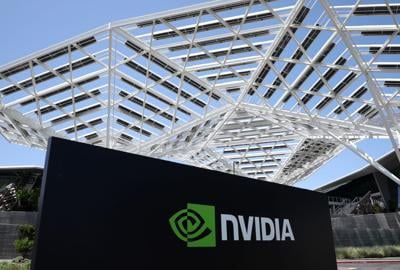
Yet, the markets exhibited remarkable resilience. After a period of uncertainty, investor attention pivoted towards the potential of artificial intelligence (AI) technology. Despite ongoing concerns regarding the trade war, optimism surged as the narrative shifted to AI’s capacity to drive economic growth. Stocks linked to AI, including Nvidia, saw substantial gains, with Google‘s stock rebounding impressively from a 23 percent decline earlier in the year to a remarkable increase of 63 percent by mid-December.
This unpredictable volatility underscores the challenges of forecasting market behavior. Analysts often grapple with second- and third-order effects; for instance, rising unemployment may initially seem detrimental to the stock market, yet it could prompt the Federal Reserve to lower interest rates, creating a paradoxical boost for equities.
With the U.S. stock market experiencing a solid three-year performance, marked by a return of approximately 76 percent for the S&P 500, investors are now faced with questions about the sustainability of this growth. The recent surge has been largely attributed to surging investments in AI technologies. Tech stocks have more than doubled in value over the past three years, leading to increased scrutiny about whether such valuations are justified.
Amidst concerns about potential overvaluation, a noticeable shift is occurring as investors rotate away from high-flying tech stocks toward more value-oriented sectors, including banks and healthcare. This market adjustment reflects a broader reassessment of risk and growth prospects.
For retirees who depend on investment income, this environment necessitates a strategic approach. The current landscape offers a valuable opportunity to assess positions in tech stocks and consider reallocating resources towards more stable investments. Such decisions should not be viewed as predictions but rather as informed responses to the present market conditions.
In the unpredictable realm of finance, understanding the current landscape is crucial. As the AI revolution continues to unfold, the potential for future gains remains uncertain. Investors need not predict tomorrow’s market direction. Instead, the focus should be on evaluating present risks and making decisions that align with their financial goals. In a world marked by volatility, maintaining this disciplined approach is essential.

Medline and TransEnterix: A Comparative Investment Analysis

First Federal of Greene County Celebrates Growth with New Office Launch

Urgent Update: Cardinal Mindszenty Sentenced 77 Years Ago Today

Upwork Set to Reveal Q4 2025 Earnings on February 9

Marin Graduate Enhances Aurora Borealis Research Using AI

Rosenblatt Securities Lowers QUALCOMM Price Target to $190

Colorado Residents Turn to Home Battery Backup Amid Power Outages

American Airlines Celebrates a Century of Aviation Excellence

Cupid Kannapolis Event Sparks Local Business Promotions

ALMA Discovers Companion Orbiting Giant Red Star π 1 Gruis

Doctoral Candidate Trivanni Yadav Advances Battery Research at UTulsa

Global Air Forces Ranked by Annual Defense Budgets in 2025

New ‘Star Trek: Voyager’ Game Demo Released, Players Test Limits

Mass Production of F-35 Fighter Jet Drives Down Costs

NASCAR Faces Fan Backlash as Steve Phelps’ Texts Surface

Gold Investment Surge: Top Mutual Funds and ETF Alternatives

DirecTV to Launch AI-Driven Ads with User Likenesses in 2026

SEVENTEEN’s Mingyu Faces Backlash Over Alcohol Incident at Concert
-
 Science3 months ago
ALMA Discovers Companion Orbiting Giant Red Star π 1 Gruis
-
 Science3 months ago
Doctoral Candidate Trivanni Yadav Advances Battery Research at UTulsa
-
 World4 months ago
Global Air Forces Ranked by Annual Defense Budgets in 2025
-
 Top Stories4 months ago
New ‘Star Trek: Voyager’ Game Demo Released, Players Test Limits
-
 World4 months ago
Mass Production of F-35 Fighter Jet Drives Down Costs
-
 Sports3 months ago
NASCAR Faces Fan Backlash as Steve Phelps’ Texts Surface
-
 Business4 months ago
Gold Investment Surge: Top Mutual Funds and ETF Alternatives
-
 Top Stories4 months ago
DirecTV to Launch AI-Driven Ads with User Likenesses in 2026
-
 Politics4 months ago
SEVENTEEN’s Mingyu Faces Backlash Over Alcohol Incident at Concert
-

 Science4 months ago
Time Crystals Revolutionize Quantum Computing Potential
-

 Entertainment4 months ago
Freeport Art Gallery Transforms Waste into Creative Masterpieces
-

 Science4 months ago
Remembering David E. Brest: A Life Dedicated to Nature and Family