
Science
NASA Warns SpaceX Satellites Threaten Hubble’s Observations

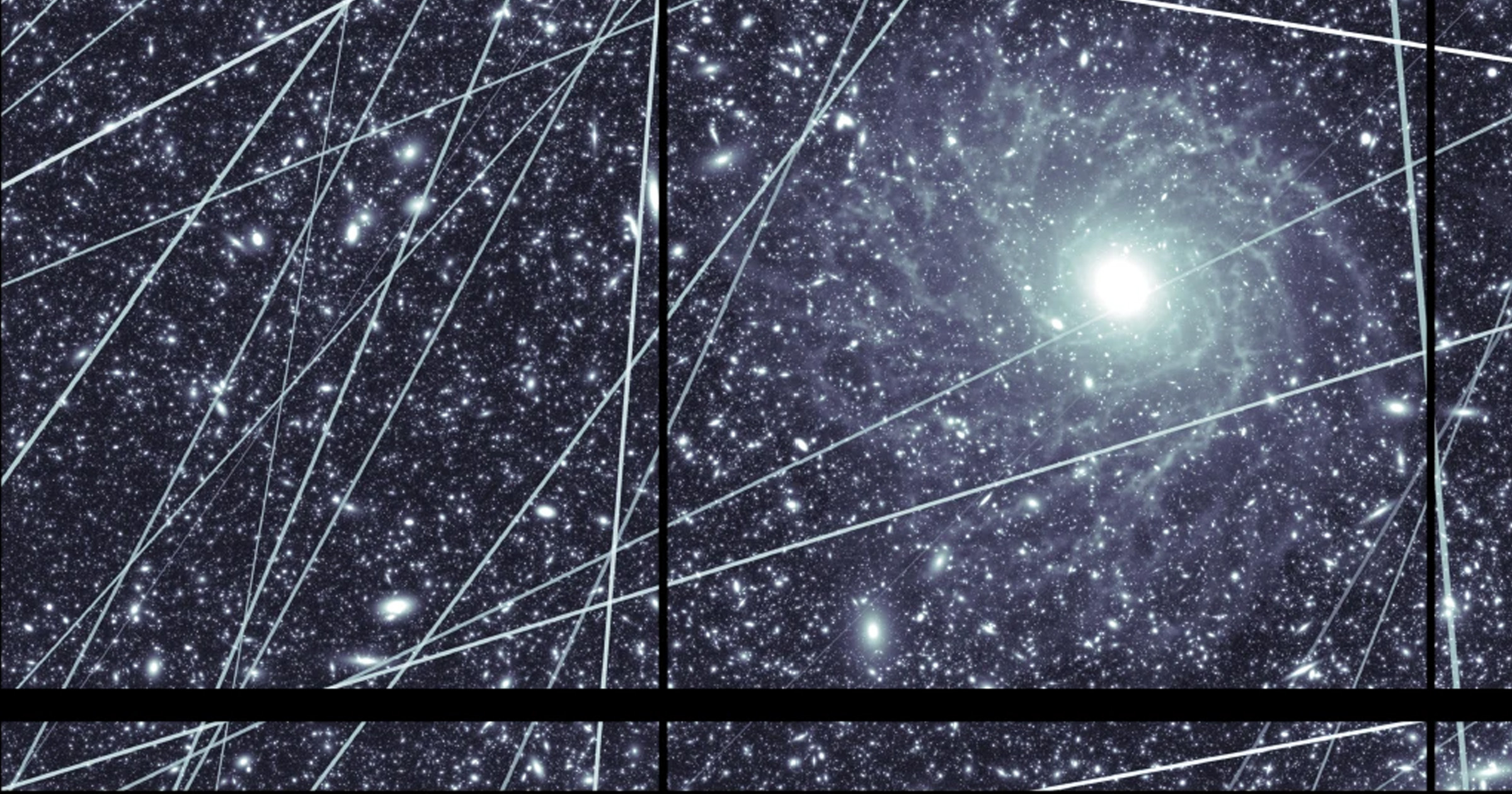
Concerns are mounting among astronomers regarding the impact of SpaceX’s Starlink satellites on astronomical observations. A recent study conducted by researchers at NASA indicates that the growing number of these satellites is increasingly threatening the integrity of images captured by the Hubble Space Telescope. The findings suggest that light pollution and radio emissions from these satellites could significantly disrupt scientific endeavors in space.
The study, led by Spanish astrophysicist Alejandro Serrano Borlaff, reveals alarming statistics: if the satellite projects planned for the next decade are realized, one out of every three images captured by the Hubble Space Telescope could be contaminated by light pollution. Currently, SpaceX has been authorized by the US Federal Communications Commission to launch 12,000 satellites into low Earth orbit (LEO), with plans for an additional 30,000 satellites in the near future.
Impact on Future Observations
The implications of this research extend beyond the Hubble Space Telescope. Future astronomical missions may face even greater challenges. According to Borlaff and his team, the European Space Agency’s upcoming ARRAKIHS mission, expected to launch in the 2030s, may experience bright streaks of light disrupting up to 96 percent of its images. Similarly, NASA’s recently launched SPHEREx could see as much as 99 percent of its images affected by light pollution.
“This is the first scientific study whose main objective is to investigate the effects of light pollution on space telescopes, taking into account these plans announced by the industry,” Borlaff stated. The significant growth in satellite constellations raises concerns about the long-term viability of astronomical research from space.
Call for Regulatory Action
The study highlights an urgent need for international regulatory bodies to address the increasing commercial activity in LEO. Without intervention, the astronomical community may struggle to maintain its ability to conduct vital research. Collaborative efforts among spacefaring nations, particularly the United States, will be crucial in mitigating the risks posed by satellite proliferation.
As the number of satellites in orbit continues to rise, the future of astronomical observation hangs in the balance. The time to act is running short, and the potential consequences for both current and future telescopes could be profound. The scientific community eagerly awaits regulatory responses to these pressing challenges, hoping to preserve the integrity of their work in the cosmos.

Minnesota Supreme Court to Hear Urgent Stormwater Fee Case

Urgent Update: Drug Trafficker Pleads Guilty, Faces Life in Prison

Police Search for Shooter After Innocent Bystander Shot in NYC

New York State Holds Billions in Unclaimed Funds—Could Yours Be There?

Tekashi 6ix9ine Plans Weight Loss During 3-Month Prison Sentence

New Jersey’s Walking Habits Revealed: How Active Are We?

Support Systems Crucial for Stroke Recovery and Emotional Healing

Duluth Council Faces Controversy Over Golf Course Land Transfer

NASA Warns SpaceX Satellites Threaten Hubble’s Observations

ALMA Discovers Companion Orbiting Giant Red Star π 1 Gruis

New ‘Star Trek: Voyager’ Game Demo Released, Players Test Limits

Global Air Forces Ranked by Annual Defense Budgets in 2025

SEVENTEEN’s Mingyu Faces Backlash Over Alcohol Incident at Concert

Electrification Challenges Demand Advanced Multiphysics Modeling

Mass Production of F-35 Fighter Jet Drives Down Costs

Gold Investment Surge: Top Mutual Funds and ETF Alternatives

Time Crystals Revolutionize Quantum Computing Potential

DirecTV to Launch AI-Driven Ads with User Likenesses in 2026
-
 Science3 weeks ago
ALMA Discovers Companion Orbiting Giant Red Star π 1 Gruis
-
 Top Stories2 months ago
New ‘Star Trek: Voyager’ Game Demo Released, Players Test Limits
-
 World2 months ago
Global Air Forces Ranked by Annual Defense Budgets in 2025
-
 Politics1 month ago
SEVENTEEN’s Mingyu Faces Backlash Over Alcohol Incident at Concert
-
 World2 months ago
Electrification Challenges Demand Advanced Multiphysics Modeling
-
 World2 months ago
Mass Production of F-35 Fighter Jet Drives Down Costs
-
 Business2 months ago
Gold Investment Surge: Top Mutual Funds and ETF Alternatives
-
 Science2 months ago
Time Crystals Revolutionize Quantum Computing Potential
-
 Top Stories2 months ago
DirecTV to Launch AI-Driven Ads with User Likenesses in 2026
-

 Entertainment2 months ago
Freeport Art Gallery Transforms Waste into Creative Masterpieces
-

 Business2 months ago
US Government Denies Coal Lease Bid, Impacting Industry Revival Efforts
-

 Health2 months ago
Gavin Newsom Critiques Trump’s Health and National Guard Plans