
Science
NASA Warns SpaceX Satellites Threaten Hubble’s Observations

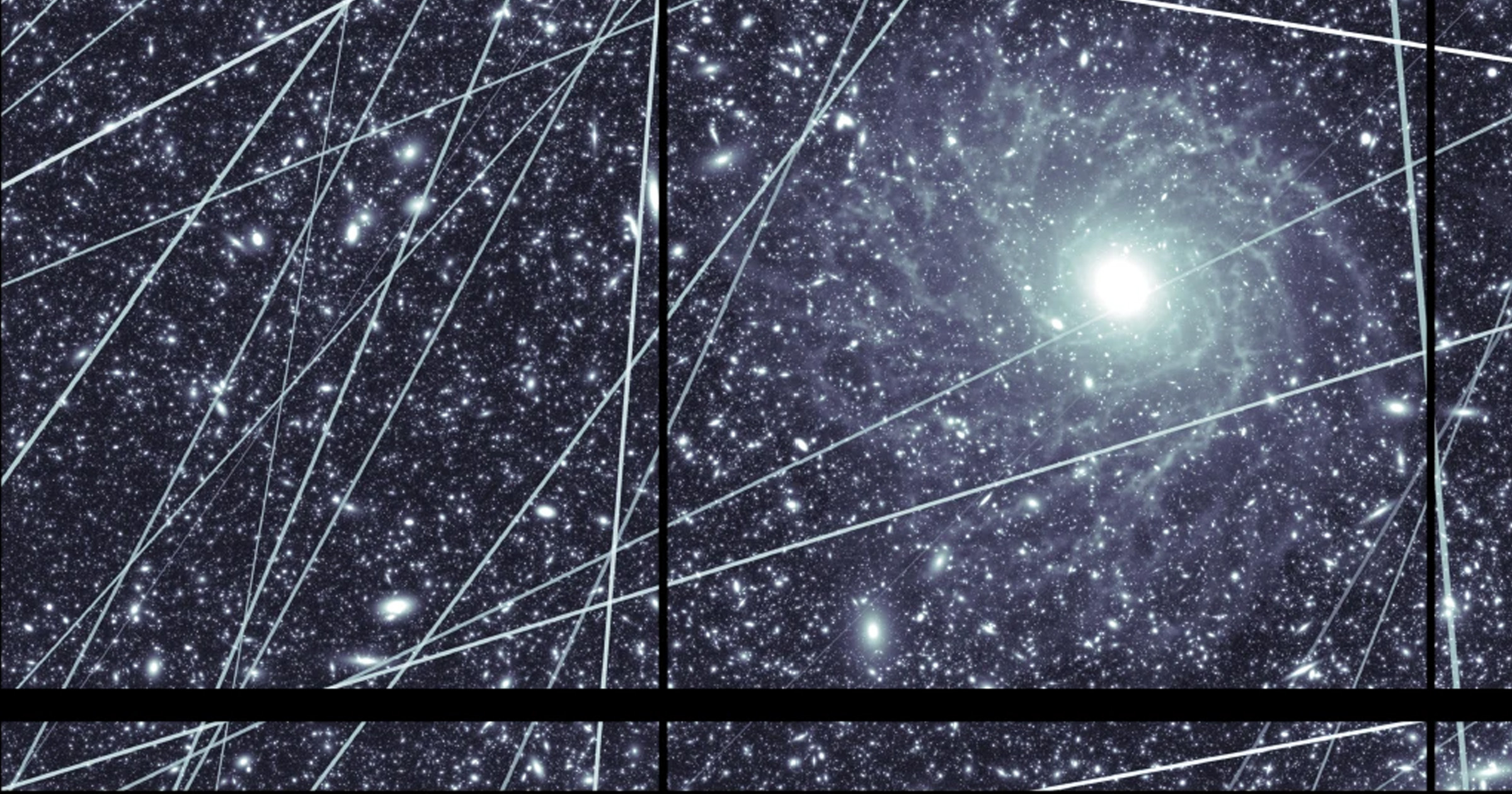
Concerns are mounting among astronomers regarding the impact of SpaceX’s Starlink satellites on astronomical observations. A recent study conducted by researchers at NASA indicates that the growing number of these satellites is increasingly threatening the integrity of images captured by the Hubble Space Telescope. The findings suggest that light pollution and radio emissions from these satellites could significantly disrupt scientific endeavors in space.
The study, led by Spanish astrophysicist Alejandro Serrano Borlaff, reveals alarming statistics: if the satellite projects planned for the next decade are realized, one out of every three images captured by the Hubble Space Telescope could be contaminated by light pollution. Currently, SpaceX has been authorized by the US Federal Communications Commission to launch 12,000 satellites into low Earth orbit (LEO), with plans for an additional 30,000 satellites in the near future.
Impact on Future Observations
The implications of this research extend beyond the Hubble Space Telescope. Future astronomical missions may face even greater challenges. According to Borlaff and his team, the European Space Agency’s upcoming ARRAKIHS mission, expected to launch in the 2030s, may experience bright streaks of light disrupting up to 96 percent of its images. Similarly, NASA’s recently launched SPHEREx could see as much as 99 percent of its images affected by light pollution.
“This is the first scientific study whose main objective is to investigate the effects of light pollution on space telescopes, taking into account these plans announced by the industry,” Borlaff stated. The significant growth in satellite constellations raises concerns about the long-term viability of astronomical research from space.
Call for Regulatory Action
The study highlights an urgent need for international regulatory bodies to address the increasing commercial activity in LEO. Without intervention, the astronomical community may struggle to maintain its ability to conduct vital research. Collaborative efforts among spacefaring nations, particularly the United States, will be crucial in mitigating the risks posed by satellite proliferation.
As the number of satellites in orbit continues to rise, the future of astronomical observation hangs in the balance. The time to act is running short, and the potential consequences for both current and future telescopes could be profound. The scientific community eagerly awaits regulatory responses to these pressing challenges, hoping to preserve the integrity of their work in the cosmos.

Robinhood Stock Surges 2.5% in Early Trading on March 17

Israel Intensifies Strikes as Global Energy Crisis Looms

CALV Offers Class on Communication Skills for Real Estate Professionals

Historic Bideford Pub Reopens as The Patch Wine Bar & Kitchen

Oscar Night Celebrations: Winners, Guests, and Exclusive After-Parties

Samsung Galaxy Watch 9 Set for Larger Battery Boost, Report Reveals

Kibble vs. Fresh Dog Food: What’s Best for Your Dog’s Health?

Acclaimed San Francisco Pizzeria Del Popolo to Close in May

‘Invincible’ Season 4 Launches on Prime Video with Epic Action

ALMA Discovers Companion Orbiting Giant Red Star π 1 Gruis

Doctoral Candidate Trivanni Yadav Advances Battery Research at UTulsa

Global Air Forces Ranked by Annual Defense Budgets in 2025

Rev. Bry Shields to Retire as McGill-Toolen President in 2026

Mass Production of F-35 Fighter Jet Drives Down Costs

Tucson Celebrates Life and Remembrance at 36th Annual All Souls Procession

Gold Investment Surge: Top Mutual Funds and ETF Alternatives

DirecTV to Launch AI-Driven Ads with User Likenesses in 2026

Paul Giamatti Reveals Villainous Role in Star Trek: Starfleet Academy
-
 Science9 months ago
ALMA Discovers Companion Orbiting Giant Red Star π 1 Gruis
-
 Science8 months ago
Doctoral Candidate Trivanni Yadav Advances Battery Research at UTulsa
-
 World10 months ago
Global Air Forces Ranked by Annual Defense Budgets in 2025
-
 Lifestyle10 months ago
Rev. Bry Shields to Retire as McGill-Toolen President in 2026
-
 World10 months ago
Mass Production of F-35 Fighter Jet Drives Down Costs
-
 Lifestyle9 months ago
Tucson Celebrates Life and Remembrance at 36th Annual All Souls Procession
-
 Business10 months ago
Gold Investment Surge: Top Mutual Funds and ETF Alternatives
-
 Top Stories10 months ago
DirecTV to Launch AI-Driven Ads with User Likenesses in 2026
-
 Entertainment10 months ago
Paul Giamatti Reveals Villainous Role in Star Trek: Starfleet Academy
-

 Lifestyle8 months ago
Maumee’s Shop With a Hero Event Delivers Joy to Local Children
-

 Top Stories10 months ago
New ‘Star Trek: Voyager’ Game Demo Released, Players Test Limits
-

 Lifestyle8 months ago
Cape May Shines as New Jersey’s Only Entry on Beach Town List